Are scorpions a problem in Winchester?
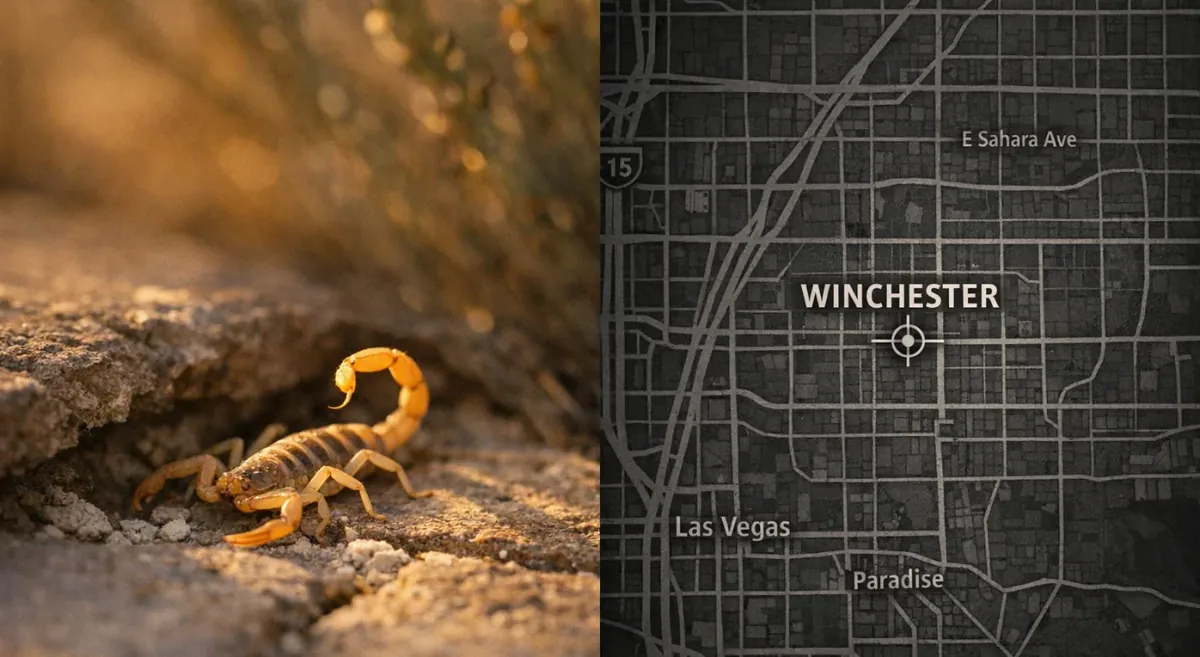
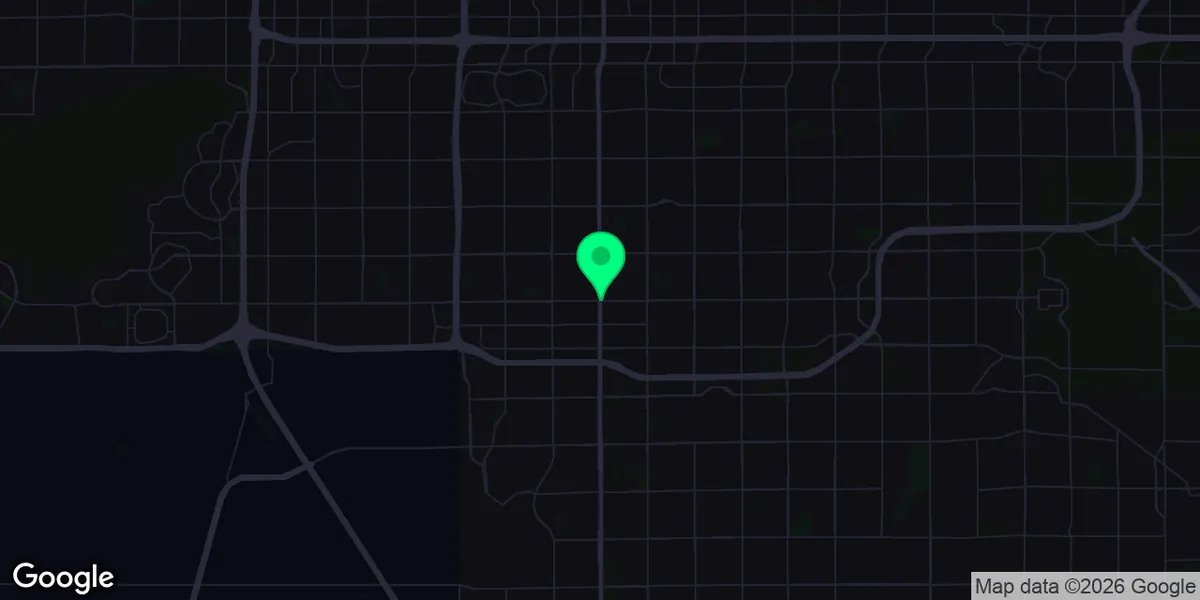
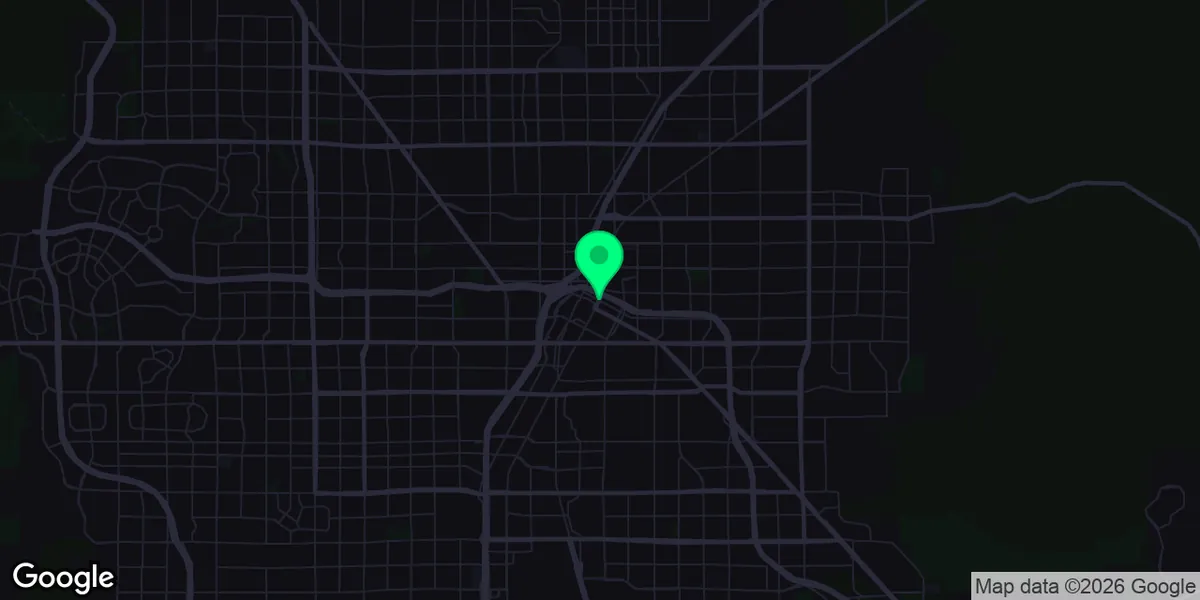
Yes. Winchester sits in the Las Vegas Valley in Clark County, one of the most scorpion-active regions in Nevada. Encounters are common enough that homeowners should expect an occasional indoor sighting, especially during the warm months. The Arizona bark scorpion, the most medically significant species in the Southwest, is present throughout the area.
Clark County scorpions are part of a bigger picture. Nevada reported 7,775 scorpion exposures to poison control between 2005 and 2015, and a follow-up analysis showed exposure counts growing in southern Nevada specifically (Kang & Brooks 2017). That doesn't mean you should panic — it means you should pay attention.
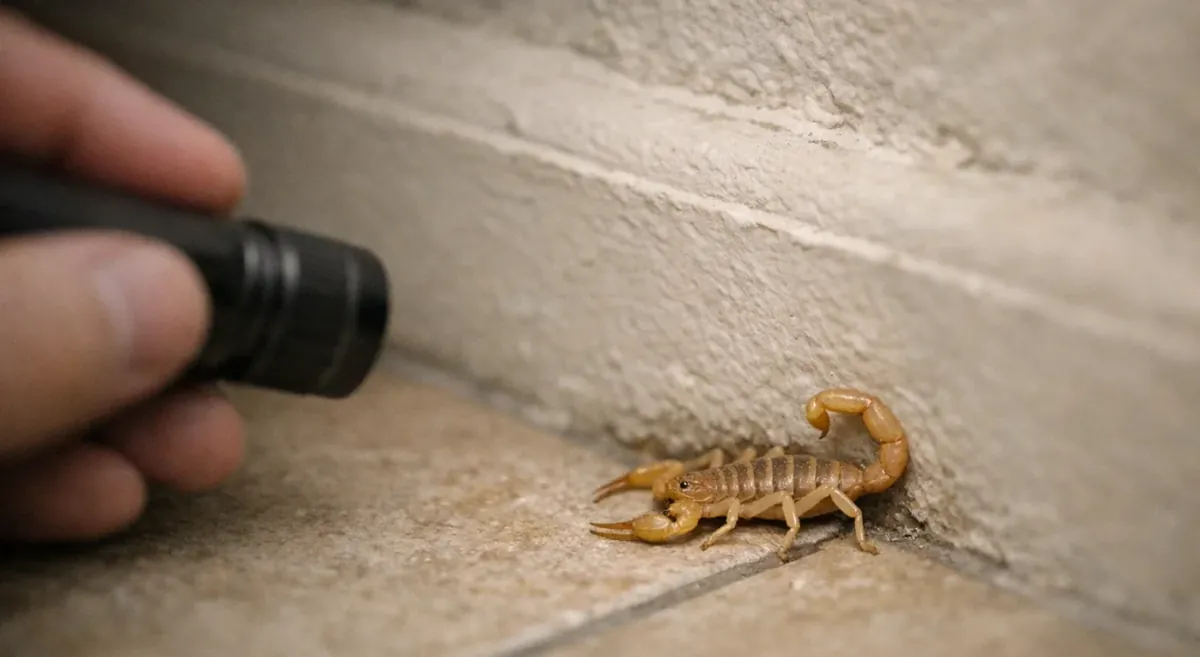
Nighttime is when most homeowners feel most exposed. Scorpions are nocturnal and thigmotactic, meaning they navigate by hugging edges — baseboards, wall bases, and furniture perimeters — rather than crossing open floors. That's exactly why perimeter monitoring works so well. You want eyes on the edges of a room, in the dark, when scorpions are actually moving.
What homeowners in Winchester usually notice first
The first sighting almost always happens in a predictable spot: the garage, along a baseboard, in a bathroom or laundry room near water, or in a bedroom at night. These are the transition zones and moisture pockets scorpions favor once they're indoors.
Picture flipping on the laundry room light and spotting a pale, slender scorpion frozen against the baseboard. It's unnerving. This is where photo-verified, real-time detection helps — instead of stumbling onto a scorpion by accident, you get an alert the moment one shows up.
Does one scorpion mean there are more?
Not necessarily — but it's worth investigating. A single scorpion can be a lone wanderer that slipped in under a door. Repeat sightings, though, usually point to conditions that support them: a steady supply of prey insects, good hiding spots (harborage), and moisture.
In a fast-growing area like Winchester, nearby construction, fresh landscaping, and irrigation can all push scorpions toward homes. Start a simple log of every sighting with the date, time, and location. Those patterns tell you whether you've got a one-off or an ongoing problem — and they'll guide smarter control decisions later.
Which scorpion species lives in Winchester?
The primary species in and around Winchester is the Arizona bark scorpion (Centruroides sculpturatus). Of 330 research-grade scorpion observations logged within 30km of Winchester on iNaturalist, 167 were bark scorpions — by far the most reported. That matters, because the bark scorpion is the only species in the region capable of a truly dangerous sting.
You'll also find look-alikes nearby: the desert hairy scorpion (Hadrurus arizonensis), the giant sand scorpion (Paruroctonus becki), and Paravaejovis confusus. These are larger or bulkier and far less dangerous. Correct ID matters because the species drives your sting risk and your control plan, especially indoors.
Bark scorpion in Winchester: what makes it different
The bark scorpion Winchester homeowners worry about is slender, light tan, and small — often under three inches — with thin pincers and a thin tail. It's the most medically significant scorpion in the U.S. and, unlike bulkier desert species, it's a strong climber. It also hugs edges and hunts after dark, which is exactly why it's so hard to find. You rarely see one crossing the middle of a floor in daylight.
Can scorpions climb walls in Winchester homes?
Yes — bark scorpions climb well, and that's one of their defining traits. They can scale rough walls, cabinets, and curtains, which is why you might find one in a bathtub, a sink, on a countertop, or clinging to a curtain rather than only on the floor. They can also reach upstairs rooms.
Smooth, non-porous surfaces slow them down, which is one reason bark scorpions sometimes get stuck in tubs and sinks. The takeaway for prevention: sealing gaps and managing entry points matters even more when your local species climbs.
How to confirm what you saw (without getting too close)
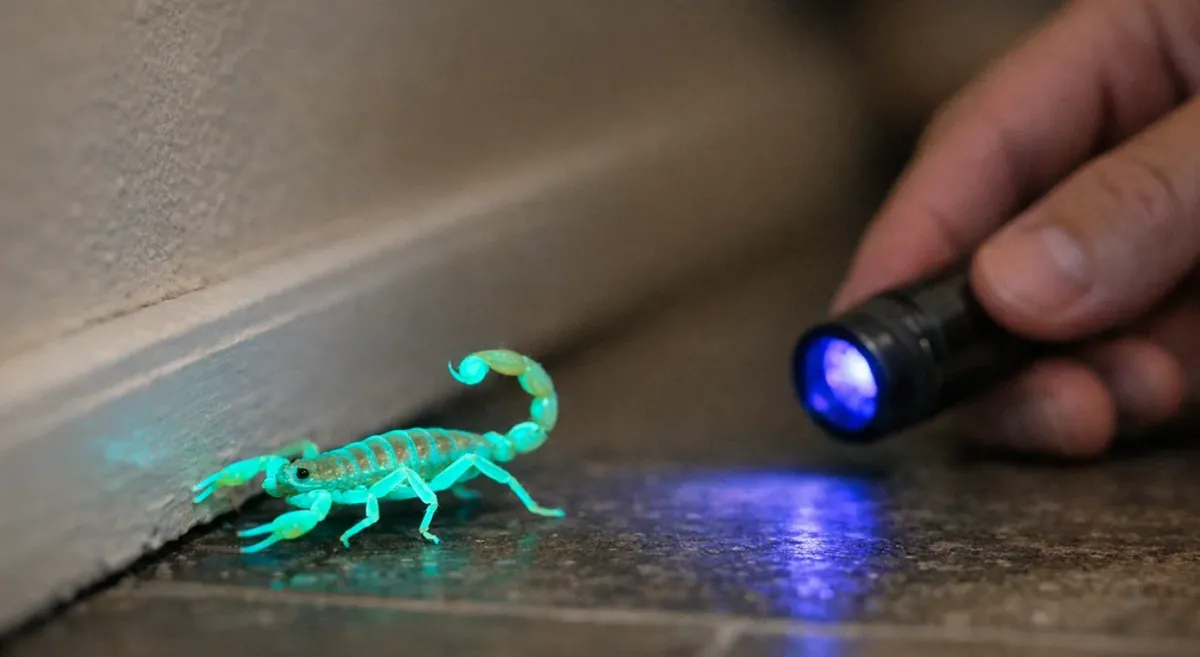
Keep your distance and never scoop a scorpion barehanded. Use a long tool and a glass if you need to contain one. The most reliable homeowner trick is UV light — scorpions fluoresce a bright greenish-blue under ultraviolet. Scorpion Alert Detectors use 365nm UV for exactly this reason: it makes an otherwise near-invisible scorpion glow. If you snap a photo, get the size, color, and location — but only if you can do it safely, without chasing.
When are scorpions most active in Winchester?
Scorpion season in Winchester runs roughly from April through October, with peak activity in the hottest stretch of June, July, and August. They can appear year-round indoors, but summer's warm evenings drive the most encounters.
Nationwide data backs this up: summer accounts for the overwhelming majority of stings, and the peak sting window is 6 PM to midnight — about 49% of envenomations (Klotz et al. 2021; Isbister & Bawaskar 2014). Automated nighttime monitoring lines up perfectly with this: Scorpion Alert Detectors scan only when a room goes dark, which is precisely when scorpions move.
Scorpion season in Winchester: what changes month to month
Think of it in three phases. Early season (spring) brings scorpions out of dormancy as nights warm. Peak season (mid-summer) is when heat, seasonal moisture events, irrigation cycles, and abundant prey insects all collide — that's when sightings spike. Late season (fall) tapers off as nights cool.
Don't assume winter is a free pass, though. Indoor scorpions in heated, humid spots like bathrooms and garages can show up any month of the year.
Why they show up at night (and why baseboards matter)
Scorpions are thigmotactic. In plain terms, they like the reassurance of a surface against their body, so they travel along edges rather than crossing open rooms. Indoors, that means baseboards, wall bases, door thresholds, and the seams where flooring meets cabinetry.
This is why inspection and prevention should focus on perimeters, not the middle of the floor. Wall edges are the scorpion highway.
How dangerous is a scorpion sting in Winchester?
Most scorpion stings are painful but not life-threatening — however, the Arizona bark scorpion raises the stakes. Its venom can cause systemic symptoms, and reactions are most serious in young children, older adults, and people with underlying health issues. A scorpion sting in Winchester deserves calm, prompt attention, not panic.
Children under 10 have the highest rates of systemic effects, hospitalization, and ICU admission in both Arizona and Nevada cohorts (Kang & Brooks 2017). For a healthy adult, a bark scorpion sting is usually a rough night. For a small child, it warrants urgent evaluation.
Typical symptoms vs. red-flag symptoms
Common local symptoms include immediate burning pain, tingling, numbness, and mild swelling around the site. Pain at the sting site shows up in 88.9% of stings and local numbness in 62.2% (Klotz et al. 2021).
Red flags mean get help now: trouble breathing or swallowing, uncontrolled muscle twitching or jerking, roving eye movements, severe vomiting, or signs of an allergic reaction like widespread hives or swelling. Severity varies from person to person and by how much venom was delivered.
Why children are a bigger concern
The same dose of venom hits a small body harder. A child's lower body weight means symptoms can escalate faster and more severely, and little kids' small airways make secretions and swallowing problems especially dangerous. If a young child is stung, treat it as urgent. For a deeper look, see our guide on why children are more at risk from scorpion stings.
What to do if you're stung in Winchester
Stay calm and act methodically. Wash the area with soap and water, apply a cool compress, and call the free Poison Help line at 1-800-222-1222 for guidance. Watch closely for red-flag symptoms, and take a photo of the scorpion for ID only if you can do it safely — don't chase it.
If you need in-person care, two facilities sit less than a mile away: Sunrise Hospital and Medical Center (3186 S Maryland Pkwy, Las Vegas) about 0.88 miles out, and the adjacent Sunrise Children's Hospital at the same address, roughly 0.86 miles away and geared toward pediatric emergencies.
First 5 minutes: do this, don't do that
- Wash the sting site with soap and cool water.
- Apply a cool compress or ice pack wrapped in cloth to ease pain and swelling.
- Remove rings, watches, or tight clothing near the sting in case of swelling.
- Keep the person calm and still — anxiety can make symptoms feel worse.
- Do NOT cut the wound, suck out venom, apply a tourniquet, or try to "shock" the sting. These myths cause harm and help nothing.
For more on avoiding common mistakes, read what not to do after spotting a scorpion in your home.
When to call Poison Control vs. when to go to the ER
Call 1-800-222-1222 first for any adult sting with only local symptoms — they'll walk you through it and can escalate if needed. Go straight to the ER for red-flag symptoms: difficulty breathing or swallowing, uncontrolled muscle movements, roving eyes, or intense full-body symptoms. Always treat stings in young children, older adults, pregnant people, or anyone with a known allergy history as urgent. Bring your scorpion photo if you have one, or be ready to describe its size, color, and where and when the sting happened.
After the sting: how to prevent a second sting tonight
Once the immediate situation is handled, secure the room for the night. Shake out shoes and clothing before putting them on, switch to closed-toe slippers indoors for a few days, check the edges of your bedding, and clear clutter off the floor. Real-time, photo-verified alerts can help you pinpoint where a scorpion is moving after dark — no repeated blacklight walks required. Our bark scorpion sting first aid guide covers the first 30 minutes in detail.
How to keep scorpions out of your Winchester home
Effective scorpion control for scorpions in Winchester, Nevada combines three things: exclusion (sealing gaps), reducing what attracts them, and targeted monitoring. Because scorpions travel along edges and enter through small gaps, focusing on your home's perimeter and entry points delivers the biggest payoff for the least effort.
Nearly all scorpion envenomations happen inside the home — 97.8% nationally (Kang & Brooks 2017). Keeping them out of the living space is the whole game.
Winchester scorpion control starts with exclusion (sealing)
Seal the ways in first. Prioritize these:
- Install tight door sweeps on exterior and garage-to-house doors — bark scorpions can slip under a surprisingly thin gap.
- Replace worn weatherstripping around doors and windows.
- Address gaps along the bottom and sides of the garage door.
- Screen or appropriately cover weep holes in block walls.
- Seal pipe and cable penetrations under sinks and behind appliances with silicone caulk or steel wool packed into gaps.
Quick self-check: at night, turn off interior lights and look for light leaking around doors and the garage from outside. Any glow you see is a gap a scorpion can use. For the full rundown, see the top 5 ways scorpions get into your home.
Reduce what attracts scorpions (food, water, hiding spots)
Scorpions follow their food. Crickets, roaches, and other insects draw them in, so cutting the bug population cuts the scorpion buffet. Moisture and clutter help scorpions survive, so fix dripping outdoor faucets, adjust overwatered irrigation, and keep the yard tidy.
Around Winchester properties, watch the usual harborage: rock and wood piles, stacked pavers, block walls, and debris against the foundation. Move them away from the house. Our list of the top 5 things that attract scorpions in your home goes deeper on this chain.
Monitoring plan: where to look (and where to place detection)
Work room by room, focusing on the edges: baseboards, door thresholds, corners, the bathroom and laundry room, and the garage-to-house transition. These are the highest-traffic scorpion routes indoors.
Scorpion Alert Detectors are built for exactly this. They plug into standard perimeter outlets, scan the floor below with 365nm UV only when the room is dark, and send a push or SMS alert within seconds when they spot the telltale glow. Place them in your highest-risk rooms and near entry points — bedrooms, bathrooms, laundry, and the garage. The goal is simple: catch nighttime activity automatically so you're never surprised at 2 a.m. Since a past sighting is the strongest predictor of a future one, any room where you've already seen a scorpion is the right place to start.
When to call a pro (and what to ask for in Winchester)
Repeated indoor sightings, any sting, or scorpion activity across multiple rooms are signs you've moved past DIY. When you call a pest control company, ask the right questions: Do you treat wall voids and harborage, not just spray baseboards? What's your exterior perimeter approach? How often do you follow up?
Be realistic about sprays — they're often disappointing against scorpions on their own. The durable results come from integrated control: exclusion to keep them out, prey reduction to remove the draw, and monitoring so you always know what's actually happening after dark.
In Winchester, scorpions often stay active after dark and hug walls and baseboards, so a quick nighttime check around entry points and room perimeters can help you spot activity early. If you want an extra layer of confidence between inspections, Scorpion Alert is a simple way to detect and monitor scorpions where they tend to travel.