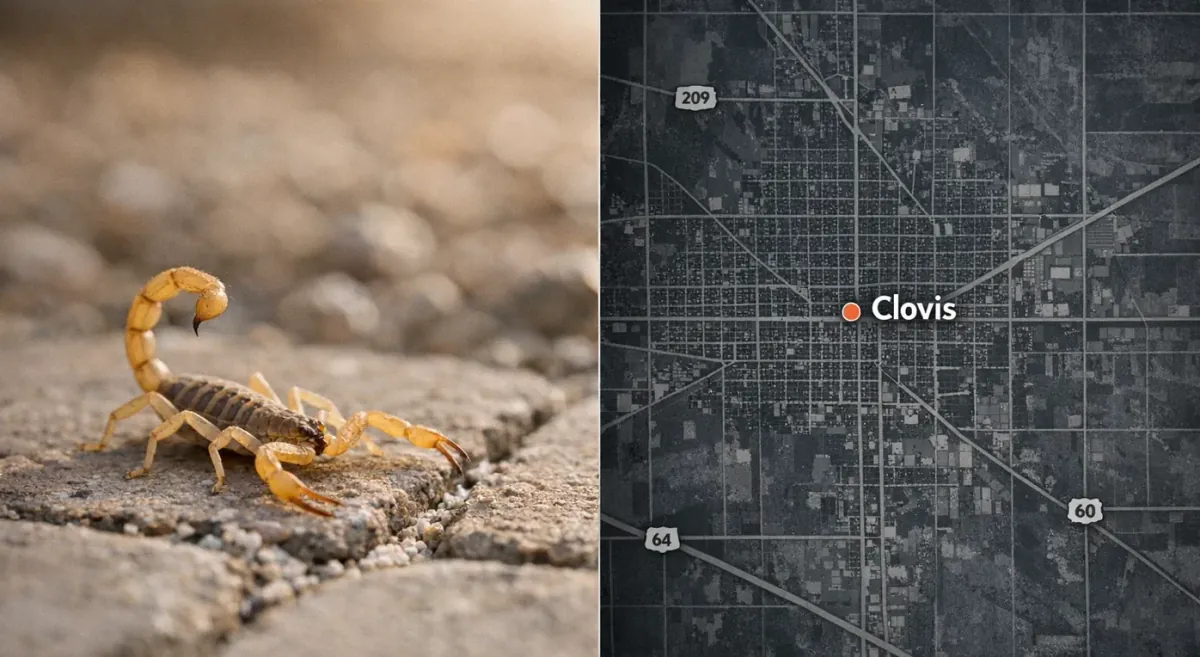
Are scorpions a problem in Clovis, New Mexico?
Yes, scorpions are a normal part of life in Clovis, and homeowners should expect occasional indoor sightings during the warm months. Most encounters involve a single wandering scorpion that slipped in through a gap near a door or a utility line. That's routine for eastern New Mexico. The goal isn't a perfectly scorpion-proof house — it's fewer entry points and earlier warning.
What does "normal" look like? One scorpion after a windy night or a day of yard work isn't something to panic over. A pattern is different. Repeat sightings over several weeks, scorpions turning up in multiple rooms, or a fresh one night after night — that suggests a route or a harborage worth addressing, rather than a lucky wanderer.
Set your expectations accordingly. You're trying to make your home harder to enter and easier to monitor — not chase an impossible standard.
Where do scorpions show up most on Clovis properties?
Outdoors, scorpions favor cool, dark micro-habitats: block walls, rock and gravel beds, stacked lumber, firewood piles, and the shady corners of sheds and garages. Anywhere that traps moisture and blocks the sun is a candidate.
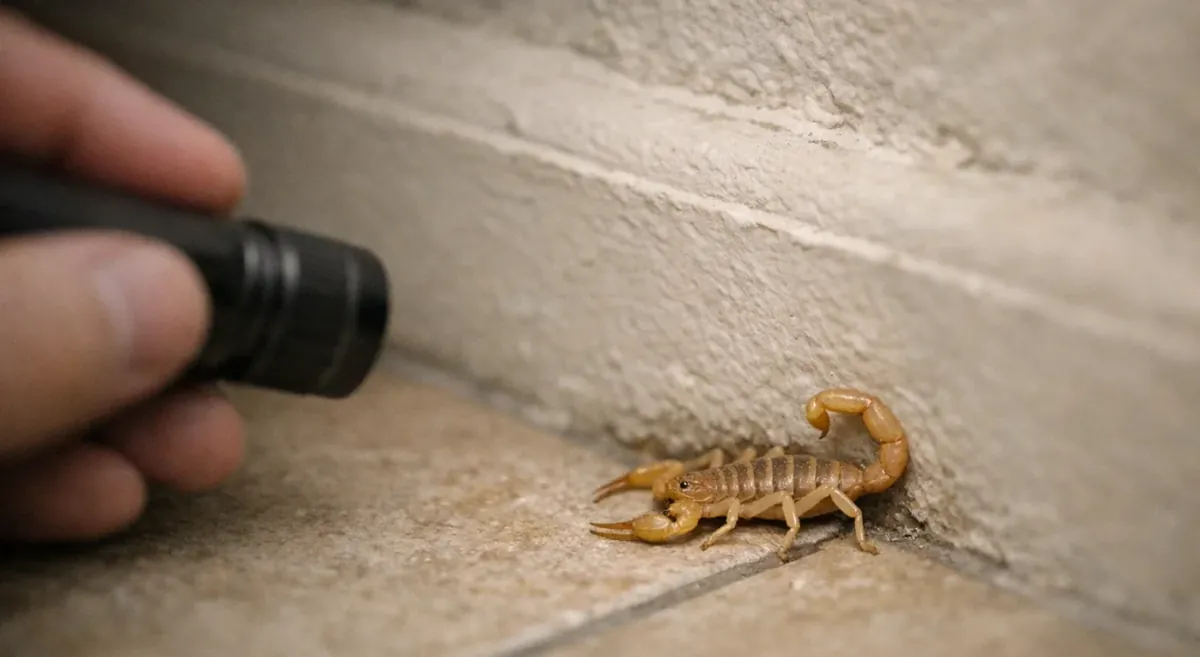
Indoors, they hug the edges — baseboards, bathroom corners, the space behind furniture, and shoes left by the door. The garage often acts as a bridge. It stays dark, it connects to the outside through a wide door, and it links straight into the living space. Knowing how they slip inside helps you close the gaps; our guide to the top ways scorpions get into your home walks through the usual culprits.
Does seeing one scorpion mean there are more?
Not necessarily. A single scorpion right after a storm or a session of moving rocks in the yard is usually a lone traveler. The picture changes when sightings repeat. If you're finding scorpions in different rooms, or one keeps appearing over consecutive nights, you're likely looking at an established route.
Keep it simple with a quick log. Jot down the date, time, room, and which wall or edge you found it near. After a couple of weeks, that little record shows you where activity clusters, so your prevention is targeted instead of random guesswork.
Why do scorpions hug walls instead of crossing rooms?
Scorpions are thigmotactic — they navigate by keeping their bodies against a surface. Open floor makes them feel exposed, so they follow baseboards, wall bases, and furniture edges instead of striking out across a room.
That behavior is useful for homeowners. It tells you where to look and where monitoring pays off: along the perimeter, not the middle of the floor. It also matters at bedtime. While you sleep, those wall-hugging routes are the scorpion's highway, which is why perimeter zones deserve the most attention.
Which scorpions live in Clovis—and what about scorpions across New Mexico?
The scorpion you're most likely to meet in Clovis is the striped bark scorpion (Centruroides vittatus), the most widespread scorpion in North America and the dominant species across eastern New Mexico. Species matters because it shapes what to expect — climbing ability, how often it enters homes, and how a sting tends to feel. When you spot one, snap a photo from a safe distance instead of handling it.
C. vittatus is the most widely distributed scorpion in North America — dominant across Texas, Oklahoma, and eastern New Mexico, with thousands stung each year indoors and around structures.
— Yamashita & Rhoads 2017
Across the rest of the state, the mix shifts by region. Eastern plains towns like Clovis lean toward the striped bark scorpion; southern New Mexico adds more desert and sand species; and cooler, higher-elevation neighborhoods generally see less activity overall.
Is the striped bark scorpion the main one in Clovis?
Yes. Here's a quick ID checklist for the striped bark scorpion:
- Small to medium — usually about 2 to 2.5 inches long
- Tan or yellowish body
- Two darker stripes running down the back
- Slender pincers and a thin tail
It's a capable climber and one of the more common house-entering species, so prevention can't stop at the floor. Textured walls, hanging blankets, and stacked clutter all give it a way up, which means vertical surfaces and clutter bridges matter as much as baseboard gaps.
What are the most common "new mexico scorpion" types homeowners run into?
Homeowners generally bump into two broad groups. Bark-type scorpions (like the striped bark) are slender climbers that readily enter homes and travel walls and clutter. Desert or sand-type scorpions tend to be bulkier ground-dwellers that stay outdoors more and burrow.
The practical difference is where they turn up. Climbers can reach counters, shelves, and beds, while ground-dwellers stick low. Lower, warmer areas — southern and eastern parts of the state — see more activity than cooler high-elevation neighborhoods.
Can Clovis scorpions climb walls or get onto beds?
Yes. The striped bark scorpion climbs textured surfaces well, and it can reach a bed. The usual routes are simple: a blanket or comforter draped to the floor, a bed skirt, or a pile of clothes and clutter touching the bed frame. Any of those acts as a ladder.
Three quick bed-safety fixes go a long way:
- Pull the bed a few inches off the wall.
- Remove bed skirts.
- Keep bedding, blankets, and laundry off the floor.
When is scorpion season in Clovis, NM (and what triggers more sightings)?
Scorpion season in Clovis runs from the late-spring warm-up through summer, with a few fall surprises before cold weather sets in. Activity climbs as nights stay warm, peaks in the heat of summer, and tapers off in autumn. Nights matter most because scorpions are nocturnal hunters — they come out to feed and explore once it's dark.
Picture a Clovis backyard after a July storm. The ground's damp, insects are moving, and a scorpion follows the block wall toward the warm, dry garage. That "why now?" moment is usually a weather or yard change, not bad luck.
What months are worst for scorpions around Clovis?
Summer nights are the peak. June through August is when you'll notice the most activity, with shoulder-season sightings in spring and fall as temperatures swing. Late summer often brings smaller scorpions into view — those are juveniles from the season's broods spreading out to hunt.
What time of day are scorpions most active?
Evening to midnight is the highest-risk window. Poison-center data shows the peak sting hours fall between 6 p.m. and midnight, with a smaller morning bump — which is why so many stings happen while people are asleep or first getting up.
~49% of scorpion envenomations happen between 6 p.m. and midnight, with a secondary peak from 6 a.m. to noon.
— Isbister & Bawaskar, N Engl J Med 2014
One easy habit shift: keep shoes and boots off the floor and give them a quick shake before putting them on in the morning.
What weather or yard changes make scorpions show up suddenly?
A few triggers reliably push scorpions toward the house:
- Rainstorms that flood their outdoor hiding spots
- Heat waves that drive them toward cooler shelter
- Irrigation leaks or overwatering along the foundation
- Moving rock piles, firewood, or stacked materials that disturb harborage
When one of these happens, do a short, focused perimeter check for a few nights rather than reaching for a fogger. Removing what draws them in beats blanket spraying — our list of things that attract scorpions to your home covers the fixes that actually stick.
Are there scorpions in Albuquerque, New Mexico too?
Yes, scorpions can be present in Albuquerque, though neighborhood risk varies a lot with elevation, landscaping, and how close a home sits to open desert or foothills. Some Albuquerque neighborhoods see steady activity; cooler, higher pockets see very little. Scorpions live across New Mexico, so this matters whether you're moving within the state, visiting family, renting, or just trying to understand the bigger picture.
For Albuquerque readers, here's a higher-level checklist — for the full detail, see how scorpions get into your home:
- Keep rock-heavy xeriscaping and block walls away from the foundation
- Clear cluttered garages and stored materials
- Watch homes bordering open desert or foothills more closely
- Seal doors and utility gaps before warm nights arrive
Where in Albuquerque do scorpion sightings tend to happen?
Patterns tend to follow the landscape. Homes at the edge of open desert or the foothills, properties with rock-heavy xeriscapes, block-wall perimeters, and cluttered garages all report more sightings. Cooler, higher-elevation microclimates usually mean less activity than the hotter, lower parts of town — but "less" isn't "none," so it's still worth attention.
If you have scorpions in Albuquerque, should you handle it differently than in Clovis?
The core playbook is the same statewide: reduce harborage, seal gaps, lower the insect population that scorpions feed on, and keep an eye on nighttime perimeter movement. What shifts is timing. Albuquerque's warm-season window can be shorter or longer than Clovis depending on local temperatures and housing style, so adjust when you ramp up prevention — but the moves themselves don't change.
How can I keep scorpions out of my Clovis home—and know if it's working?
A simple three-layer plan handles most Clovis homes: exclusion (seal the ways in), yard and garage cleanup (remove the reasons to stay), and monitoring (know when one gets inside). Do all three and the realistic payoff is fewer surprises and a faster response when something slips through. You won't get to zero — but you'll stop stepping on them at 2 a.m.
What's the fastest prevention checklist to do this week?
Start with the entry points, then work outward. This order keeps it from feeling overwhelming:
- Days 1–2: Install or replace door sweeps, seal threshold gaps, close utility penetrations where pipes and wires enter, and tidy the garage perimeter.
- Days 3–7: Pull harborage away from the foundation — firewood, rock piles, stacked materials — fix any irrigation leaks, and clear indoor clutter bridges near walls and beds.
If you only manage one thing, seal the doors and the garage. That's where most scorpions get in.
How do you confirm scorpion activity without nightly blacklight walks?
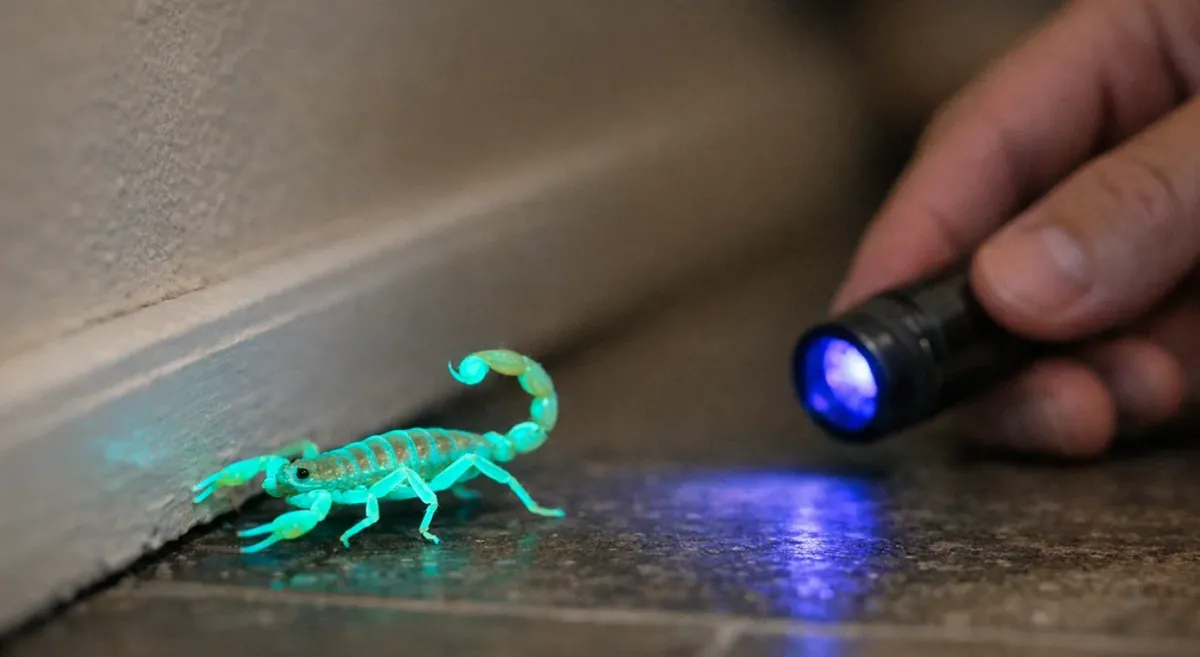
Perimeter monitoring works because scorpions travel edges and baseboards, and because they move at night when you can't see them. The trouble with hunting them yourself is that it means patrolling with a UV flashlight every single night — tedious, and easy to skip on the night it matters most.
Automated detection solves that. Plug-in detectors from Scorpion Alert sit on the room perimeter, activate when the room goes dark, and scan continuously — scorpions glow greenish under 365nm UV light, so the Detector catches that glow and sends a photo-verified alert to your phone within seconds. Place them at entry points, in bedrooms and playrooms, and near water sources like bathrooms and laundry rooms. For anyone navigating scorpions in Clovis, New Mexico, season and safety concerns together, that kind of automated overnight coverage is what turns a guessing game into a manageable routine.
What should you do if someone is stung in Clovis?
Most striped bark scorpion stings in Clovis cause sharp local pain that fades over 15 to 20 minutes and can be managed at home. Here's a calm first-aid sequence:
- Wash the sting site with soap and water.
- Apply a cold pack or ice wrapped in a cloth to ease pain and swelling.
- Remove tight rings, watches, or clothing near the site in case of swelling.
- Stay calm and observe the person for the next 30 to 60 minutes.
Call Poison Control at 1-800-222-1222 for guidance, and don't wait if you see red-flag symptoms: trouble breathing or swallowing, muscle twitching or jerking, roving eye movements, or severe reactions in a young child, an older adult, or anyone with allergies. Children are especially vulnerable — here's why kids are more at risk from scorpion stings. For the complete step-by-step plan, read our bark scorpion sting first-aid guide for the first 30 minutes.
As Clovis heads into peak scorpion season, a little nighttime awareness goes a long way—especially around entry points, cluttered storage areas, and pet spaces where scorpions like to hide. If you want an extra layer of confidence after reading Scorpions in Clovis, New Mexico: Season & Safety, Scorpion Alert uses UV-based visibility and AI confirmation to help you spot activity sooner and respond safely.