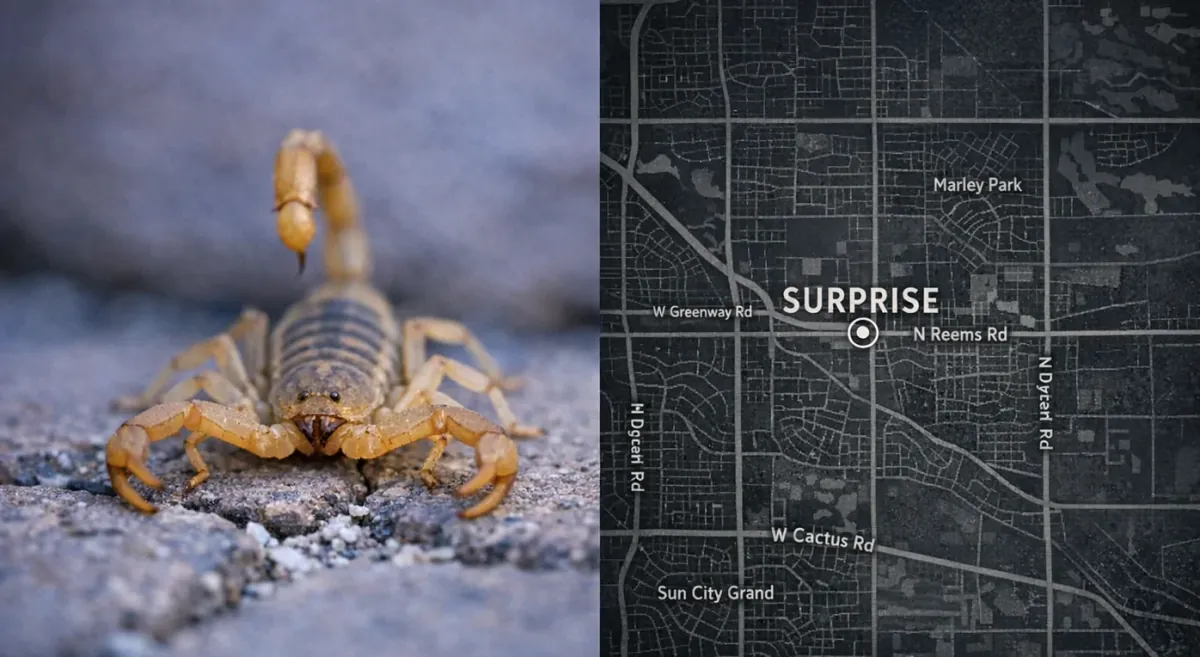
Are scorpions a problem in Surprise?
Yes, scorpions are a significant concern for Surprise homeowners. As part of Maricopa County, which logged 518 scorpion exposures and 794 envenomations in just the first three months of 2026, Surprise sits in the heart of Arizona's scorpion territory. Arizona accounts for 68.2% of all US scorpion exposures, making encounters in Surprise neighborhoods far more likely than in most other parts of the country.
The question isn't whether scorpions exist in Surprise—they do. The real question is whether your specific home and yard create conditions that draw them indoors. Some neighborhoods see frequent activity, while others report only occasional sightings, depending on factors like construction age, landscaping choices, and proximity to desert areas.
What makes Surprise homes feel "scorpion-prone"?
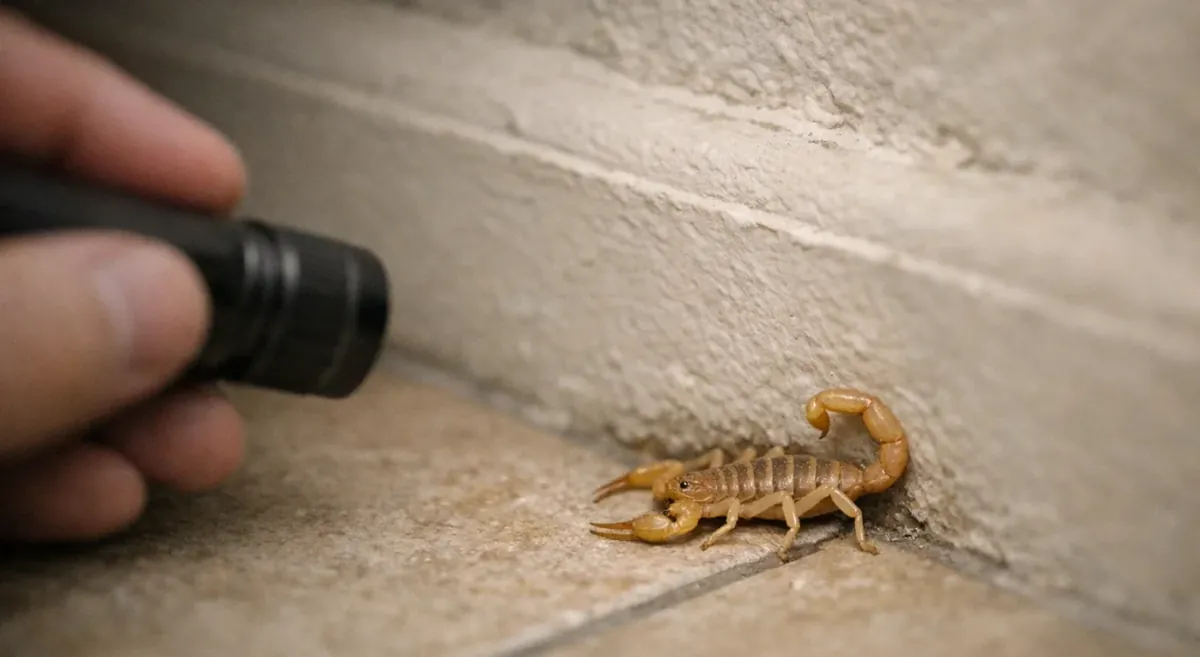
Scorpions enter Surprise homes for three basic needs: prey insects, water, and shelter. They're thigmotactic creatures, meaning they navigate by maintaining contact with surfaces. That's why homeowners typically find them along baseboards, in corners, or traveling edges where walls meet floors. A home becomes "scorpion-prone" when it offers easy access to these travel routes, plus the resources they seek.
Older homes with settling foundations often develop tiny gaps around pipes and cables. Newer construction in Surprise's expanding neighborhoods can disturb established scorpion populations, sending them searching for new territory. Both scenarios increase the likelihood of indoor encounters, especially during the hot summer months when scorpions seek cooler spaces and their insect prey gathers near moisture sources.
Is one scorpion a big deal—or just a random visitor?
A single scorpion might be a wanderer that slipped through a briefly open door. But repeat sightings suggest something more: nearby harborage sites, abundant prey insects, or consistent entry points your home hasn't sealed. Document each sighting with the room, time, and recent weather conditions. If you're seeing scorpions in the same areas repeatedly—especially bathrooms, laundry rooms, or garages—you're likely dealing with an established pathway rather than random visits.
Two or more sightings within a week warrant investigation. Check for cricket populations (a favorite scorpion food), moisture issues that attract insects, and gaps along your home's perimeter. The pattern of your sightings often reveals the underlying attraction.
When should you call Surprise scorpion control?
Call a professional when scorpions move from an occasional nuisance to an active threat. Clear triggers include: someone in your home has been stung, you have young children or pets who play on floors, you're finding multiple scorpions per week, or scorpions have appeared in beds or bathrooms where family members are most vulnerable. These situations demand more than DIY solutions.
A quality scorpion inspection in Surprise should cover both your home's interior perimeter and the full exterior, identifying entry points, harborage areas, and conditions that attract prey insects. The best professionals won't just spray and leave—they'll help you understand why scorpions chose your property and create a comprehensive plan that combines exclusion, habitat modification, and targeted treatments where needed.
Which scorpion species lives in Surprise?
While specific species data for Surprise isn't available through iNaturalist observations, Maricopa County's scorpion population is well-documented. The Arizona bark scorpion (Centruroides sculpturatus) dominates the Phoenix metro area, including Surprise. This species matters most to homeowners because it's the only scorpion in the United States with venom potent enough to cause life-threatening symptoms, particularly in children.
Other species like the giant desert hairy scorpion and striped-tail scorpion also inhabit the region, but they pose far less medical risk. The challenge for Surprise residents is that scorpion identification often happens in stressful moments—like spotting one on your bathroom floor at midnight. Size, color, and behavior provide clues, but getting close enough for detailed identification isn't always safe or practical.
Do Surprise residents have bark scorpions?
Almost certainly yes. The Arizona bark scorpion thrives throughout Maricopa County and has adapted remarkably well to suburban environments. These tan to yellowish-brown scorpions measure 2-3 inches long and have a slender build compared to other species. What sets them apart for Surprise homeowners is their vertical reach—they're the only local species that regularly turns up above ground level, in upstairs rooms and elevated spots.
Bark scorpions seek out cool, dark spaces with some humidity, which describes many areas inside homes. They're also more likely than other species to enter homes in groups, following the same scent trails and entry points. If you're dealing with scorpions in Surprise, statistical probability suggests you're dealing with bark scorpions.
Can scorpions climb walls in Surprise homes?
Yes—and the practical point is that they aren't limited to ground level, so upstairs rooms and beds aren't automatically safe. Bark scorpions can make their way to the second floor and higher, which means you need to check more than floor-level hiding spots. They may turn up behind picture frames, inside closets on hanging clothes, or at a light fixture above a bed—reaching that spot through the ceiling from the attic or a wall void via the gap around the electrical box.
Common entry points include exterior stucco walls near attic vents, interior areas around bathroom plumbing, and garages where stacked storage lets them reach higher shelving. Understanding this three-dimensional movement pattern changes how you approach both inspection and prevention in your Surprise home.
How to get a useful photo for identification (without getting stung)
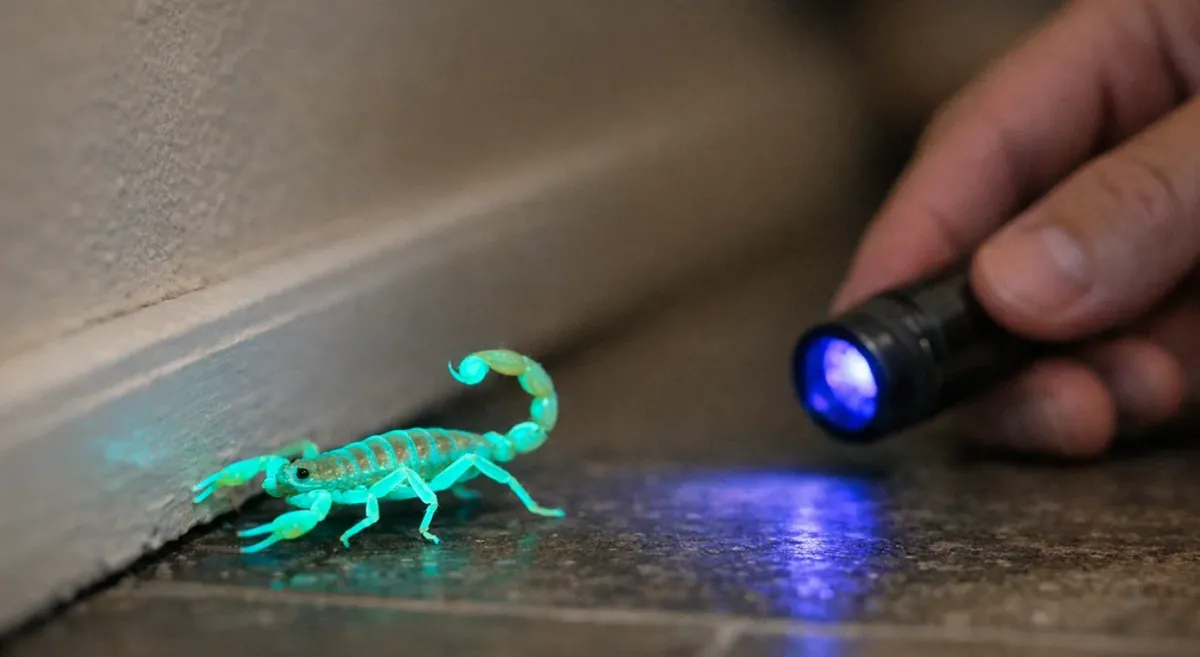
Stay at least 3 feet away and use your phone's zoom feature instead of getting closer. Scorpions can move surprisingly fast when threatened, covering several feet in seconds. If you have a UV flashlight, use it—all scorpions glow blue-green under ultraviolet light, making them easier to spot and photograph against dark backgrounds. Keep children and pets in another room during this process.
Record the location, time, and what the scorpion was doing when you found it. Was it traveling along a wall? Hiding under something? Near a water source? These behavioral details, combined with size and color visible in your photo, help pest professionals identify the species and understand why it entered your home. Never attempt to handle or closely examine a live scorpion for identification purposes.
When are scorpions most active in Surprise?
Scorpions in Surprise follow predictable activity patterns tied to temperature and darkness. Peak activity occurs from late spring through early fall, with the highest encounter rates during August and September when monsoon humidity combines with warm nights. Scorpions are strictly nocturnal hunters, emerging around sunset to search for prey and returning to hiding spots before dawn.
Understanding their nightly behavior helps explain where and when you're most likely to encounter them. Scorpions are thigmotactic, meaning they navigate by maintaining contact with surfaces like walls and baseboards. Between 6 PM and midnight—prime hunting hours—they travel these edges throughout your home, which is why monitoring during peak season focuses on room perimeters rather than open floors.
Many Surprise residents wonder about scorpion mating seasons and reproduction. Scorpions typically mate during warm months, with females carrying live young on their backs for several weeks after birth. This means a single pregnant female entering your home can result in 20-30 baby scorpions, making prevention especially important during peak season.
What months are peak "scorpion season" in Surprise?
March marks the beginning of increased scorpion activity in Surprise as overnight temperatures consistently stay above 70°F. Activity gradually builds through spring, with May and June seeing steady encounters. The real surge comes with monsoon season—typically July through September—when humidity spikes and prey insects flourish. August and September represent absolute peak months, with 49% of envenomations occurring between 6 PM and midnight during this period.
October brings a gradual decline as nights cool, though warm evenings can still see significant activity. By November, scorpion encounters drop dramatically, and December through February represents the quiet season—though scorpions never completely disappear. They simply hunker down in protected spaces, occasionally emerging during unusually warm winter nights.
Where do they go during the day vs. at night?
Daytime scorpions seek tight, dark spaces that retain moisture and stay cool. Inside homes, this means the undersides of appliances, gaps behind baseboards, cluttered closet floors, and spaces between stacked boxes in garages. Outside, they wedge into block wall crevices, under decorative boulders, beneath loose bark, and in the moist soil under potted plants.
Come nightfall, scorpions emerge to hunt, following walls and edges through your home. They're not randomly wandering—they're systematically searching the perimeter where prey insects travel. This predictable behavior explains why automated monitoring systems like Scorpion Alert place detectors along walls where scorpions naturally path, rather than in room centers where they rarely venture.
Do scorpions come inside more during heat or rain?
Both extreme heat and sudden rain drive scorpions indoors, but for different reasons. During peak summer heat, when surface temperatures exceed 115°F, scorpions seek the cooler, stable temperatures inside homes. They'll slip through the smallest gaps around doors and windows to escape potentially lethal heat. Monsoon rains create a different pressure: flooding can drive scorpions from outdoor harborages, while the humidity surge triggers increased insect activity that scorpions follow indoors.
After any significant weather change in Surprise, inspect entry points carefully. Focus on door sweeps, weatherstripping, and utility penetrations. Check bathrooms and laundry rooms where moisture accumulates, as these become scorpion magnets when outdoor conditions turn harsh. The 24-48 hours after a major storm often see the highest intrusion rates.
How dangerous is a scorpion sting in Surprise?
Most scorpion stings in Surprise cause immediate, intense pain followed by numbness and tingling around the sting site—unpleasant but not life-threatening for healthy adults. However, Arizona has the highest rates of severe scorpion envenomation effects in the nation, with some victims experiencing serious neuromuscular symptoms that require emergency treatment. The key factor is which species stung you and your individual risk factors.
Since Surprise sits in Maricopa County where bark scorpions dominate, any sting should be taken seriously. While 88.9% of sting victims report pain at the site and 62.2% experience local numbness, a subset develop systemic symptoms: muscle twitching, difficulty swallowing, blurred vision, or respiratory distress. Children under 10 face the highest risk, with significantly higher rates of hospitalization and ICU admission compared to adults.
The heightened danger for young children stems from their smaller body mass and developing nervous systems. Of patients receiving Anascorp antivenom in Arizona hospitals, 54.4% were under 5 years old and 18.6% were ages 5-9, highlighting how childhood stings often require aggressive medical intervention.
What does a scorpion sting feel like—and what's normal?
The immediate sensation resembles a wasp sting amplified—sharp, burning pain that makes you instantly aware something's wrong. Within minutes, tingling and numbness spread around the sting site, sometimes traveling up the affected limb. This local reaction, while uncomfortable, is considered normal and typically peaks within the first hour before gradually subsiding over 24-48 hours.
Red flag symptoms that indicate a more serious envenomation include: muscle twitching or jerking movements, difficulty swallowing or excessive drooling, roving eye movements, breathing difficulties, or severe agitation in children. According to Dr. Meghan Spyres from Banner Poison and Drug Information Center, "They can also cause involuntary muscle movement — so jerking of the arms and legs — and even more severe, in some cases, it can cause difficulty swallowing. People's eyes can move around in weird directions."
Who is most at risk in Surprise households?
Children represent the highest-risk group, particularly those under 5 years old who play on floors where scorpions travel. Their small body mass means venom concentrates to dangerous levels more quickly. Toddlers exploring at ground level face additional risk because they might not immediately communicate that they've been stung, delaying treatment. Pets, especially small dogs and cats, face similar vulnerabilities.
Elderly residents and those with compromised immune systems also face elevated risk. While healthy adults typically weather a bark scorpion sting with local symptoms, these vulnerable populations may develop systemic reactions requiring medical intervention. Bedroom and nursery encounters pose particular concern since 97.8% of scorpion envenomations happen inside homes, often when victims are unaware of the scorpion's presence.
Is it always the bark scorpion that stings?
Without clear species identification at the time of a sting, you must respond based on symptoms rather than assumptions. While bark scorpions cause the most medically significant stings in Surprise, other species can still deliver painful stings that require first aid. The challenge is that a panicked homeowner rarely gets a good look at the scorpion, and even if they do, distinguishing between species in the moment is difficult.
This uncertainty makes symptom monitoring crucial. Treat every sting as potentially serious until proven otherwise. Call Poison Control at 1-800-222-1222 immediately—they can assess symptoms and guide your response. Don't wait to identify the species before seeking help if concerning symptoms develop, especially in children.
What to do if you're stung in Surprise
First, stay calm and call Poison Control at 1-800-222-1222 immediately for professional guidance. Wash the sting site with soap and water, then apply a cool compress to reduce pain and swelling. Remove any tight jewelry near the sting before swelling begins. Monitor symptoms closely—most adults experience only local pain and numbness, but watch for signs of systemic reaction: difficulty breathing, muscle twitching, excessive drooling, or roving eye movements.
For children under 10 or anyone developing severe symptoms, don't wait—head to the nearest emergency room. Surprise residents have several nearby options with emergency departments experienced in treating scorpion envenomations. Time matters with severe stings, especially for young children who can deteriorate rapidly. Arizona's emergency departments stock Anascorp antivenom specifically for bark scorpion stings.
While managing the medical situation, try to safely contain the scorpion if possible—this helps medical staff confirm the species and may influence treatment decisions. Avoid dangerous responses like trying to crush it with your bare hands or using ineffective home remedies that delay proper care.
Immediate first aid steps (the first 10 minutes)
- Call Poison Control at 1-800-222-1222 — they'll assess severity and guide next steps
- Wash the sting site thoroughly with soap and water to reduce infection risk
- Apply a cool compress or ice pack wrapped in cloth for 10-minute intervals
- Remove rings, bracelets, or tight clothing near the sting before swelling starts
- Keep the stung limb at or below heart level — don't elevate it
- Give over-the-counter pain medication as directed, but avoid aspirin
- Document the time of sting and any symptoms that develop
Keep the person calm and still, especially children who might panic. Movement can accelerate venom circulation, so have them sit or lie down comfortably while you monitor symptoms and wait for Poison Control guidance.
When to call Poison Control or go to the ER
Call Poison Control immediately for every scorpion sting—they're available 24/7 and can quickly assess whether you need emergency care. Go directly to the ER without delay if you observe: difficulty breathing or swallowing, severe muscle twitching or jerking movements, uncontrolled eye movements, excessive drooling or frothing, severe agitation or altered mental state in a child, or any rapidly worsening symptoms.
For children under 5, err on the side of caution. Even if initial symptoms seem mild, young children can deteriorate quickly with bark scorpion envenomation. Poison Control may recommend preventive ER evaluation for very young children even without severe symptoms. The availability of Anascorp antivenom has transformed bark scorpion stings from potential ICU admissions to outpatient treatments when caught early.
If you can do it safely: contain the scorpion for ID
Only attempt capture if you can do so without risk of additional stings. Place a wide-mouth glass or clear container over the scorpion, then carefully slide stiff paper or cardboard underneath. Flip the container upright while keeping the paper pressed against the opening, then secure with tape. This method keeps you safely distant from the scorpion's stinger.
If it's dark, scorpions glow bright blue-green under UV light, making them easier to spot and contain. Never use your hands, even with gloves—scorpions can sting through fabric and their tails reach further than expected. If the scorpion escapes or you can't safely contain it, don't pursue. Medical staff can treat based on symptoms alone, and your safety matters more than species confirmation.
How to keep scorpions out of your Surprise home
Effective scorpion control in Surprise requires a three-layer approach: seal entry points, reduce what attracts them, and monitor for activity. Start with exclusion—scorpions can squeeze through gaps as small as 1/16 of an inch, so thorough sealing is essential. Focus on the most common entry routes: gaps under doors, spaces around plumbing and electrical penetrations, and cracks where the foundation meets walls. This mechanical barrier is your first—and best—line of defense.
Next, eliminate what draws scorpions to your property. They follow prey insects, so controlling crickets, roaches, and other bugs reduces scorpion traffic. Fix moisture issues that attract these prey insects—leaky irrigation, poor drainage, and overwatered landscaping create insect breeding grounds. Many homeowners search for what kills scorpions instantly, but prevention beats any spray or powder.
81.8% of Arizona households that experienced a scorpion sting had previously seen scorpions on the property — past sightings are the strongest predictor of future stings.
— Klotz et al., Am J Med 2021
This statistic is why ongoing monitoring matters. Once scorpions have found your home, they often return using the same pathways. Automated detection systems like Scorpion Alert plug into outlets along walls where scorpions naturally travel, using UV light to spot them in darkness and sending photo alerts to your phone—eliminating the need for nightly flashlight patrols.
Surprise scorpion control starts with sealing the perimeter
Install door sweeps on every exterior door, ensuring they seal tightly against the threshold with no light visible underneath. Pay special attention to garage doors—the gap between concrete and the door bottom creates a highway for scorpions following walls. Use clear silicone caulk around all pipe and wire penetrations, both inside and outside. Don't forget weep holes in brick veneer—stuff them with copper mesh that allows moisture escape while blocking scorpions.
Window screens need tight fits with no tears or gaps at corners. Check where utilities enter your home—air conditioning lines, cable entries, and outdoor electrical outlets often have unsealed gaps. The time invested in thorough sealing pays off quickly. Most Surprise homes can reduce scorpion intrusions by 80% or more through exclusion alone.
Yard and garage changes that reduce scorpions without chemicals
Remove scorpion habitat by eliminating unnecessary ground cover. Wood piles, decorative rock beds, and dense vegetation against your foundation create perfect harborage. Store firewood on raised racks at least 20 feet from the house. Replace river rock with decomposed granite, which doesn't provide the deep crevices scorpions prefer. Trim palm trees regularly—dead fronds harbor both scorpions and their prey.
Adjust outdoor lighting to reduce the insects that attract scorpions. Replace white bulbs with yellow "bug lights" or position fixtures to shine away from the home. Fix irrigation leaks promptly and avoid overwatering, which creates the humid microenvironments scorpions seek. In the garage, swap cardboard boxes for sealed plastic containers, and keep floors clear so scorpions have fewer hiding spots.
Monitoring at night: how to know if your plan is working
Effective monitoring leverages scorpion behavior—they're nocturnal and thigmotactic, traveling along walls in darkness. Manual UV flashlight checks work, but they require dedication: you'd need to patrol your home's perimeter every single night during peak scorpion season. Missing even one night means you could miss a scorpion that enters your living space.
This is where automated monitoring proves valuable. Scorpion Alert detectors plug into standard outlets along room perimeters—exactly where scorpions travel. When darkness falls, each detector activates its 365nm UV light and watches for the characteristic blue-green glow of a passing scorpion. Within seconds of detection, you receive a photo alert on your phone showing exactly where the scorpion is, allowing quick response with a glass-and-cardboard capture. For Surprise families who've already seen scorpions on their property—remember, that's 81.8% of homes that eventually experience a sting—continuous monitoring provides peace of mind that manual checks can't match.
Living in Surprise means staying aware of bark scorpions and the places they like to hide—especially around entry points, block walls, and shaded landscaping—so you can act before a surprise sting happens. If you want an extra set of eyes between nightly UV checks, Scorpion Alert uses AI-powered detection to help you monitor activity and spot patterns so your prevention steps stay focused.