Are scorpions a problem in Spring Valley?
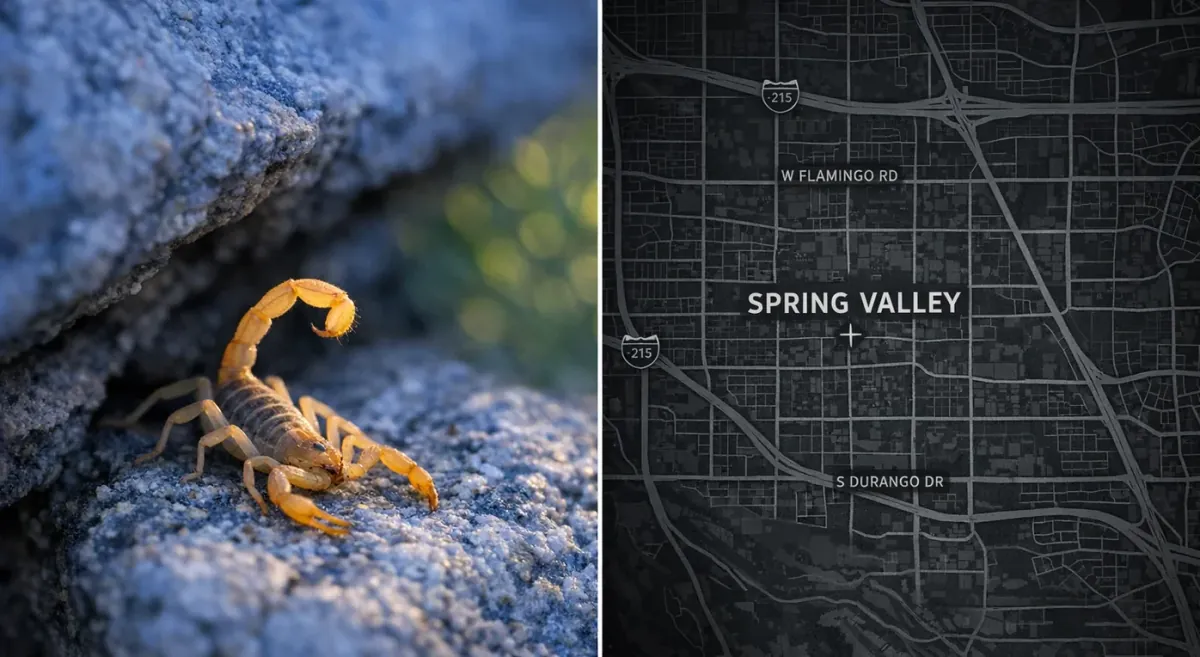
Yes, scorpions are a real and common part of life in Spring Valley. The community sits inside Clark County, one of the higher-risk scorpion zones in the Southwest, and southern Nevada has seen exposure counts rise over the last decade. Most homeowners spot scorpions in the yard first, then eventually indoors along baseboards and thresholds.
Local sightings back this up. Within 30km of Spring Valley, iNaturalist has logged 368 research-grade scorpion observations, with the Arizona bark scorpion the most-reported species. That doesn't mean every yard is crawling with them, but it does confirm they're established here. A 2010–2015 follow-up analysis specifically flagged growing exposure counts in southern Nevada.
Most indoor sightings come down to two things: entry points and nighttime behavior. Scorpions are thigmotactic, meaning they hug edges as they travel, so they can slip under a door at dusk and end up in a back bedroom by midnight.
What kinds of Spring Valley properties tend to see scorpions?
Homes near desert edges, block walls, and rock or gravel landscaping see the most activity. Decorative boulders, retaining walls, wood piles, and irrigated planting beds all create the cool, sheltered harborage scorpions love. Suburban lots that back up to open desert or wash areas tend to have more encounters than tightly packed interior neighborhoods.
Seeing one scorpion doesn't automatically mean an infestation. It often just means suitable habitat sits nearby. But it's a signal worth taking seriously, because where there's one, there are usually others close by.
Why do scorpions end up indoors here?
Scorpions come indoors chasing shelter, moisture, and prey insects — and they get in through surprisingly small gaps. Common entry points include gaps under exterior doors, torn weatherstripping, garage door corners, weep holes, and cracks where plumbing or wiring penetrates a wall. A bark scorpion can fit through a gap about the width of a credit card.
Once inside, that edge-hugging behavior takes over. A scorpion follows the baseboard, rounds a corner, and can end up far from any door. That's why you might find one in a hallway or bedroom and wonder how it possibly got there. For the full breakdown, see our guide on the top ways scorpions get into your home.
Which scorpion species lives in Spring Valley?
The primary species around Spring Valley is the Arizona bark scorpion (Centruroides sculpturatus), which accounts for 167 of the local iNaturalist observations. It's also the only scorpion in the region whose sting is considered medically significant — which is exactly why correct identification matters for the scorpions in Spring Valley, Nevada that homeowners are most likely to encounter.
Other species show up too. Local records include the desert hairy scorpion (Hadrurus arizonensis), Paruroctonus becki (76 sightings), and Paravaejovis confusus (37). These are far less concerning medically, but telling them apart helps guide how urgently you respond and how you plan control.
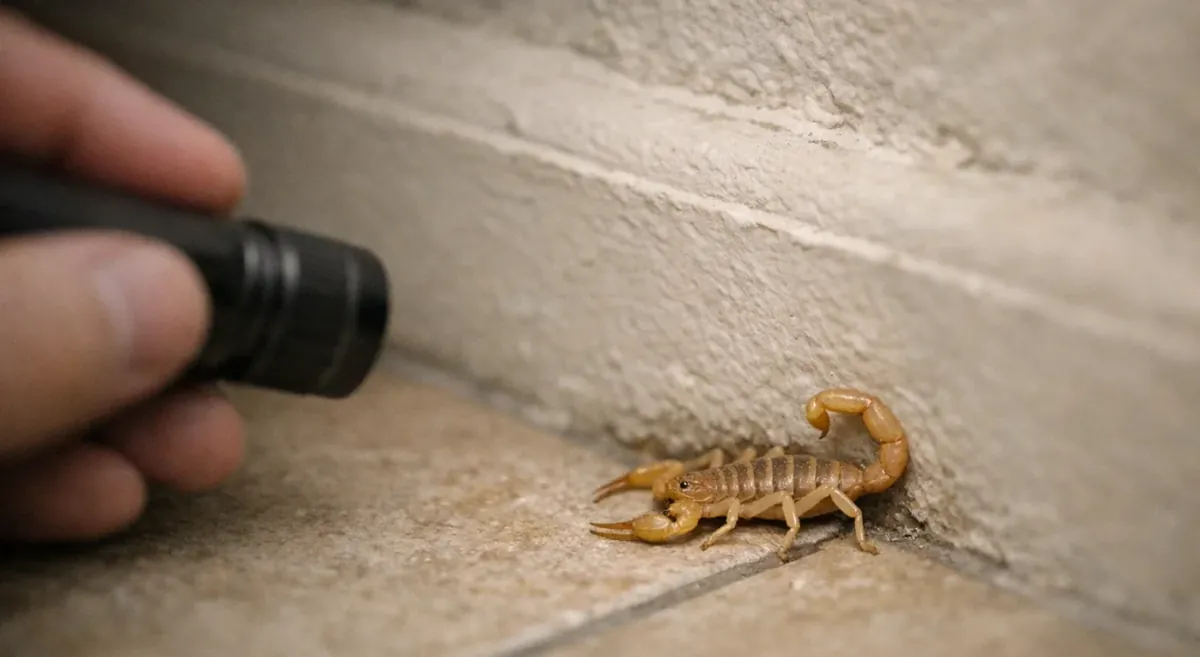
Here's a quick homeowner ID checklist: bark scorpions are light tan to yellowish, slender, and usually 2–3 inches long with thin pincers. They're found high and low — along walls, in closets, even up curtains. Larger, bulky, dark scorpions with thick pincers are typically the harmless desert species.
Arizona Bark Scorpion: what Spring Valley homeowners should know
Bark scorpions favor cool, dark, humid spots — bathrooms, laundry rooms, garages, and bedrooms are classic indoor harborage sites. Their pale, slim build lets them tuck into cracks you'd never notice by daylight. "Small" does not mean "safe" — a juvenile bark scorpion can still deliver a painful sting.
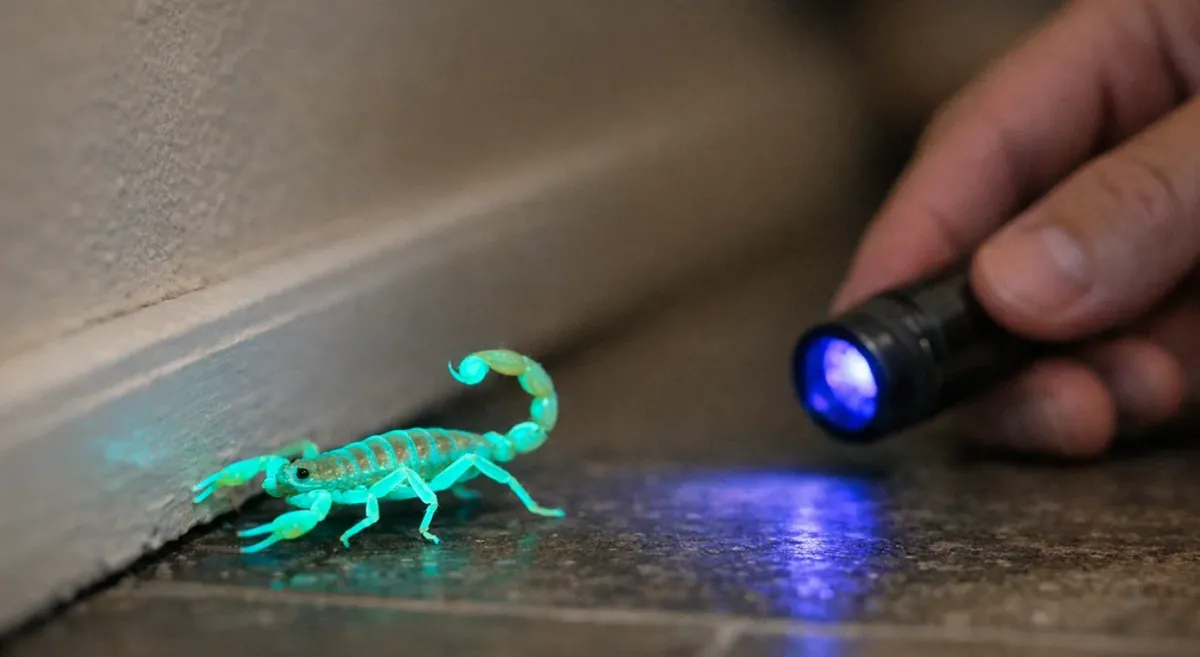
The most reliable way to spot one is with UV light. Scorpions glow a vivid greenish color under 365nm ultraviolet, so a quick UV flashlight sweep can confirm a sighting fast. Never handle one directly, even to identify it.
Can bark scorpions climb walls and end up in beds?
Yes. Bark scorpions are strong climbers and readily scale walls, furniture, curtains, and bedding, which is why they're the species most often found on upper floors and in beds. Rolling over onto a scorpion that climbed a bed skirt is a documented way people get stung.
That climbing ability changes how you prevent stings. Pull beds and cribs away from walls, keep blankets and bed skirts from touching the floor, and check curtains and baseboards before lights-out. Because they climb, a sighting upstairs is entirely normal — not a sign something strange is going on.
Other Clark County scorpions you might see
Not everything skittering across your floor at night is a scorpion. Crickets, small roaches, and certain spiders get mistaken for them constantly in the dark. And among true Clark County scorpions, the harmless desert species can be confused with bark scorpions if you only get a quick glimpse.
The safest way to settle it is a clear photo from a safe distance — no hands-on contact. A good image lets you or an expert confirm the species without anyone getting close to a defensive scorpion.
When are scorpions most active in Spring Valley?
Scorpions are active in Spring Valley from roughly spring through fall, with the peak in the hottest summer months. Warm nighttime temperatures drive them out to hunt, and summer accounts for the overwhelming majority of stings nationwide. You can find them year-round in the desert, but sightings climb sharply once evenings stay warm.
Activity often spikes after weather shifts. A run of hot nights, a summer rain, or a change in yard irrigation can push scorpions to move — sometimes toward the moisture and shelter of your home. Those short-term surges are when indoor surprises tend to happen.
Scorpion season Spring Valley: the months people notice them most
Early season (spring) brings the first yard and garage sightings as things warm up. Peak season — roughly June through September — is when reports jump, including indoor encounters. Activity tapers as nights cool through fall into winter. Summer also overlaps with mating and reproduction, which adds to the number of scorpions on the move.
Why you usually see them at night (and along edges)
Scorpions are nocturnal, so daytime sightings are relatively rare — they spend daylight hours tucked into cracks and shaded harborage. After dark they come out to hunt, and because they're thigmotactic, they travel along baseboards, wall bases, corners, and door thresholds. That's exactly where to look inside if you suspect one.
What to do when activity spikes after dark
A simple evening routine quickly cuts your risk:
- Shake out shoes and slippers before putting them on.
- Never leave towels or clothing piled on the floor overnight.
- Pick up pet food and water bowls after dark.
- Clear floor clutter from bedrooms and bathrooms.
Automated monitoring is built around this dark-hours pattern. Scorpion Alert Detectors only scan when a room is dark — the exact window scorpions are on the move.
How dangerous is a scorpion sting in Spring Valley?
Most bark scorpion stings cause intense local pain but resolve without serious harm, and the vast majority are managed at home. That said, the Arizona bark scorpion is the one species in Spring Valley capable of dangerous systemic effects, especially in young children, older adults, and people with a history of allergies. Nationally, 97.8% of envenomations happen in the home.
What a bark scorpion sting can feel like
Expect immediate, sharp pain at the site — reported in 88.9% of Arizona stings — often followed by tingling and local numbness in about 62.2%. More severe systemic symptoms can include muscle twitching, roving eye movements, and trouble swallowing. Intensity varies with the person, the sting location, and especially age.
Who is most at risk in Spring Valley homes?
Children under 10 have the highest rates of systemic effects, hospitalization, and ICU admission in both Arizona and Nevada cohorts. Pets are vulnerable too, since they spend time low to the floor where scorpions travel. That's why nighttime bedroom protection matters most for the smallest members of the household. For a deeper read, see why children are more at risk from scorpion stings.
When to seek urgent care in Clark County
Call the Poison Help line at 1-800-222-1222 for any sting when you're unsure — they'll tell you if you need more care. Seek urgent care right away for trouble breathing or swallowing, uncontrolled muscle twitching, vision problems, or severe full-body symptoms, especially in a very young child. Two nearby options are Wolfson Medical Center at 6803 W Tropicana Ave and IUVENTUS Medical Center at 4966 S Rainbow Blvd, each about 0.65 miles away.
What to do if you're stung in Spring Valley
Stay calm and act in stages: clean and ice the sting, monitor closely for the next hour, and escalate if severe symptoms appear. Most stings need only home care, but knowing the timeline keeps you from either panicking or missing a red flag.
The first 5 minutes: quick, safe actions
- Wash the sting site with soap and water.
- Apply a cool pack or ice wrapped in cloth to reduce pain and swelling.
- Remove rings or tight jewelry near the sting in case of swelling.
- Keep the person calm and still — anxiety worsens the experience.
- If safe, snap a photo of the scorpion from a distance for ID.
Do not chase the scorpion barefoot, and never handle it to get a better look. For the complete walkthrough, read our bark scorpion sting first-aid guide.
The next 30–60 minutes: monitor and decide
Systemic symptoms usually appear fast. Watch for spreading numbness, muscle twitching, difficulty swallowing, or unusual eye movements. If you call for medical advice, have this ready: the person's age and weight, symptoms and when they started, time of the sting, and whether you suspect a bark scorpion.
Aftercare at home: reducing the chance of a second sting
Once the person is stable, shift to prevention. Clear the floor near beds, check shoes before wearing them, and pay extra attention to the room where the sting happened. Photo-verified nighttime alerts can ease the "is something still in here?" anxiety by confirming what's actually moving in a key room, instead of leaving you guessing in the dark.
How to keep scorpions out of your Spring Valley home
Effective scorpion control in Spring Valley is layered: seal entry points, make the yard less inviting, and add monitoring so you know whether it's working. No single step is a silver bullet, but together they steadily lower your risk.
Seal the most common entry points first (the Spring Valley checklist)
Start with the entry points scorpions actually use, in priority order:
- Install tight door sweeps on all exterior doors, including the garage-to-house door.
- Replace worn weatherstripping around doors and windows.
- Seal garage door corner gaps.
- Screen or seal weep holes and utility penetrations.
- Caulk baseboard-level cracks and gaps behind plumbing.
A weekend walkthrough, room by room with a flashlight, catches most of these. For the full list, see our guide on how scorpions get into your home.
Make the yard less scorpion-friendly without overhauling landscaping
You don't need to rip out your yard — just remove the easy harborage. Clear stacked wood, bricks, and clutter away from the foundation, thin dense ground cover near walls, and keep irrigation from creating constant damp zones next to the house. Because scorpions follow their food, reducing prey insects helps too. Swap white exterior bulbs near doors for warm or yellow LED lighting that draws fewer bugs. Our list of the top things that attract scorpions covers the food, shelter, and water triangle in detail.
Use monitoring so you know if your plan is working
Because scorpions patrol edges, perimeter-based monitoring is efficient — you're watching the routes they actually travel. Focus on high-risk rooms: bedrooms, bathrooms, and the laundry room. Scorpion Alert Detectors plug into standard outlets on the room perimeter, shine 365nm UV light onto the floor, and only scan once the room is dark. When they catch that telltale greenish glow, you get a photo-verified alert with a confidence score sent to your phone within seconds. It's awareness and verification, not a chemical treatment — a way to confirm what's really moving after dark instead of guessing.
When to call a Spring Valley scorpion control pro
Call a professional when you're seeing scorpions repeatedly, when they keep appearing indoors, or when you want help with exclusion and habitat reduction beyond what you can do yourself. Pros can add targeted exterior treatments and seal harder-to-reach gaps. Ask about warranty terms and a follow-up schedule during peak summer. Pair any treatment with monitoring so you can actually confirm results over time — and before you react to that first sighting, review our list of what not to do after spotting a scorpion.
Scorpion Alert rents Scorpion Detectors as part of a simple monthly monitoring subscription — the hardware is included. A one-time shipping fee applies at checkout. See /pricing for current rates. There's no long-term contract; cancel any time by emailing support@scorpionalert.com and returning the Detectors. Visit scorpionalert.com to protect the rooms where your family sleeps.
If you’re dealing with scorpions in Spring Valley, Nevada, the most practical next step is making nighttime checks easier—especially in garages, patios, and along baseboards where they like to roam. Scorpion Alert uses 365nm UV light and automatically activates when it’s dark, helping you spot scorpions where you live without turning a nightly search into a chore—learn more at Scorpion Alert.