Are scorpions a problem in Waco?
Yes — scorpions are a real and common part of life in Waco. Homeowners across McLennan County regularly find them along foundations, in garages, and occasionally inside living spaces, especially in the warm months. The good news is that the local species isn't life-threatening, and most households manage the problem with prevention and monitoring rather than trying to eliminate every scorpion.
Researchers within 30 km of Waco have logged 110 research-grade scorpion observations on iNaturalist, all of them one species. Texas as a whole reports roughly 1,743 scorpion exposures a year to poison control, about 10.3% of the national total, according to Kang & Brooks 2017. So scorpions in Waco, Texas are far from rare — they're just quiet.
Most encounters happen after dark. That's the single biggest reason people are surprised to find one indoors: the scorpion was probably active for hours before anyone spotted it, moving while the house slept.
What counts as a serious scorpion issue vs. a one-off sighting?
A single scorpion on the patio in July is normal. A serious issue looks different: multiple indoor sightings in a week, scorpions turning up in bedrooms or a child's room, repeat stings, or scorpions appearing in more than one room of the house.
Watch for these red flags: frequent activity after dark, scorpions found tucked against baseboards, or any encounter involving a pet or a kid. All of that can justify calling in Waco scorpion control help. One outdoor sighting is a reminder to seal up; a pattern of indoor sightings is a call to act.
Knowing which scorpion you're dealing with — and when it's most active — makes every prevention step smarter. That's where we're headed next.
Why Waco homeowners often miss scorpions until they're inside
Scorpions are nocturnal. They hunt at night and rest in dark, tight hiding spots during the day, which is exactly why you rarely see one until it's already indoors and moving after you've gone to bed.
They also travel in a very predictable way. Scorpions are thigmotactic, meaning they keep their bodies pressed against surfaces and edges — they hug baseboards, thresholds, and the corners of rooms rather than crossing open floor. That behavior shapes both where you'll find them and where nighttime monitoring works best, which we'll come back to in the prevention section.
Which scorpion species lives in Waco?
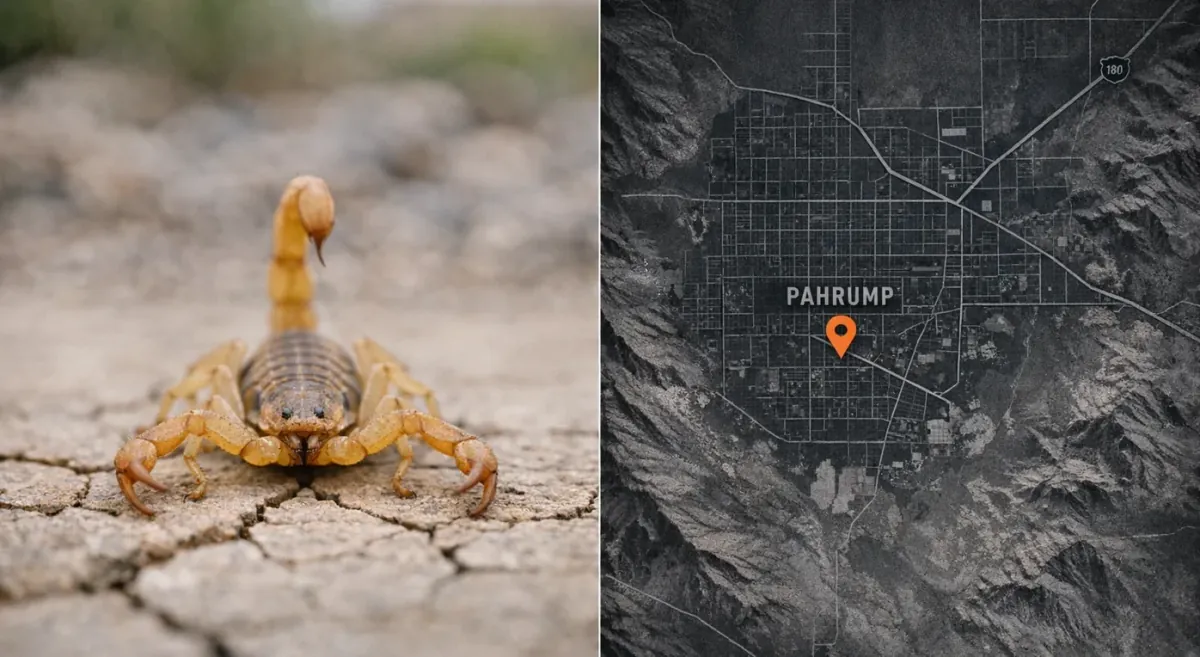
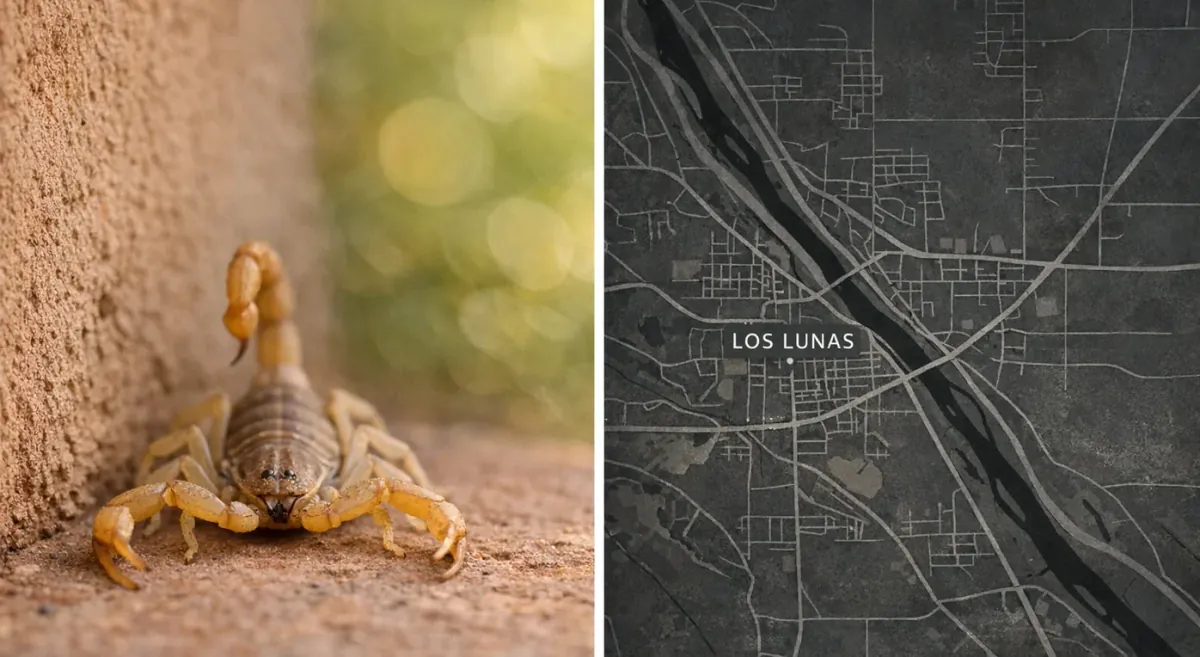
Waco's scorpion is the Striped Bark Scorpion (Centruroides vittatus). Every one of the 110 local iNaturalist records is this species, and it's the one you'll almost certainly meet. It's the most widely distributed scorpion in North America and dominant across Texas, per Yamashita & Rhoads 2017.
It's a tan-to-yellowish scorpion with two darker stripes running down its back. "Bark scorpion" behavior means it likes to squeeze into tight, dark spaces and will happily move indoors under doors and along walls. Correct ID matters, because it tells you the real sting risk and shapes how aggressively you need to respond.
If you spot one, photograph it from a safe distance rather than handling it. A clear photo is all you need for identification.
Striped Bark Scorpion in Waco: quick ID checklist
- Color: tan to light yellowish-brown, often with two dark lengthwise stripes on the back.
- Size: typically 2 to 3 inches including the tail.
- Body shape: slender pincers and a thin, delicate build rather than thick, crab-like claws.
- Hiding spots indoors: baseboards, closets, laundry rooms, and dark corners — anywhere it can press against an edge.
Don't rely on color alone. Lighting, age, and juveniles can all shift the appearance, and a young striped bark scorpion may look paler with faint stripes. Because these scorpions follow perimeter edges, the baseboard and closet sightings make sense — that's their natural highway indoors.
Are there other scorpions in McLennan County?
In and around Waco, the striped bark scorpion is effectively the only species turning up in the record. Other Texas scorpions exist statewide, but they're not what local data shows here, so there's no need to memorize a long list.
Use a simple rule: if a scorpion doesn't match the striped bark profile, treat it as potentially sting-capable anyway and follow the same safety steps. If you're seeing scorpions repeatedly, a local pro can do a Waco scorpion control evaluation and confirm what you're dealing with.
When are scorpions most active in Waco?
Scorpion season in Waco runs strongest through the warm months, roughly late spring into early fall, with peak activity in the heat of summer. Nationwide, summer accounts for the overwhelming majority of scorpion cases, and warm-month evenings dominate the calls, according to Kang & Brooks 2017. That's your window to tighten up routines around the house.
Think of it in two buckets. Outdoor activity climbs as nights warm up — more scorpions on patios, garage floors, and along fence lines. Indoor surprises follow, because heat and dry spells push scorpions toward the cooler, sheltered interior of your home.
Waco scorpion season: what "peak" looks like for homeowners
During peak summer months, expect more sightings overall, more movement after dark, and more patio and garage encounters. Weather drives the spikes: stretches of extreme heat and dry conditions send scorpions and their insect prey looking for moisture and shade, and a rain event can nudge activity too.
Simple habits cut down the surprises. Shake out shoes and slippers before putting them on, check folded towels, and pull beds a few inches off the wall so a scorpion can't step straight from the baseboard onto your sheets.
Why nighttime activity matters (and where they travel indoors)
Peak sting hours run 6 PM to midnight, when nearly half of envenomations occur, per Klotz et al. 2021 and related work — the scorpion is simply doing its hunting then. Because they're thigmotactic, they follow edges: baseboards, door thresholds, and room corners are their indoor routes.
That predictability is useful. It means the smartest place to watch for scorpions is the room perimeter near entry points and high-risk rooms. And because scorpions glow under UV light, they become far easier to spot in a dark room — a fact we'll put to work in the prevention section.
How dangerous is a scorpion sting in Waco?
A striped bark scorpion sting in Waco hurts, but it's not life-threatening for a healthy adult. These stings produce sharp local pain that averages 15 to 20 minutes, and severe systemic reactions are rare — life-threatening envenomation from this species has not been documented, according to Yamashita & Rhoads 2017.
The venom's main toxin targets pain-signaling channels, which explains the intense burning without the whole-body neuromuscular syndrome seen with Arizona's bark scorpion. Severity still varies by person, though, and certain groups deserve extra caution — which is exactly what the next section covers.
Common sting symptoms vs. emergency warning signs
Expected symptoms are local: sharp pain, tingling or numbness at the site, mild swelling, and redness. Pain at the sting site shows up in the vast majority of cases, so it's normal and usually manageable at home.
Get help now if you see emergency signs: trouble breathing, difficulty swallowing, widespread muscle twitching or jerking, unusual eye movements, or intense full-body symptoms — especially in a small child. When in doubt, call the Poison Help line at 1-800-222-1222 for free, 24/7 guidance. With kids, it's always better to overreact than underreact.
Who is most at risk in Waco households?
Children and pets sit at the top of the risk list. Smaller bodies feel the same dose of venom more intensely, and both kids and pets spend time low to the ground where scorpions travel. That's why children are more vulnerable to scorpion stings than adults.
Most home stings happen in ordinary moments — stepping into a shoe or reaching into a storage box where a scorpion was resting. The practical takeaway is to focus your control and monitoring efforts on bedrooms, nurseries, and play areas first.
What to do if you're stung in Waco
Stay calm and treat it as a first-aid situation, not usually an emergency. Wash the area, apply cold, monitor symptoms, and call Poison Help at 1-800-222-1222 if anything worries you. Most striped bark scorpion stings in Waco are handled at home, but knowing the steps helps you stay steady under stress.
First steps: calm, clean, observe, document
- Wash the sting site with soap and water.
- Apply a cold compress or ice pack (wrapped in cloth) for 10-minute intervals to ease pain and swelling.
- Remove any rings or tight jewelry near the sting in case of swelling.
- Keep the limb comfortable and still; over-the-counter pain relief can help.
- Watch symptoms closely for the first hour.
Do not cut the wound, try to suck out venom, apply a tourniquet, or use alcohol "remedies" — these do harm, not good. For a fuller walkthrough, see our guide to scorpion sting first aid in the first 30 minutes. Write down the basics too: the time of the sting, where on the body it happened, and how symptoms change every 15 to 30 minutes.
When to seek medical care in Waco (kids, pets, severe symptoms)
Seek care right away for breathing trouble, facial or throat swelling, uncontrolled pain, muscle jerking, or any systemic symptoms — and lower your threshold sharply for a very young child. The Doris Miller VA Medical Center at 4800 Memorial Dr serves veterans; for general emergencies, head to your nearest full ER or dial 911 if symptoms are severe.
For pets, watch for drooling, agitation, or difficulty moving, and call your vet or an emergency animal hospital if symptoms escalate. Here's the bigger picture: a sting inside the home often means there's unseen scorpion activity indoors — which makes it the right moment to tighten exclusion and add monitoring.
How to keep scorpions out of your Waco home
Effective Waco scorpion control is a layered plan, not a single product. Reduce hiding spots and prey outside, seal the ways scorpions get in, then add nighttime monitoring where they actually travel. Because nearly all scorpion stings happen in the home, keeping them out of the house is where you get the biggest payoff.
Start outside: yard, fence line, and clutter control
Scorpions love clutter and cool, dark shelter near the foundation. Clear wood and rock piles, remove yard debris, and trim back dense ground cover that touches the house. The fewer harborage spots against your walls, the fewer scorpions staged to slip indoors.
Cut the food supply too. Scorpions follow insects, so reducing crickets, roaches, and other prey around the home lowers the reason they show up in the first place. During peak summer months, run these cleanups more often — that's when both scorpions and their prey are most active.
Lock down entry points (the Waco home checklist)
Seal the openings scorpions use most:
- Install tight door sweeps and fresh weatherstripping on exterior doors.
- Close gaps around the garage door.
- Screen or seal weep holes and utility penetrations (pipes, cables, AC lines).
- Repair torn window screens.
Tackle it one room at a time so the project doesn't overwhelm you — start with bedrooms and any room where a scorpion has already turned up. For a deeper look at how they sneak in, read our guide to the top ways scorpions get into your home.
Use monitoring where scorpions actually travel (perimeter + night)
Because scorpions hug walls and baseboards, watching the room perimeter is far more efficient than watching open floor. And since scorpions fluoresce a bright greenish glow under UV light — especially around 365nm — they're easy to detect in a dark room, even when they'd be invisible to the naked eye.
This is exactly how a Scorpion Alert detector works. It plugs into a standard wall outlet on the room perimeter near entry points and high-risk rooms, scans the floor with UV light when the room is dark, and sends a photo-verified alert to your phone within seconds of spotting a scorpion. Instead of stumbling onto one at 2 a.m., you get a heads-up — no nightly flashlight patrols required. Put detectors first in bedrooms, nurseries, and any room with a past sighting, since a prior sighting is the strongest signal that another scorpion will follow.
If you're using traps or sprays: what to expect (and common pitfalls)
Set realistic expectations. Sticky traps can catch insects and the occasional scorpion, but they're messy and unreliable — they work better as a rough finder than a solution, and they don't stop the ones traveling elsewhere. Sprays fade and rarely reach the tight voids where scorpions hide.
The winning approach is layered: exclusion plus habitat reduction plus monitoring, rather than betting on one "magic" product. And if you just spotted one, avoid the panic moves that make things worse — here's what not to do after spotting a scorpion in your home.
In Waco, scorpions tend to move most at night, so knowing where they’re hiding before you reach into shoes, closets, or garage corners can make a real difference. Scorpion Alert helps you spot them using UV-based detection and a two-stage AI check to cut down on false alarms—so you can focus on the places that matter. If you want an extra set of eyes after dark, learn more about Scorpion Alert here.