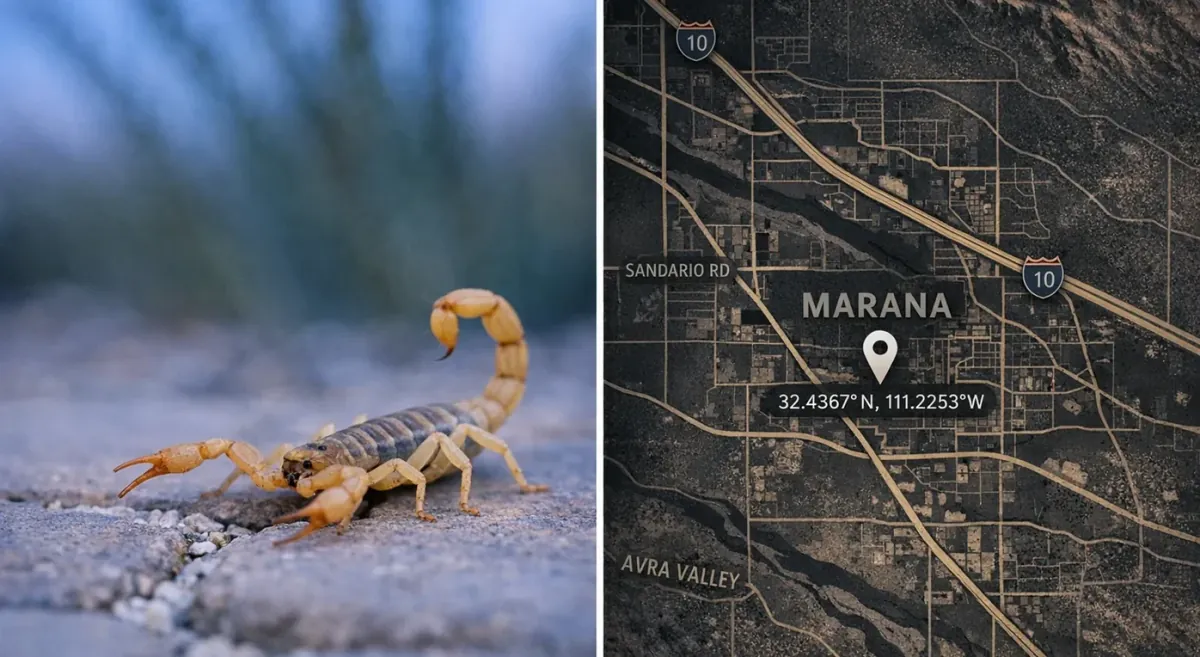
Are scorpions a problem in Marana (including Rancho Marana)?
Scorpions are a fact of desert-edge life in Marana, and occasional sightings are normal — but repeated indoor encounters are a signal, not just bad luck. When you see the same thing week after week, it usually means three things are lining up at your house: a way in, a food supply, and a cool, dark place to hide.
Marana sits where new subdivisions push right up against open Sonoran Desert and wash corridors. That matters. Newly graded lots and brand-new homes often see more scorpion activity in their first few years, because construction disturbs the desert and displaced scorpions look for the nearest shelter — which is now your foundation.
Risk changes lot to lot, too. Homes backing to a wash or open desert, yards with decorative rock piled against the foundation, long block walls, drippy irrigation lines, and cluttered garages all tilt the odds toward more encounters. Two houses on the same street can have very different scorpion problems.
What does "normal" vs. "concerning" scorpion activity look like?
Normal is the occasional scorpion in the yard at night. Concerning is a scorpion in a bedroom or nursery, more than one indoor sighting within 7 to 14 days, or any sting at all. The first pattern is desert living; the second means something is drawing them inside.
Keep a simple log so you're not guessing. Each time you spot one, jot down four things: date and time, the room, which wall or door it was near, and the weather (especially monsoon humidity). A week or two of notes usually reveals the entry point faster than any single sighting could.
Where do Marana homeowners usually find their first scorpion?
Most people find their first scorpion in a garage, laundry room, bathroom, closet, or along a baseboard — cool, dark spots that are often near water. These places check every box a scorpion wants.
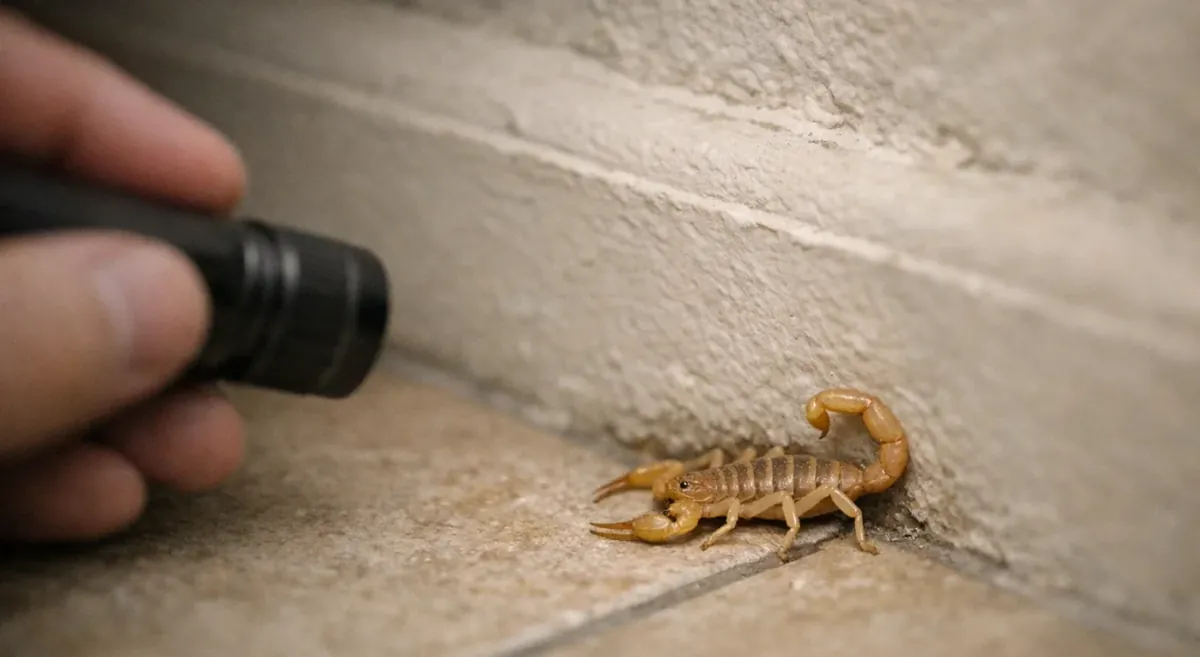
Picture this: you pad into the laundry room barefoot at 11 p.m. and there's a pale scorpion pressed against the baseboard behind the dryer. It's there because scorpions are thigmotactic — they hug edges and walls instead of crossing open floors. That's why perimeter areas matter so much, and it sets you up for smarter monitoring later.
Never handle a scorpion with your fingers. Use a glass and a stiff card, or long tongs, and keep kids and pets clear.
Why do sightings vary between neighborhoods like Rancho Marana and desert-edge lots?
It comes down to microhabitat. Lots close to open desert, washes, and heavy landscape rock have more prey insects and more hiding spots, so they see more scorpions than interior lots a few streets away. Scorpions don't respect city limits — this is a Pima County pattern that plays out block by block.
Renting? You still have real options. You can declutter, ask your landlord for door sweeps and weatherstripping, and add nighttime monitoring — none of that requires owning the home.
When is scorpion season in Marana, and what weeks are worst?
Scorpion season in Marana runs through the warm months, roughly April into October, with the worst weeks during monsoon season in August and September. Warmth plus humidity means more nighttime movement and more encounters. Because scorpions are nocturnal, nearly all of those encounters happen after dark.
Statewide, Kang & Brooks 2017 found August and September are the peak envenomation months in Arizona. For a full breakdown by month, see our month-by-month Arizona scorpion season guide.
Why monsoon season changes everything (even if you don't see more scorpions)
Monsoon humidity brings out the insects scorpions eat, and it drives everyone — bugs and people — into more nighttime activity. Even if the raw number of scorpions holds steady, your odds of crossing paths with one climb.
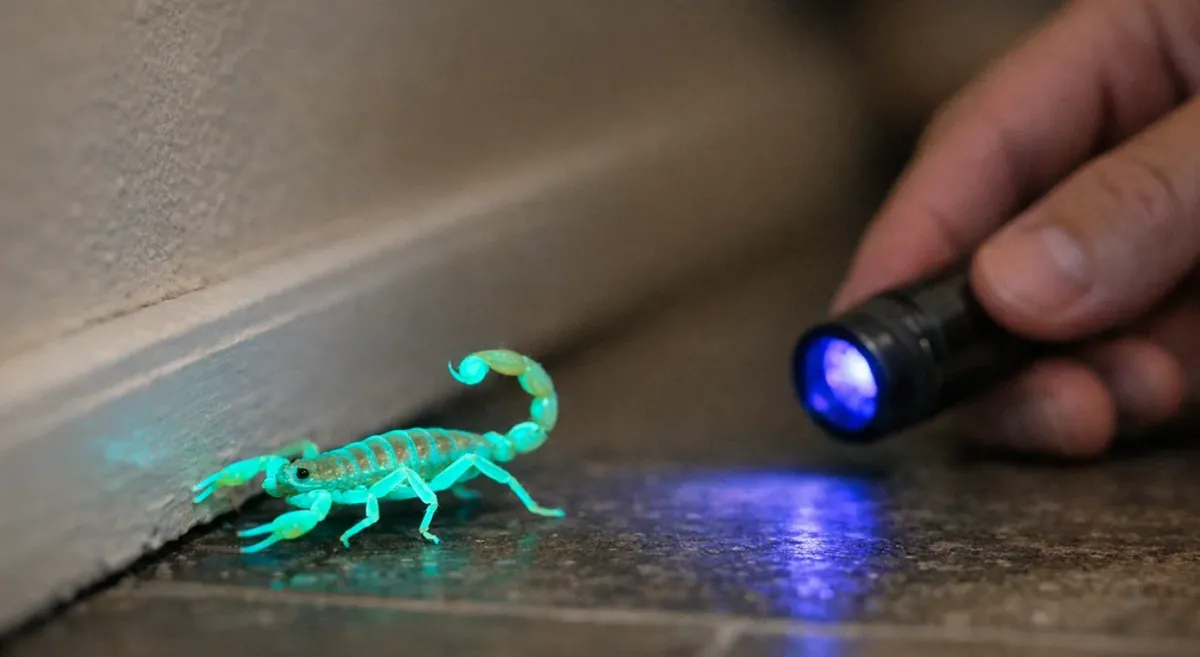
They're still nocturnal, and they light up a vivid greenish glow under UV at night. For peak weeks, a short checklist helps:
- Shake out shoes, towels, and folded laundry before use.
- Pull beds a few inches off the wall and skip floor-length bed skirts.
- Keep floors clear of clutter, especially in kids' rooms.
What rooms become higher-risk during peak activity?
Water-adjacent rooms lead the list — bathrooms and laundry rooms, where scorpions seek moisture. Garage-to-house transitions are next: the interior garage door threshold and the mudroom or laundry entry are classic crossing points. Kids' rooms round it out, because floor toys and clutter create dozens of easy hiding spots.
How dangerous are scorpion stings in Marana, and when should you get help?
Most scorpion stings in Marana are intensely painful but not life-threatening for a healthy adult. The Arizona bark scorpion is the one that can cause serious, whole-body symptoms — and children, older adults, and pets are at higher risk. When symptoms stay local, you usually watch at home; when they spread beyond the sting site, get medical help.
68.2% of all US scorpion exposures reported to poison centers from 2005–2015 happened in Arizona.
— Kang & Brooks, J Med Toxicol 2017
Children under 10 have the highest rates of systemic effects, hospitalization, and ICU admission — which is why any sting on a small child is treated as urgent. Read more on why children are more at risk from scorpion stings.
What are typical sting symptoms vs. red-flag symptoms?
Typical symptoms are localized: burning pain, tingling, and numbness at the sting site, sometimes spreading a short distance. In an Arizona cohort, Klotz et al. 2021 found pain at the site in 88.9% of stings and local numbness in 62.2%.
Red flags mean call for help right away: trouble breathing or swallowing, uncontrolled muscle twitching or jerking, abnormal roving eye movements, severe vomiting, or symptoms that get worse fast. When in doubt, call Poison Control at 1-800-222-1222 for free guidance.
What should you do in the first 10 minutes after a sting?
Act calmly and in order:
- Wash the sting site with soap and water.
- Remove any rings, watches, or tight items near the sting in case of swelling.
- Apply a cool compress and take an over-the-counter pain reliever if appropriate.
- Do not cut the wound, suck out venom, or apply a tourniquet.
- If a child was stung, or if symptoms start spreading, call Poison Control immediately.
Does species ID matter if you're stung?
It helps, but don't waste precious minutes trying to guess by color. If you can do it safely, snap a photo of the scorpion for the medical team. If you're not sure what it was, err on the side of caution and watch closely for red-flag symptoms.
How do you get rid of scorpions in Marana (treatment, spraying, or an exterminator)?
The control plan that actually works follows one order: seal entry points, reduce their food and hiding spots, apply targeted treatment, then monitor at night. Skip the first steps and you're just spraying while new scorpions walk in under the door.
What are the highest-ROI fixes for scorpion control in Marana AZ?
Sealing gives you the biggest return for the least money. Scorpions can flatten through a gap the width of a credit card, so exclusion beats extermination. Focus here:
- Install door sweeps on exterior doors and the interior garage door.
- Add or replace weatherstripping and seal thresholds.
- Fix the garage door side and top seals — a common Marana gap.
- Caulk or foam around plumbing penetrations and utility line entries.
Here's the light test: stand inside a dark room during the day. If you see daylight under a door, a scorpion can get through there. See our full breakdown of the top ways scorpions get into your home.
Does scorpion spraying work in Marana, or is it mostly hype?
Spraying alone is oversold. Many insecticides don't kill scorpions quickly, and their tough exoskeleton shrugs off a lot of contact products. Good pest control works by targeting the prey insects and harborage that draw scorpions in, plus perimeter crack-and-crevice treatment — not by fogging your baseboards and calling it done.
Removing what attracts them is half the battle; our guide to the things that attract scorpions in your home covers it. Before you hire anyone, ask: What exactly do you treat? How often? And what should I change at home to support it?
When should you hire a scorpion exterminator in Marana?
Hire a pro if you have repeated indoor sightings, any sighting in a bedroom or nursery, a sting, or a lot that backs to desert or a wash where you simply can't keep up. Good providers think in integrated pest management terms: they inspect, treat, recommend exclusion, and set a clear follow-up schedule. Avoid anyone who promises spray-only results and never mentions sealing or harborage.
How can you monitor for scorpions at night without constant blacklight walks?
Put a system in place instead of relying on your own vigilance — that's how you monitor without patrolling. Anxiety spikes at 2 a.m., and that's exactly when you don't want to be walking the house with a flashlight. There are three levels of monitoring, from occasional to fully hands-off.
| Method | Effort | Proof | Coverage |
|---|
| Occasional UV flashlight checks | High — you do it manually | Live, but only when you look | Only where you shine it |
| Sticky / passive traps | Low | None until you inspect | Spotty; catches some |
| Automated detection (Scorpion Alert) | None — hands-off | Photo-verified phone alert | Every room with a Detector |
Why perimeter monitoring works (and where to focus indoors)
Because scorpions are thigmotactic, they travel along baseboards and room edges rather than crossing open floors — so you monitor the perimeter first. Prioritize bedrooms, kids' rooms, laundry rooms, bathrooms, and the garage entry.
Protect the bed while you're at it. Pull it a few inches off the wall and remove any bed skirt touching the floor, so a scorpion has no bridge to reach it. Also worth reading: what not to do after spotting a scorpion in your home.
What does Scorpion Alert detect, and how does it reduce false alarms?
Scorpion Alert Detectors plug into a standard wall outlet on the room perimeter and switch on automatically when the room goes dark, scanning continuously overnight when scorpions are most active. Each one shines a 365nm UV light onto the floor and watches for that unmistakable greenish scorpion glow.
When it spots one, it sends a photo-verified push or SMS alert to your phone within seconds, so you're not guessing whether it was a scorpion or a shadow. A two-stage process — on-device plus cloud confirmation — keeps false positives down while keeping the alert fast.
Where should you place detectors for a Marana home layout?
Cover entry points and high-risk rooms first: front and back doors, the garage entry, the patio slider, any pet door, plus bedrooms and the laundry room. Because they're plug-in with no hub, you can add units to expand coverage across the whole house — most Marana homes benefit from several to watch every likely crossing point.
Share app access so the whole family gets alerts, and set overnight push or SMS notifications for peace of mind. When the alert comes in, you grab a UV flashlight and a glass, walk to the Detector that triggered, trap the glowing scorpion, and release it outside — no more stepping into the dark wondering what's on the floor.
For homeowners dealing with scorpions in Marana, Arizona — season after season, sting risk and all — Scorpion Alert offers a rental subscription that puts automated monitoring on autopilot. The hardware is included; pricing is per Detector per month and drops as you add Detectors — see the live calculator at scorpionalert.com/pricing for current rates. There's no long-term contract; cancel any time by emailing support@scorpionalert.com and returning the Detectors. Get photo-verified scorpion alerts for your Marana home with Scorpion Alert.
In Marana, scorpions tend to show up most when the nights are warm and they’re roaming along walls and room edges—so a little planning goes a long way, especially if you have kids or pets at home. If you want a simple tool to help you spot and prevent scorpion activity with less guesswork, visit Scorpion Alert.