Are scorpions a problem in Glendale?
Yes—scorpions are a real concern for Glendale homeowners. Located in Maricopa County—the epicenter of America's scorpion activity—Glendale sits in Arizona's high-risk zone. Across the county, the Banner Poison Center logged 518 scorpion exposures and 794 envenomations in just the first three months of 2026.
That's more than eight scorpion stings per day, and those are only the ones serious enough to prompt a poison control call. Arizona accounts for 68.2% of all scorpion exposures reported to U.S. poison centers, with Maricopa County carrying much of that burden. For Glendale residents, that means there's a very real chance of encountering scorpions both inside and outside the home—especially during the warm months when these nocturnal hunters are most active.
What counts as a "scorpion problem" in a Glendale home?
A single scorpion in your yard doesn't necessarily signal an infestation. But certain patterns should raise your alert level. Finding scorpions inside your home repeatedly—especially in bedrooms or bathrooms—suggests they've found reliable entry points. Seeing juvenile scorpions can also mean adults are breeding nearby, possibly in your walls or attic.
The concern ramps up when scorpions show up where your family is most vulnerable. A scorpion on the bathroom floor at 2 a.m., or one crawling across a child's bedroom wall, quickly goes from nuisance to safety issue. Since scorpions hunt at night when you're least prepared to spot them, even occasional indoor sightings are worth taking seriously.
Why scorpions show up indoors (even when it feels random)
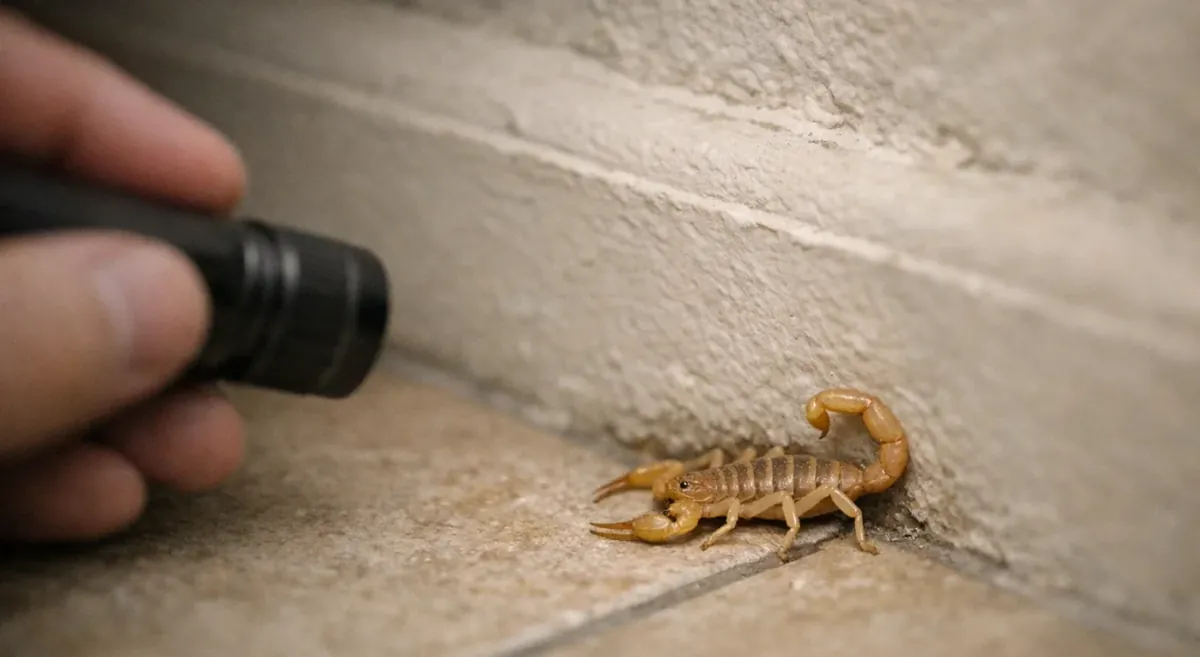
Scorpions don't wander randomly through your home. They're thigmotactic, meaning they navigate by maintaining contact with surfaces. Picture a scorpion entering through a gap under your door—it won't beeline across an open floor. Instead, it'll follow the baseboard, trace along furniture legs, and hug wall corners as it explores.
This edge-following behavior explains why homeowners find scorpions in predictable spots: along bedroom walls, behind toilets, in the corners of closets, or tucked against the washing machine. They aren't targeting these locations specifically. They're simply following the architectural lines of your home—which naturally lead them to the places where you're most likely to encounter them barefoot in the dark.
Are scorpions worse in some Glendale neighborhoods?
Without detailed neighborhood-level data for Glendale, the best approach is to assess your own property's risk factors. Homes backing up to desert washes or undeveloped land tend to see more scorpion activity. Properties with rock landscaping—especially river rock or decomposed granite—provide ideal harborage. Dense groundcovers like lantana or bougainvillea create shaded hunting grounds near your foundation.
Block walls—ubiquitous in Glendale subdivisions—deserve special attention. The hollow cores and settling cracks in these walls create scorpion highways between yards. If your neighbors have scorpions, there's a good chance they're using your shared block wall as a travel corridor. Palm trees with thick skirts of dead fronds essentially hang "vacancy" signs for scorpions seeking daytime shelter.
Which scorpion species lives in Glendale?
While iNaturalist doesn't show a clear primary species for Glendale specifically, that's more about observer reporting patterns than scorpion reality. Maricopa County hosts several scorpion species, but one stands out as the main medical concern: the Arizona bark scorpion (Centruroides sculpturatus). This is the species responsible for virtually all serious envenomations in the Phoenix metro area.
The bark scorpion earned its reputation thanks to a potent neurotoxic venom that can cause severe symptoms, especially in children. Unlike the painful but medically minor stings from other Southwest species, bark scorpion envenomation can trigger muscle spasms, breathing difficulties, and uncontrolled eye movements that require emergency treatment. Children under 10 face the highest risk of severe reactions, with many requiring intensive care and antivenom treatment.
Why iNat may not show a 'primary' Glendale species (and what to do instead)
Citizen science platforms like iNaturalist depend on people photographing and uploading their finds. Most homeowners who discover a scorpion aren't thinking about contributing to a database—they're focused on removing the threat. This reporting bias means the absence of data doesn't equal the absence of scorpions.
For Glendale residents, the practical approach is simple: treat every scorpion as potentially medically significant until proven otherwise. Visual differences between species can be subtle, especially when you're dealing with a moving scorpion in poor lighting. Focus on safe removal first, identification second.
How to tell an Arizona bark scorpion from look-alikes
Bark scorpions have a slender build compared to other desert species. Their pincers are thin and delicate-looking, not the beefy claws of a desert hairy scorpion. Their tail segments are elongated and narrow. Most tellingly, they turn up higher than other desert species—if you find a scorpion up on a wall or in a sink rather than down on the floor, it's almost certainly a bark scorpion.
Color isn't reliable for identification. Bark scorpions range from pale yellow to light brown, often matching the soil in their habitat. Size varies too—adults reach about 3 inches including the tail, but juveniles can be under an inch. Rather than getting close enough to check these features, focus on safe capture and removal.
Do scorpions in Glendale climb walls or end up in beds?
They can end up in beds, yes — and the reason is their reach, not anything targeted. Bark scorpions aren't confined to floor level the way other scorpions are, so they can get to places others can't. Bed skirts and clothes piled on the floor give one a route up onto mattresses and furniture. The practical point: cover upstairs bedrooms and keep bedding from touching the floor, not just ground-level rooms.
Finding a scorpion in your bed isn't random bad luck—it's predictable when bedding or a bed skirt touches the floor and gives one a way up. The same goes for bathroom encounters: they can come up through drains or reach sinks and tubs from adjacent surfaces. These aren't targeted invasions; they're just a reminder that bark scorpions aren't limited to the floor, so upstairs and elevated spots need attention too.
When are scorpions most active in Glendale?
Scorpion activity in Glendale follows two distinct patterns: seasonal peaks through the year and nightly hunting schedules. Understanding both helps you anticipate when to be most vigilant and when to adjust your prevention strategies for Arizona's scorpion season.
The seasonal pattern mirrors Arizona's weather extremes. Scorpions emerge from winter dormancy as overnight temperatures consistently stay above 70°F, typically by late March in Glendale. Activity ramps up through the blazing summer, peaks during the humid monsoon months of July through September, then gradually tapers as nights cool in October and November.
What 'scorpion season' means in the West Valley
For Glendale and the West Valley, "scorpion season" effectively runs from April through October, with August and September marking the absolute peak. During these months, the combination of warm nights and monsoon humidity creates ideal hunting conditions. Scorpions that stayed hidden during the dry early summer become noticeably more active once the rains arrive.
This monsoon connection isn't coincidence. The humidity surge triggers increased insect activity—cricket chirps, flying termites, and ground beetles all multiply during this period. More prey means more hunting scorpions, and more hunting scorpions means more accidental encounters with humans. It's during these peak months that Maricopa County poison control centers see their highest call volumes.
The nightly pattern: why evenings and pre-dawn matter most
Scorpions are strictly nocturnal, but they don't hunt all night long. 49% of envenomations occur between 6 PM and midnight—right when families are active indoors. Another 30% happen in the morning hours between 6 AM and noon, often when people encounter scorpions that hunted all night and haven't yet returned to hiding.
This timing creates maximum conflict with human routines. Evening stings happen when you're walking to the bathroom in dim light or reaching for something in the garage. Morning stings occur when you step into shoes left by the door or grab a towel a scorpion made its way onto during the night. They travel room perimeters in darkness, following baseboards and walls—right where your feet land when you get out of bed.
What increases activity around your house?
Three factors drive scorpions toward homes: prey, moisture, and shelter. Crickets and roaches draw hunting scorpions like magnets. A single leaky irrigation head or dripping hose bib creates an insect oasis that scorpions exploit. Landscape lights attract flying insects, which attract the spiders and ground beetles scorpions hunt.
Shelter opportunities multiply the problem. Stacked pavers, river rock borders, and woodpiles offer perfect daytime hiding spots. Block walls with settling cracks provide protected travel routes. Dense shrubs shade the ground and trap moisture. Each of these features alone might attract a few scorpions. Combined, they can turn your property into a scorpion hub that supplies not just your home, but your neighbors' as well.
How dangerous is a scorpion sting in Glendale?
The danger level depends entirely on which species stings you—and who gets stung. In Maricopa County, where the Arizona bark scorpion dominates, the medical stakes are higher than anywhere else in the country. Arizona has the highest rates of severe scorpion effects nationwide, with more hospitalizations and ICU admissions than all other states combined.
For healthy adults, even a bark scorpion sting typically means hours of intense pain and strange sensations rather than a life-threatening crisis. But for young children, the elderly, or those with compromised immune systems, that same sting can quickly escalate into a medical emergency. This split reality—painful for some, potentially deadly for others—makes every sting worth taking seriously.
What a Glendale scorpion sting usually feels like
The immediate sensation is unmistakable: a sharp, burning pain that radiates from the sting site. Within minutes, 88.9% of victims report intense pain at the puncture point. More concerning is what follows—62.2% experience spreading numbness and tingling that can affect the entire limb or even spread to the tongue and throat.
Beyond pain and numbness, bark scorpion venom can trigger unusual neurological symptoms. Victims describe uncontrollable muscle twitching, a sensation of electric shocks running through their body, difficulty swallowing, and blurred vision. Some report feeling like their teeth are vibrating or their tongue is swollen. These bizarre symptoms help distinguish a bark scorpion sting from other painful but less dangerous species.
Are baby scorpions more dangerous than adults?
Despite the persistent myth, juvenile scorpions aren't more dangerous than adults. They can't inject more venom, they don't have more potent venom, and they can control their venom use. What makes baby scorpions concerning is that they're harder to spot—a translucent juvenile on light-colored tile can be nearly invisible until you step on it.
The real issue with juveniles is what they represent. Baby scorpions don't travel far from where they're born. Finding one inside means adults are likely breeding in or very near your home. A single adult might wander in through a door gap. Juveniles, however, suggest an established population that's already treating your home as part of its territory.
Kids and pets: who's at higher risk in Glendale homes?
Children under 10 face dramatically higher risk from scorpion stings. They have the highest rates of severe systemic effects, hospitalizations, and ICU admissions. Of patients receiving antivenom treatment in Arizona, 54.4% are under 5 years old and 18.6% are between 5 and 9 years. Their smaller body mass means venom concentration reaches dangerous levels faster than it does in adults.
Floor-level activity puts both kids and pets in harm's way. Toddlers crawling on floors, children playing on carpets, and pets investigating new scents all operate in the exact zone where scorpions travel. Dogs and cats often get stung on the nose or paws while investigating these strange glowing creatures. While pets rarely die from stings, they experience significant pain and may need veterinary treatment for severe reactions.
What to do if you're stung in Glendale
Speed matters when responding to a scorpion sting, especially if the victim is a child. Your first priority is to assess whether this is a painful nuisance or a developing emergency. Keep the Poison Help line number handy: 1-800-222-1222. These specialists understand scorpion envenomation and can guide you through the critical first hour.
Most adult stings in Glendale can be managed at home with proper monitoring. But certain symptoms demand immediate medical attention: difficulty breathing or swallowing, severe muscle spasms, roving eye movements, or excessive drooling in children. These neurological signs indicate systemic envenomation that requires professional intervention, possibly including antivenom.
Immediate first aid steps (the first 10 minutes)
First, get the victim away from where the sting occurred—scorpions often hunt in pairs. Wash the sting site with soap and water to reduce infection risk. Remove rings, watches, or tight clothing near the sting before swelling begins. Apply a cool compress to the area for 10-minute intervals, which helps with pain and swelling.
Keep the affected limb still and positioned at heart level. Movement can spread venom through the lymphatic system faster. Don't cut the wound, apply suction, or use electric shock devices—these folk remedies increase tissue damage without removing venom. Skip alcohol and sedatives, too; they can mask important symptoms and interact with potential hospital treatments.
When to call Poison Control vs. go to urgent care/ER
Call Poison Control immediately for any child sting or if an adult develops symptoms beyond local pain and numbness. The specialists can assess severity based on your description and advise whether home monitoring is enough or emergency care is needed. They'll stay on the line to track symptom progression.
Head straight to the ER if you observe these red flags: slurred speech, difficulty breathing, uncontrolled muscle movements, excessive salivation, or roving eye movements. Children showing any systemic symptoms need immediate evaluation—their condition can deteriorate rapidly. Time is critical; severe pediatric envenomations may require multiple vials of antivenom and intensive monitoring.
If you can do it safely: contain the scorpion for identification
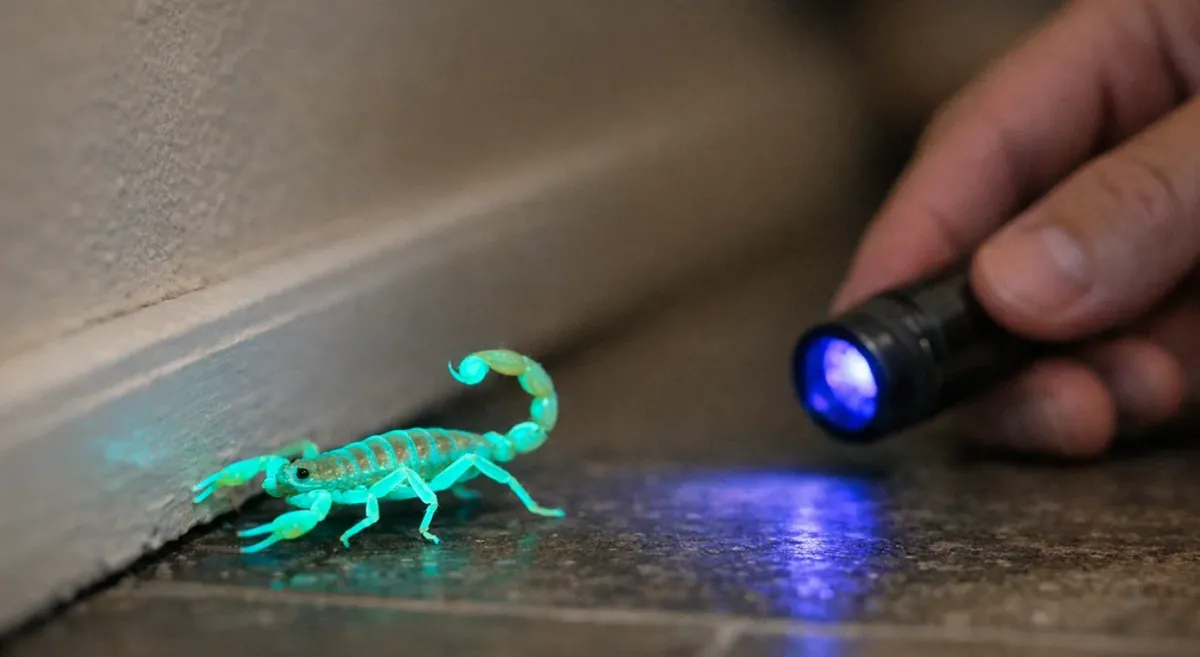
Only attempt capture if the scorpion is still visible and you can do so without risking another sting. Use a clear glass or jar to trap it against the floor—approach slowly, as sudden movements can trigger defensive stinging. Slide stiff paper or cardboard under the glass to seal the scorpion inside. A UV flashlight makes scorpions glow bright green, making them easier to track in dim light.
Never grab a scorpion with your hands, even if you think it's dead. Reflex stinging can occur for hours after death. If capture isn't safe, take a photo from a distance if possible. But remember: starting treatment matters more than perfect species identification. Emergency rooms in Glendale are familiar with bark scorpion stings and will treat based on symptoms regardless.
How to keep scorpions out of your Glendale home
Effective scorpion control starts with understanding how these nocturnal hunters move. They enter homes by following edges and cracks, traveling along foundations and walls where they feel secure. The most common entry points—door sweeps, garage seals, and weep holes—are all fixable vulnerabilities that scorpions exploit night after night.
Success comes from layering multiple strategies: sealing entry routes, eliminating yard harborage, controlling prey insects, and monitoring to verify your efforts are working. Skip any layer and scorpions can find a way around your defenses. The goal isn't perfection—it's making your home far less attractive than your neighbors'.
Start with exclusion: seal the routes scorpions actually use
Door sweeps are your first line of defense. Even a quarter-inch gap under a door can invite scorpions inside—they can compress their bodies to fit through surprisingly small spaces. Install new sweeps on all exterior doors, including the door between the house and garage. Check that sweeps make full contact across the entire width.
Focus next on the garage-to-house interface. This transition zone accounts for countless scorpion entries. Seal gaps around the garage door frame with weather stripping. Fill spaces where pipes or wires penetrate walls with steel wool and caulk. Don't forget the pet door—scorpions see these as open invitations. Consider switching to an electronic door that stays closed unless triggered by your pet's collar.
Reduce outdoor hiding spots and moisture around Glendale yards
River rock and decorative boulders create perfect scorpion habitat against your foundation. If you can't remove them entirely, pull them at least 2 feet away from the house and treat the exposed ground. Trim palm skirts flush with the trunk—those dead fronds can shelter entire scorpion colonies. Stack firewood on raised racks away from walls, never directly on the ground.
Fix irrigation leaks immediately. A single drip head can create an insect buffet that draws scorpions from blocks away. Check for pooling water after each irrigation cycle. Adjust sprinklers hitting walls or pooling near the foundation. Consider converting to drip irrigation, which reduces the moisture zones where prey insects breed.
What actually works vs. what wastes time (sprays, DE, traps)
Most hardware store scorpion sprays provide false confidence. Scorpions walk on the tips of their legs, minimizing contact with treated surfaces. Their waxy exoskeleton resists many pesticides that kill insects effectively. Diatomaceous earth has the same problem—scorpions can simply walk over it without absorbing lethal doses.
Sticky traps catch some scorpions but can create new problems. They fill with dust in garages, reducing effectiveness within days. Trapped insects can attract more scorpions looking for prey. Pets and children also risk getting stuck to them. Plus, checking dozens of traps nightly during scorpion season becomes tedious homework that most homeowners eventually abandon.
Add monitoring so you know if Glendale scorpion control is working
The most frustrating part of scorpion control is not knowing whether your efforts are working until someone gets stung. Traditional advice says to patrol with a UV flashlight nightly, but that's exhausting and easy to skip when you're tired. Miss even one night and you can miss the scorpion that enters while you sleep.
This is where automated monitoring fills the gap. Scorpion Alert detectors plug into outlets along your walls—right where scorpions naturally travel. When darkness falls and scorpions emerge, the detectors watch for that telltale UV glow and alert your phone within seconds. Place them near high-risk areas: master bedroom, kids' rooms, bathrooms, and that garage-to-house door. Instead of nightly flashlight patrols, you get instant notification if a scorpion breaches your defenses, allowing quick capture before it disappears into hiding.
Living in Glendale means staying alert to bark scorpions—especially around block walls, landscaped yards, and warm entry points where they like to hide. If you want a simple way to spot them before they become a surprise indoors, Scorpion Alert uses UV-based detection to make scorpions easier to find and respond to quickly.