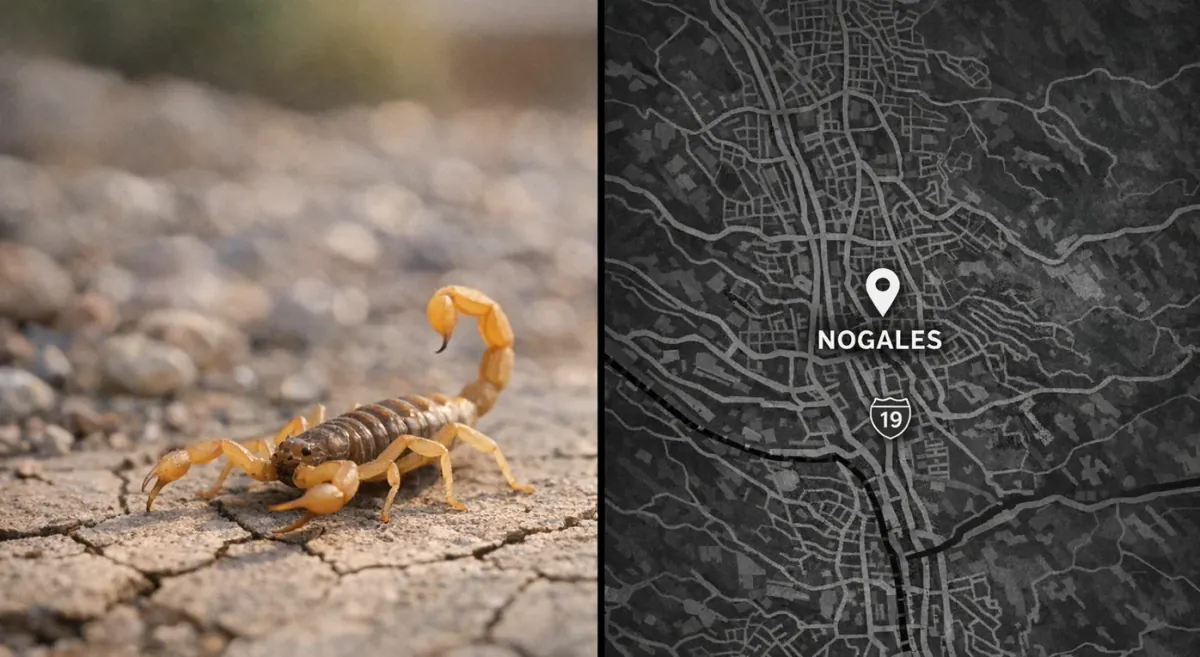
Are scorpions a problem in Nogales?
Yes. Scorpions are a real, ongoing concern for homeowners in Nogales, Arizona, and across Santa Cruz County. The area sits in warm, arid, Sonoran-influenced terrain that scorpions thrive in, and Arizona alone accounts for the vast majority of scorpion encounters nationwide. Sightings can spike in the warm months, and even tidy homes get visitors.
68.2% of all US scorpion exposures reported to Poison Control Centers between 2005 and 2015 happened in Arizona.
— Kang & Brooks 2017, J Med Toxicol
Closer to home, the Arizona Poison & Drug Information Center logged 33 scorpion exposures and 45 envenomations in Santa Cruz County in 2025, according to its annual county report. That's county-wide, not just the city, but it shows scorpion stings are a regular part of life here.
Why can a scorpion in Nogales feel so sudden? Because scorpions are nocturnal. They hide by day and move at night, so you often don't know one is inside until you see it—or step on it.
Where do Nogales homeowners usually spot scorpions first?
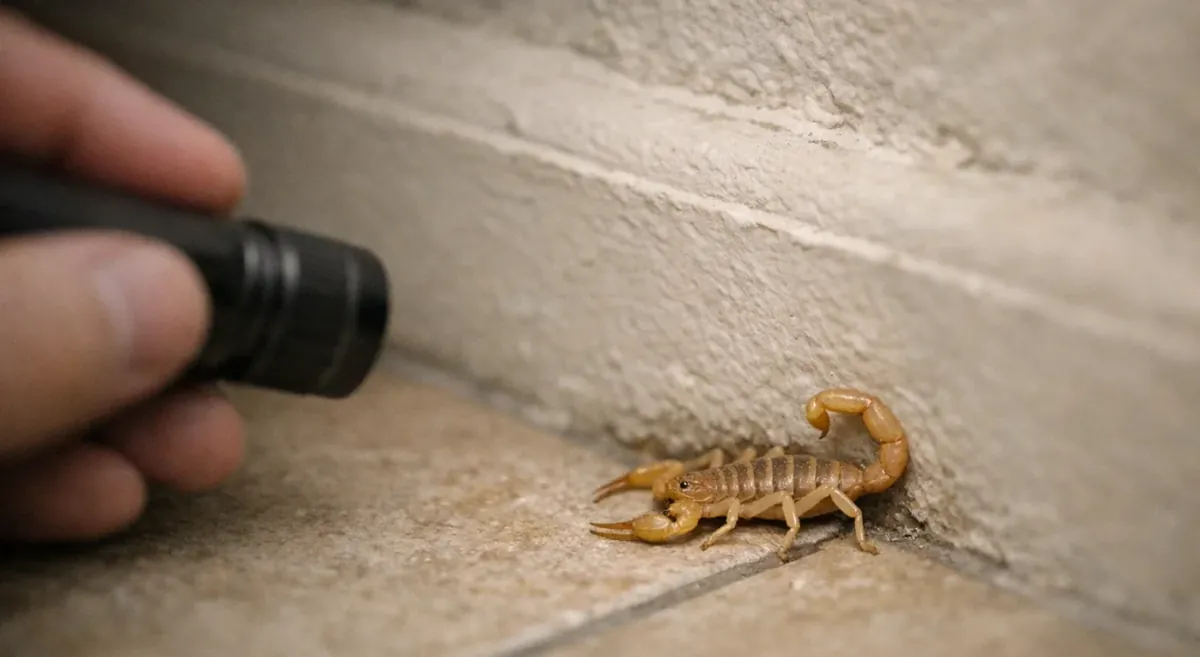
Most first sightings happen in the same handful of spots: along baseboards, in bathrooms and laundry rooms, in the garage, and near pet food and water bowls. These are cool, dark, sometimes humid places—exactly what scorpions look for.
There's a reason sightings cluster near walls. Scorpions are thigmotactic, meaning they navigate by keeping their bodies pressed against a surface or edge. At night, they follow baseboards and the bases of furniture, so the middle of a room is far less likely to reveal one than the perimeter.
Why do scorpions show up in some neighborhoods but not others?
Risk is patchy because it depends on micro-conditions. Homes near desert washes, brushy lots, or rocky landscaping tend to see more activity because those areas shelter both scorpions and the insects they eat. Block walls, decorative rock, and mature landscaping all create daytime hiding spots right up against the house.
Older housing stock adds pressure, too. Aging weatherstripping, gaps under garage doors, and small cracks around plumbing give scorpions easy entry. A newer, tightly sealed home a block away may see far fewer—even in the same neighborhood.
Does one scorpion mean more nearby?
Not necessarily, but it is a reason to inspect and monitor—not panic. A single scorpion could be a lone wanderer that slipped under a door. What suggests repeat activity is a pattern: multiple sightings over a few weeks, lots of prey insects like crickets and roaches indoors, or scorpions turning up in the same room or entry point again and again. Any of those likely means you have a route inside worth closing off.
Which scorpion species lives in Nogales?
iNaturalist doesn't currently show a confirmed primary species for Nogales, so the honest answer is to identify by risk, not by a database. The most plausible species in the Nogales and Santa Cruz County area include the Arizona bark scorpion (Centruroides sculpturatus), stripe-tailed and other Centruroides species, and larger desert hairy or giant hairy scorpions. Treat any unknown scorpion as potentially medically significant until you know what it is.
Do bark scorpions live in Santa Cruz County?
Almost certainly. The Arizona bark scorpion is widespread across southern Arizona, and Santa Cruz County falls squarely within its range. This is the one species in the region capable of causing serious symptoms, which is exactly why homeowners ask. Until a scorpion is positively identified, the safest move is to assume it could be a bark scorpion and act accordingly—especially where children are present.
Quick ID: what to look at (from a safe distance)
You can tell a lot without ever touching a scorpion. Look for these traits from a few feet away:
- Size: bark scorpions are small, roughly 2 to 3 inches, often light tan.
- Tail: bark scorpions have a thin tail; big-bodied species with thick tails and heavy pincers are generally less venomous.
- Pincers: slender pincers often point toward a bark scorpion; bulky claws point toward a hairy scorpion.
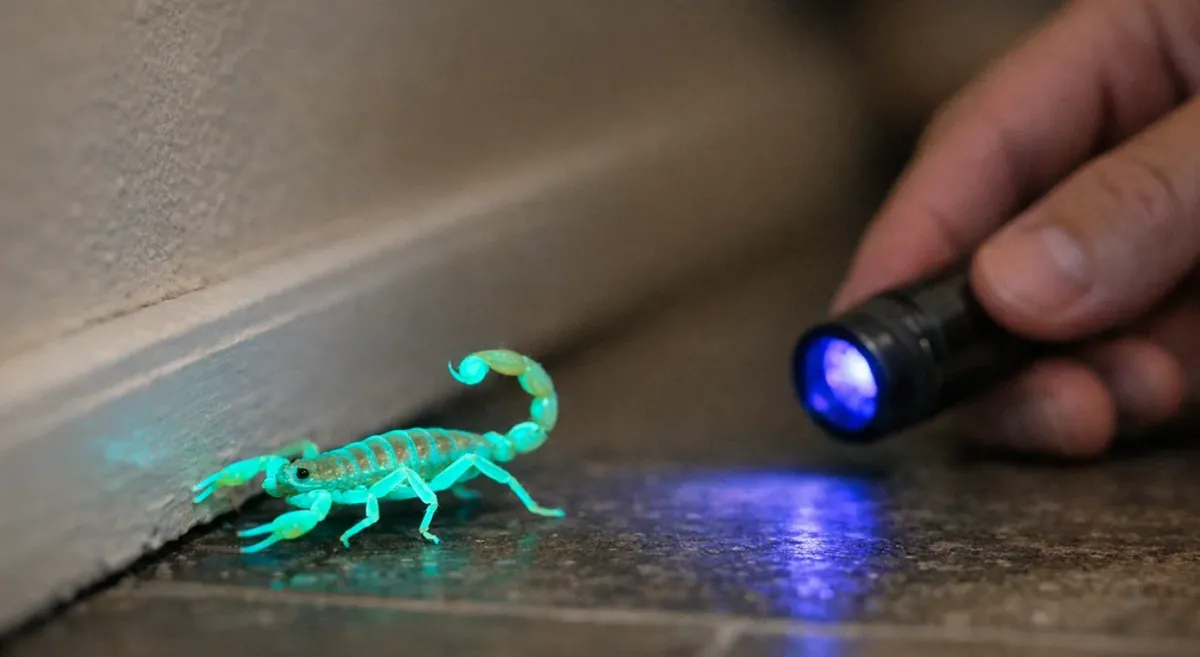
- Color under UV: all scorpions glow bright greenish-blue under 365nm UV light, which makes them easy to spot at night from across the room.
Why iNat data can be "None" for a city (and what to do anyway)
A blank in iNaturalist usually reflects observation gaps, not an absence of scorpions. Small cities get few photo uploads, and casual observers rarely report or correctly identify what they find. Don't read "None" as "no scorpions here." Treat it as a home-exclusion and monitoring problem instead: seal entry points, reduce hiding spots, and keep an eye on the perimeter after dark.
When are scorpions most active in Nogales?
Scorpion season in Nogales runs through the warm months, peaking in the heat of summer. Activity climbs as temperatures rise and typically hits its highest point in August and September, when Arizona sees its most envenomations. During this window, ramp up sealing, decluttering, and nighttime monitoring.
August–September are the peak scorpion envenomation months in Arizona, coinciding with monsoon humidity and warmth.
— Kang & Brooks 2017, J Med Toxicol
Our month-by-month Arizona scorpion season guide breaks the whole year down if you want to plan ahead.
What time of night are scorpions most likely to roam indoors?
The prime window is roughly 6 PM to midnight, with a smaller bump from 6 AM to noon. Nearly half of stings happen in that evening stretch, because scorpions hunt after dark. That's also the hardest time to catch them—you're asleep or winding down. Night-active monitoring helps because it watches the room edges while you can't.
Does monsoon season increase scorpion activity in Nogales?
It often does. Summer monsoon rains raise humidity and drive a surge in the insects scorpions feed on. As outdoor conditions shift, scorpions move more and sometimes press toward the cool, moisture-rich edges of your home. More prey plus more movement usually means more indoor encounters during and just after storms.
Season checklist: what to do before, during, and after the peak
- Before (spring): seal gaps, replace worn door sweeps, and clear yard debris and rock piles near the house.
- During (summer/monsoon): shake out shoes and bedding, keep floors clutter-free at the edges, and run night-active monitoring.
- After (fall): audit where you saw activity, patch any entry points, and knock down indoor insect populations.
How dangerous is a scorpion sting in Nogales?
Most scorpion stings in Nogales are painful but not life-threatening for a healthy adult. The exception is the Arizona bark scorpion, whose venom can cause more serious, whole-body symptoms—and the highest risk falls on young children, older adults, and anyone with prior severe reactions. Arizona also reports the country's highest rates of severe neuromuscular and respiratory effects, so local stings deserve respect.
Pain at the sting site shows up in nearly 88.9% of cases, and local numbness in about 62.2%, according to an Arizona cohort study (Klotz et al. 2021).
What does a scorpion sting feel like (and what symptoms matter)?
Expect immediate burning pain, then tingling or numbness spreading from the site. That's the common, manageable picture. Watch closely for concerning symptoms: difficulty breathing or swallowing, severe muscle twitching or jerking, roving or uncontrolled eye movements, drooling, or intense agitation—especially in a child. Those signal a serious reaction and need medical care right away.
Who is most at risk from stings in Nogales homes?
Children under 10 carry the highest risk of systemic effects, hospitalization, and ICU admission. Older adults and anyone with a history of strong reactions come next. Small pets can also react badly. Because kids are so vulnerable, it's worth reading our guide on why children are more at risk from scorpion stings.
Does the scorpion's size tell you how dangerous it is?
No. Size is a poor safety guide. The small, unassuming bark scorpion is the most venomous species in the region, while some of the largest scorpions you'll see are relatively mild. Take every sting seriously, prioritize identification, and lean on medical guidance rather than guessing from how big the scorpion looked.
What to do if you're stung in Nogales
Stay calm and act quickly. Most stings can be managed at home, but knowing when to escalate matters. Wash the area, apply cold, watch symptoms closely, and call Poison Control at 1-800-222-1222 for free, 24/7 guidance. That single call can tell you whether you can stay home or need an emergency room.
The first 10 minutes: a calm, step-by-step plan
- Move away from where the scorpion is so no one gets stung again.
- Wash the sting site with soap and water.
- Remove rings, watches, or tight clothing near the sting in case of swelling.
- Apply a cold pack wrapped in cloth to ease pain and swelling.
- Keep the person still, calm, and watched for the next several hours.
For more detail, see our bark scorpion sting first-aid guide.
When to call Poison Control vs. when to go to the ER
Call Poison Control (1-800-222-1222) for essentially any sting to get expert triage. Go straight to the ER—or call 911—if the person is a young child with strong symptoms, or if anyone has trouble breathing or swallowing, severe muscle twitching, abnormal eye movements, or pain and agitation you can't control. Antivenom (Anascorp) can reverse serious symptoms fast, and in a randomized trial symptoms resolved within four hours in 8 of 8 treated children versus 1 of 7 given placebo (Boyer et al. 2009).
If you can do it safely: how to identify or document the scorpion
Snap a photo from a safe distance, never handle it, and note which room it was in. That information helps medical staff and helps you understand where activity is happening. A UV flashlight will make any additional scorpions glow along the baseboards if you need to check at night. Photo-verified monitoring alerts do the same job automatically, logging the date, time, and room so you're not guessing.
How to keep scorpions out of your Nogales home
Effective scorpion control in Nogales comes down to three things: block entry, remove hiding spots and prey, and monitor at night. Prioritize the entry pressure points common to local homes—older door seals, garage thresholds, gaps around plumbing, and block-wall foundations—then cut back the yard conditions that draw scorpions close.
Because 97.8% of scorpion envenomations happen in the home, keeping them out is the whole game. Reducing what attracts them is step one, and our list of the top things that attract scorpions in your home is a good place to start.
Your 30-minute Nogales scorpion audit (inside + outside)
- Check the gap under every exterior door, especially the garage; add or replace sweeps.
- Inspect where plumbing and wiring enter walls under sinks and behind appliances.
- Walk the baseboards in bathrooms, laundry rooms, and bedrooms—your highest-probability zones.
- Outside, pull rock, wood, and debris piles away from the foundation and trim brush back from the walls.
- Fix moisture issues: drips, irrigation leaks, and damp spots that draw prey insects.
Can scorpions climb walls in my Nogales house?
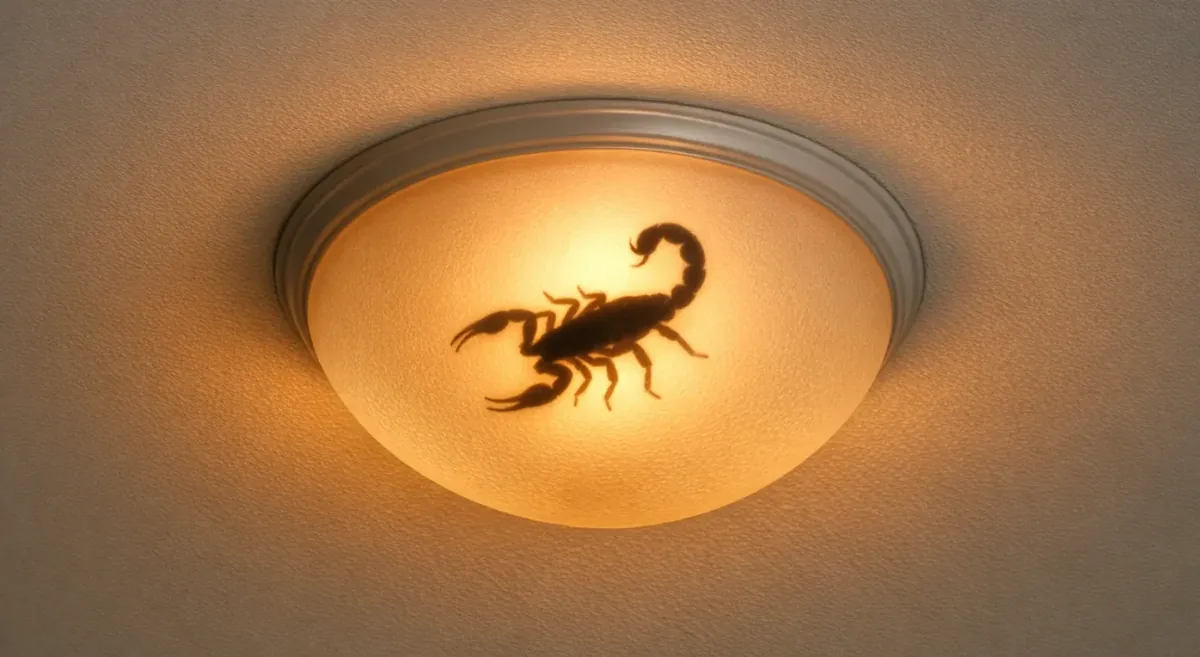
Yes, bark scorpions can climb vertical surfaces, including interior walls, and they can reach upper floors. They can also get into beds by scaling a bed skirt. That's why prevention focuses on cutting off routes: keep bedding and blankets off the floor, pull beds away from walls, and remove bed skirts. Since scorpions hug edges as they travel, concentrate your attention and any monitoring along the baseboards rather than the middle of the room.
Monitoring that actually helps you sleep: catching nighttime activity early
Most families miss scorpions because they're quiet, nocturnal, and active while you sleep. Sticky traps are messy and unreliable, and nobody wants to patrol the house with a flashlight every single night. Perimeter-based detection solves that: Scorpion Alert Detectors plug into standard wall outlets right where scorpions travel, shine 365nm UV light onto the floor, and watch for the telltale glow only when the room is dark. When one appears, you get a photo-verified push or text alert within seconds, so you know exactly which room to check.
If you're already seeing scorpions: what to change this week
- Knock down insect populations indoors; scorpions follow their food.
- Tighten door sweeps and weatherstripping on every exterior door.
- Declutter floor edges and clear items from under beds and along baseboards.
- Store shoes off the floor and always shake them out before wearing.
- Add night-active monitoring near entry-adjacent outlets and in bedrooms first, since past sightings are the strongest predictor of a future sting.
And before you react to that next scorpion on the wall, read what not to do after spotting a scorpion in your home so you don't turn a sighting into a sting.
Scorpion Alert rents Detectors as part of a simple monthly monitoring subscription, with the hardware included and no long-term contract. Pricing runs per Detector per month, starting at $3.50 for a single unit and sliding down to a $2.00 floor at ten or more, plus a one-time shipping fee at checkout. Cancel any time by emailing support@scorpionalert.com and returning the Detectors. If you're dealing with scorpions in Nogales, Arizona, automated night-active detection is one of the easiest ways to finally sleep easy — get started with Scorpion Alert.
In Nogales, scorpions are most active after dark, so consistent night checks and reducing hiding spots around your home can make a real difference. If you want an easier way to spot activity sooner, Scorpion Alert uses UV-based detection with AI confirmation to help monitor your property so you can respond before a surprise encounter.