Are scorpions a problem in Portales?
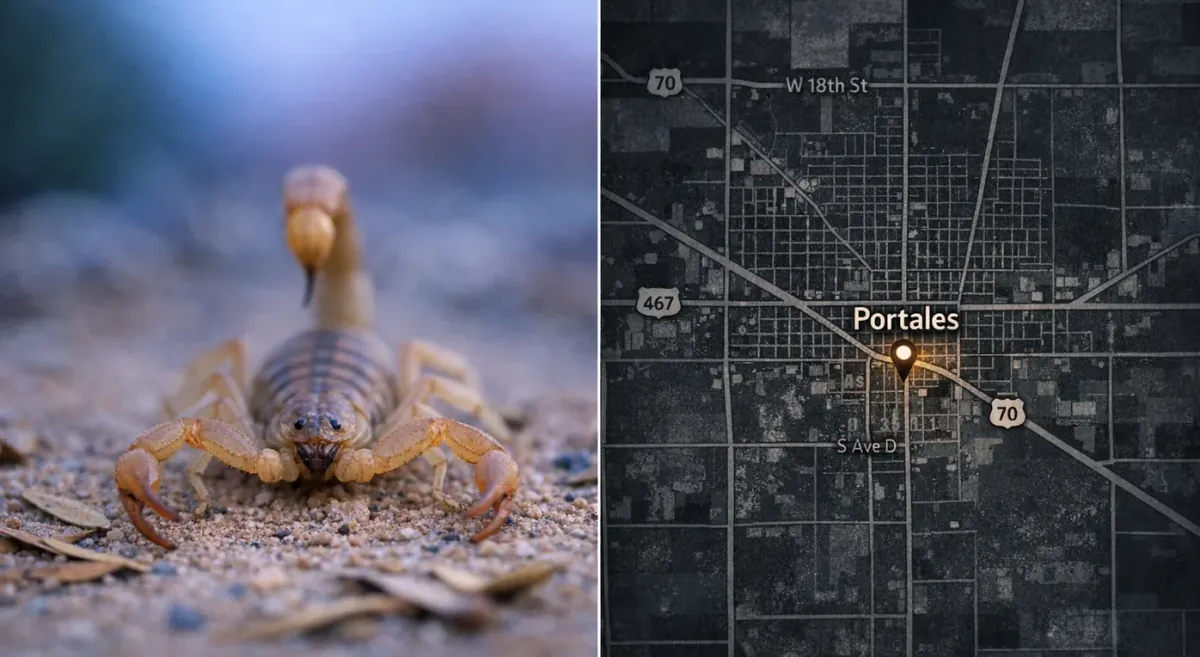
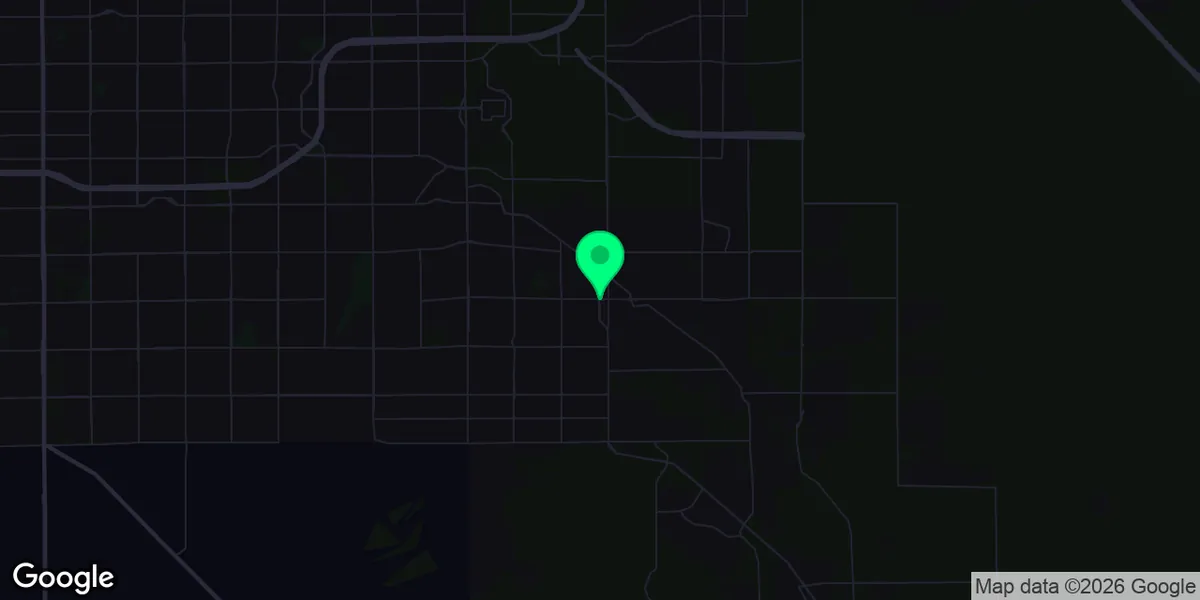
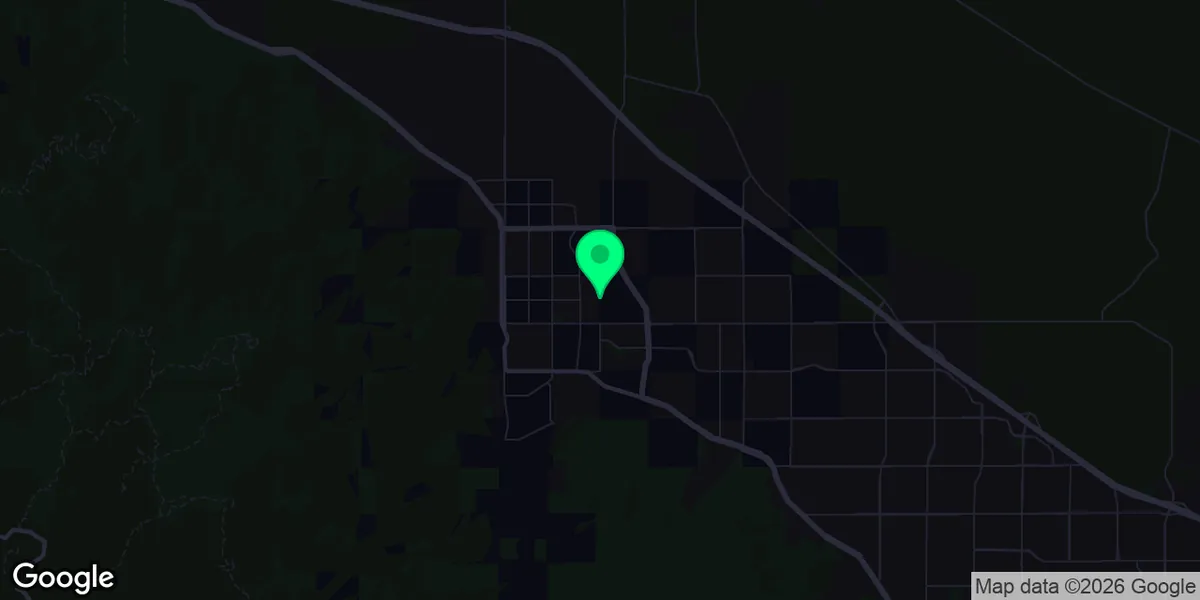
Yes — scorpions are a genuine concern for Portales homeowners, and the local relevance here is high. Sitting in Roosevelt County on the eastern plains of New Mexico, Portales has the warm, dry conditions scorpions favor. For most people, "a problem" means the occasional sighting on a wall or floor. For others, it turns into recurring indoor activity that calls for a real plan.
There's a big difference between the two. A single scorpion that wandered in through a gap under the door is a one-off nuisance. A pattern of repeated sightings — especially in the same rooms — points to nearby harborage and a food supply that's keeping them close. The rest of this guide will help you tell those situations apart and respond accordingly.
What makes Portales homes and yards attractive to scorpions?
Scorpions follow food and shelter, not people. Around Portales, that means the dry, dusty hiding spots common on the high plains: rock piles, stacked firewood, landscape timbers, cinder-block walls, outbuildings, and cluttered garages. Anything that stays cool, dark, and undisturbed during the day is a candidate.
The bigger driver is prey. Scorpions eat crickets, roaches, spiders, and other small insects. If your yard or garage has a steady bug population, scorpions have a reason to stick around. That's why controlling insects matters as much as sealing gaps — a point worth keeping in mind when you read about the top things that attract scorpions to your home.
Where do people in Roosevelt County usually find them?
Check these spots first: bathrooms, laundry rooms, garages, and bedrooms indoors; wood piles, rock borders, block walls, and outbuildings outdoors. Scorpions gravitate toward cool, humid pockets, which is why plumbing areas come up so often.
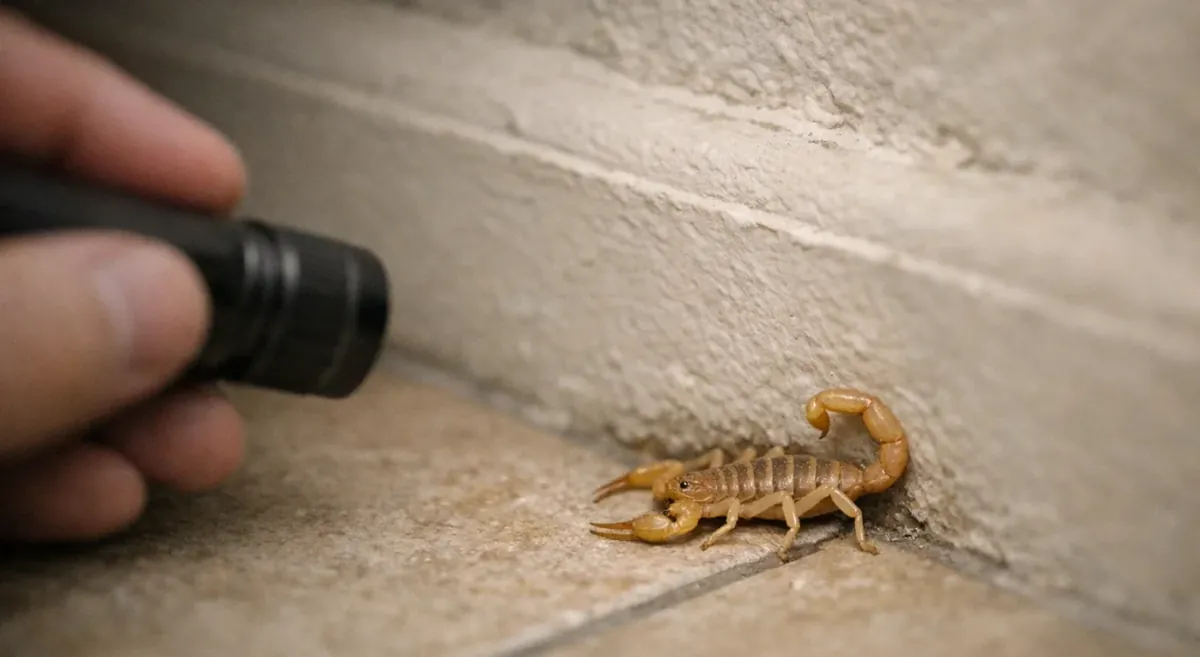
They tend to travel along edges rather than crossing open floor. Scorpions are thigmotactic — they navigate by keeping a body surface in contact with a wall or baseboard. So you'll usually spot them hugging a baseboard, tucked into a corner, or along the edge of a cabinet — not out in the middle of the room. That single behavior tells you exactly where to look and where monitoring pays off.
Does one scorpion mean there are more?
Not necessarily — but it's worth paying attention. A lone scorpion in the middle of winter is often an accidental wanderer. Several sightings over a few weeks, live young, or repeated finds in the same room suggest a nearby harborage feeding activity into your house.
A simple decision rule: if you see one scorpion, seal obvious entry points and keep an eye out. If you see two or more in a short span, find them in the same room repeatedly, or spot them where children sleep, it's time to escalate to a real scorpion control plan for your Portales home — exclusion, prey reduction, and monitoring together.
Which scorpion species lives in Portales?
The species most often recorded in and around Portales, New Mexico is Chihuahuanus russelli, commonly called Russell's Scorpion, based on research-grade observations logged on iNaturalist within 30km of the city. It's a native desert-plains species, not one of the medically severe bark scorpions found farther west.
Russell's Scorpion (primary iNat species): what homeowners should notice
Russell's Scorpion is a modest-sized, sandy-to-tan scorpion that blends easily with the pale soils around Portales. Look for a fairly slender build with proportionate pincers and a tail that isn't dramatically thick. You're most likely to find it in dry, sheltered micro-habitats — under rocks, along foundation edges, and in garages.
Photo ID can be tricky. Lighting changes how a scorpion's color reads, and a tan scorpion can look almost yellow under one bulb and gray under another. When in doubt, get a clear photo rather than trying to nail the species by eye.
Do Portales scorpions glow under blacklight?
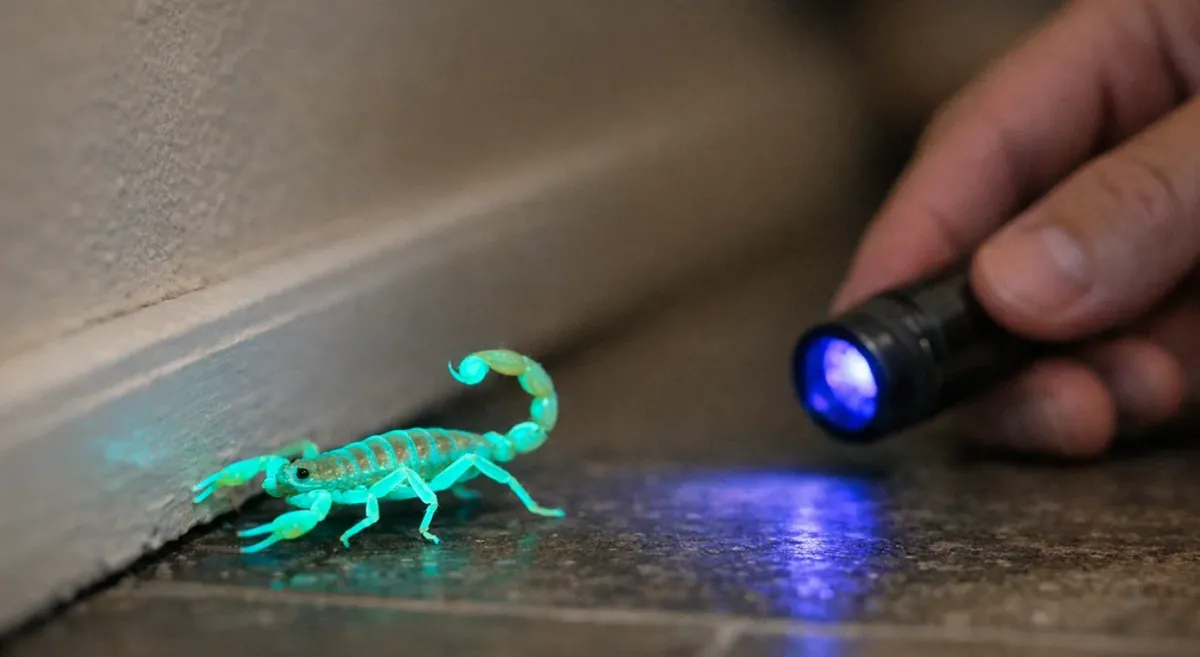
Yes. Nearly all scorpions fluoresce a bright greenish-blue under ultraviolet light because of compounds in their cuticle. A 365nm UV light turns a nearly invisible scorpion into an obvious glowing shape on the floor — which is exactly why UV is the gold standard for nighttime detection.
If you go looking with a UV light, watch where you step, and keep kids and pets back until you've located and contained the scorpion. A glowing scorpion is still a live scorpion.
Are there multiple scorpion types in the Portales area?
Yes. Alongside Russell's Scorpion, local iNaturalist records also include the striped bark scorpion (Centruroides vittatus) and a sand scorpion (Paruroctonus utahensis) within Roosevelt County. Species matters because it affects sting intensity, behavior, and preferred hiding spots. Rather than handling one to figure out which is which, snap a clear photo from a safe distance — it helps with both ID and, if needed, medical care.
When are scorpions most active in Portales?
Scorpions are active in Portales from spring through fall, with a clear peak during the hot summer months. Nationwide data shows summer dominates scorpion activity, with warm-month evening hours driving the overwhelming majority of cases. Activity spikes after dark, and scorpions travel along room perimeters — which is why nighttime, edge-focused monitoring works so well.
Scorpion season Portales: what to expect month-by-month
Think of it as a curve. Early season (roughly April–May) brings the first movement as nights warm up. Peak season lands in the deep summer, June through August, when heat keeps scorpions hunting nightly. Activity tapers through September and October as nights cool. Watch for surprise shoulder-season nights — an unusually warm evening in early spring or late fall can wake scorpions up well outside the expected window.
Why you see scorpions after weather changes
Rain and irrigation shifts can move scorpions. A soaking rain or a change in yard watering pushes insects around, and scorpions follow the prey. Dry stretches can drive them toward moisture indoors — bathrooms and laundry rooms especially. After a weather change, check baseboards and damp rooms that night, and shake out shoes and check corners the next morning.
What time of night are scorpions active indoors?
Scorpions are nocturnal, and indoor activity clusters in the evening and overnight hours — the same 6 PM to midnight window that dominates sting data. Because they hug walls, a sweep along baseboards, door thresholds, and the edges of laundry and bathroom floors before bed will catch them on their natural travel routes. Those perimeter paths are where you'll find them.
How dangerous is a scorpion sting in Portales?
For most healthy adults in Portales, a scorpion sting is painful but not dangerous — closer to a bad wasp sting than a medical emergency. The species recorded locally, led by Russell's Scorpion, aren't the life-threatening bark scorpions of Arizona. That said, reactions vary by person, so certain groups should take any sting more seriously.
Pain at the sting site is by far the most common effect. In one large cohort, pain was reported in 88.9% of stings and local numbness in 62.2%. Most stings are managed at home, but knowing the red flags matters.
Common symptoms vs. red-flag symptoms
Typical local symptoms include immediate burning pain, tingling, mild swelling, and numbness that spreads a short distance from the sting. These usually ease within hours.
Red-flag symptoms mean get help right away: trouble breathing or swallowing, severe muscle twitching or jerking of the arms and legs, roving or jerking eye movements, slurred speech, or intense full-body symptoms — especially in a child. Symptoms can escalate over the first hour or two, which is why watching the person closely after a sting matters as much as the first-aid step itself.
Who is at higher risk in Portales households?
Young children, older adults, and anyone with a known allergy or heart or breathing condition should treat a sting with extra caution. Children are the biggest concern — data consistently shows kids under 10 have the highest rates of severe reactions, a pattern worth reading more about in why children are more at risk from scorpion stings. Households with small kids, pets, floor-level sleeping, or cluttered rooms should be especially proactive about keeping scorpions out.
Does scorpion size or color change sting danger?
A common myth says smaller scorpions are always more dangerous. That's not a reliable rule. Sting severity depends on the species and the person stung, not on how big or what color the scorpion looks. Rather than guessing from appearance, focus on species ID and symptoms — and when you're unsure, take a photo and monitor the person.
What to do if you're stung in Portales
Stay calm — most stings in Portales are treated at home. Clean the area, apply a cold compress, watch for red-flag symptoms, and call Poison Control at 1-800-222-1222 for free, 24/7 guidance. If severe symptoms appear, head to Roosevelt General Hospital at 42121 US-70 in Portales (about 2 miles from town center, phone 575-359-1800).
First 5 minutes: what to do immediately
Move through these steps in order:
- Wash the sting site with soap and water.
- Apply a cold compress or ice pack (wrapped in cloth) to reduce pain and swelling.
- Remove rings, watches, or anything tight near the sting in case of swelling.
- Take an over-the-counter pain reliever if appropriate, and keep the person calm and still.
- Note the time and start watching for any spreading or full-body symptoms.
Do not cut the wound, try to suck out venom, apply a tourniquet, or take extra sedatives or painkillers hoping to get ahead of it. Panic-driven mistakes cause more harm than the sting itself. For the full early-response playbook, see scorpion sting first aid for the first 30 minutes.
When to call Poison Control vs. when to go in
Use this simple tree. If symptoms are limited to pain, tingling, and mild swelling, call Poison Control at 1-800-222-1222 and follow their guidance at home. If the person has trouble breathing or swallowing, muscle twitching, abnormal eye movements, or severe whole-body symptoms — or if the person stung is a young child — go to Roosevelt General Hospital or call 911. If you're in Portales at night and unsure, Poison Control is staffed around the clock, so call them first; they'll tell you whether a trip to the ER is needed.
If you can do it safely: identify or document the scorpion
A clear photo helps both medical staff and pest control. Photograph it from a safe distance with good light — there's no need to touch it. If you want it contained, the safest method is the glass-and-paper trick: place a glass over the scorpion, slide a stiff piece of paper underneath, and lift. Scorpions glow under UV light, so a UV flashlight makes it much easier to spot and approach one at a controlled distance rather than fumbling in dim light.
How to keep scorpions out of your Portales home
An effective scorpion control plan works on four fronts: exclude them, reduce their prey, remove their hiding spots, and monitor for activity. Because scorpions travel along edges, edge-focused strategies — sealing perimeter gaps and watching baseboards — give you the most bang for your effort. Layer in low-effort monitoring so you find scorpions before they find you.
Portales exclusion checklist (indoors + outdoors)
Do these in order, highest-impact first:
- Install or replace door sweeps on exterior and garage doors — the gap under a door is the number-one entry route.
- Seal gaps around thresholds, and screen or fill weep holes and utility penetrations.
- Caulk cracks in the foundation and around window frames.
- Tighten up the garage-to-house transition, where scorpions often slip through.
For a broader rundown, review the top ways scorpions get into your home and prioritize the gaps you actually have.
Yard and garage fixes that reduce hiding spots and food
Fewer bugs means fewer scorpions. Trim back vegetation touching the house, move wood piles and rock borders away from the foundation, and keep outdoor lighting from drawing clouds of insects to your doors. In the garage, store items in sealed bins raised off the floor, and pull clutter away from the walls — those wall-hugging piles are exactly where scorpions like to shelter and hunt.
Night monitoring: blacklight walks vs. automated detection
Scorpions glow under UV and are most active after dark, so a UV flashlight can reveal one in seconds. The catch: scorpions are nocturnal every single night, and nobody wants to patrol their baseboards at 2 a.m. indefinitely. That's the gap automated monitoring fills.
Scorpion Alert takes a different approach. The Detectors plug into standard wall outlets right on the room perimeter — where scorpions naturally travel — and shine 365nm UV light onto the floor. When the room is dark and a scorpion's greenish glow appears, the system sends a photo-verified alert to your phone within seconds. You grab a glass and a UV flashlight, go to the room that triggered, and capture it. It's a "know sooner" layer that runs itself, and it's especially worth adding in any room where a scorpion has already turned up.
Sticky traps, by contrast, are a weak substitute. They catch some scorpions but miss many, they get gummed up with dust and insects — which can actually draw more scorpions in — and they leave you guessing whether the coast is clear. To see the mistakes that make a scorpion problem worse, read what not to do after spotting a scorpion in your home.
Scorpion Alert rents Detectors through a monthly monitoring subscription — the hardware is included, and the per-Detector rate drops with every unit you add, plus a one-time shipping fee at checkout. There's no long-term contract; cancel any time by emailing support@scorpionalert.com and returning the Detectors. See current rates on the live pricing calculator.
In Portales, scorpions can be easy to miss until one turns up in a hallway or near a bed—so it helps to have a way to spot them before there’s a close encounter. Scorpion Alert uses UV light (scorpions naturally fluoresce) plus two-stage AI detection to help identify activity at night and give you clearer, actionable information. If you want an extra layer of awareness alongside sealing entry points and staying vigilant, learn more at Scorpion Alert.