Are scorpions a problem in Payson?
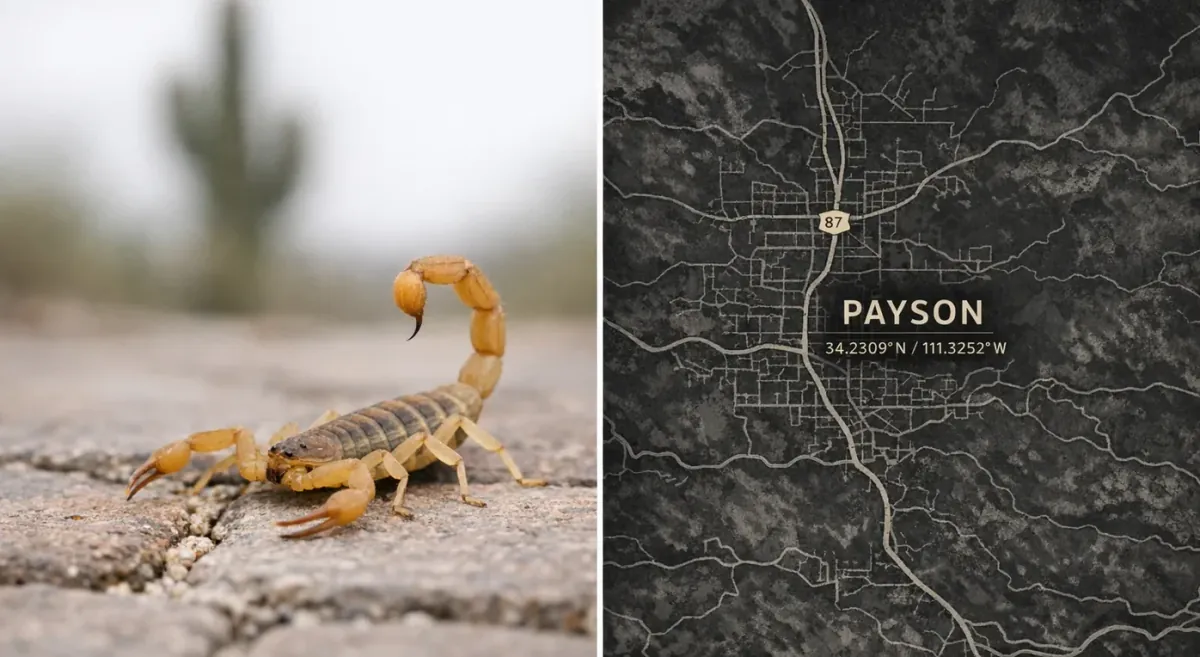
Yes. Payson sits in Gila County at about 5,000 feet in Rim Country, and scorpions are a real, ongoing concern for local homeowners. You won't see the sheer numbers of a low-desert city like Phoenix, but sightings inside homes are common enough that treating them as a "when," not an "if," is the smart approach here.
Payson's mix of pine forest, granite outcrops, and warm summers gives scorpions plenty of daytime hiding spots and easy nighttime access to homes. The good news is that most encounters are manageable once you understand where scorpions travel and why they slip indoors in the first place.
What "high relevance" means for Payson homeowners
High relevance means scorpions are established in and around Payson, and finding one indoors is a normal part of life here — not a freak event. Statewide, Arizona dominates the national picture: 68.2% of all US scorpion exposures reported to poison control between 2005 and 2015 came from Arizona, according to Kang & Brooks 2017.
There's a difference between an occasional scorpion and a repeat-visitor problem. One scorpion in a season may just be a wanderer that slipped under a door. But two or three sightings in a couple of weeks — especially in the same room — points to steady access and possibly a small population near your foundation. That's your cue to act rather than wait.
Where people in Payson usually find scorpions
Scorpions gravitate toward cool, dark, slightly humid spots. In Payson homes that usually means garages, bathrooms, laundry rooms, and ground-floor bedrooms. National harborage data backs this up — Kang & Brooks 2017 lists bathrooms, laundry rooms, garages, and bedrooms as the most common indoor hiding sites.
These rooms share three things: water access, clutter to hide under, and edges to travel along. Scorpions are thigmotactic, meaning they navigate by hugging walls and surfaces. That's why you'll find them along baseboards, behind the washer, or tucked into a shoe left by the wall.
Is it one scorpion…or a reason to act fast?
A single sighting warrants caution. Several sightings warrant action. Watch for red flags: multiple scorpions in a short window, a seasonal spike in summer, or a surge in small prey insects like crickets and roaches, which draw scorpions inside to hunt. If DIY sealing and cleanup aren't cutting it — or you keep finding scorpions in bedrooms — it's time to bring in professional scorpion control in Payson.
Which scorpion species lives in Payson?
There isn't a single confirmed "main" species for Payson in the citizen-science record, so the practical move is to treat any scorpion you find as potentially medically significant until you know otherwise. Rim Country's elevation and habitat can host several species, and the one that matters most for sting risk in Arizona is the Arizona bark scorpion (Centruroides sculpturatus).
Why iNat doesn't name one "main" Payson scorpion
Community sighting platforms like iNaturalist don't point to one dominant species for Payson, and that's mostly a reporting gap rather than an absence of scorpions. Small towns generate fewer observations, photos get misidentified, and many people simply squash a scorpion instead of documenting it. A fuzzy species list is normal — and it means homeowners should lean on safe, practical identification rather than a definitive local checklist.
The species that matter most for scorpion sting Payson concerns
The Arizona bark scorpion is the species that drives medical urgency in Arizona. Its venom is neurotoxic, which can produce symptoms beyond ordinary localized pain — tingling, numbness, muscle twitching, and in severe cases trouble controlling the eyes or breathing. Most other scorpions you might encounter cause a painful but self-limiting sting, closer to a bad bee sting. Because you can't always tell them apart at a glance, err on the side of caution.
How to identify a scorpion in Payson safely (without handling it)
Never pick up a scorpion to identify it. Here's a safer sequence:
- Keep several feet of distance and photograph it with your phone's zoom rather than leaning in close.
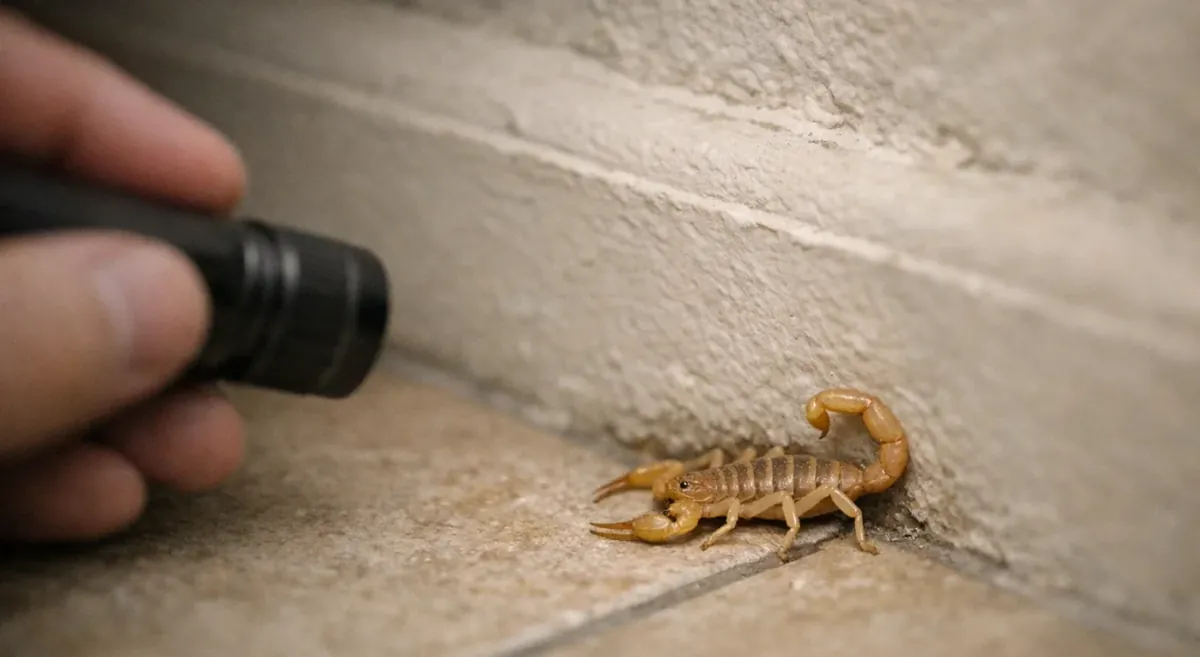
- Note the body shape — bark scorpions tend to be slender with thin pincers and a thin tail, often light tan.
- If you need it contained, place a glass or clear container over it and slide a stiff card underneath.
- Share the photo with a local pest control professional if you're unsure — most will identify from an image before scheduling a visit.
For more on what to avoid in the moment, read our guide on what not to do after spotting a scorpion in your home.
When are scorpions most active in Payson?
Scorpions in Payson are most active during the warm months, peaking in late summer, and they're most active at night. Activity climbs as temperatures rise in late spring, stays high through summer, and eases once fall nights turn cold at Payson's elevation. Across Arizona, August and September are the peak envenomation months, per Kang & Brooks 2017.
Scorpion season Payson: the months to watch closest
Think of it as a simple timeline. Roughly May through September is your higher-alert stretch, with late summer as the peak. October through April is generally lower alert, though a warm spell can still coax a scorpion out. For a month-by-month breakdown across the state, see our scorpion season month-by-month guide for Arizona.
Why you see scorpions at night (and along walls)
Scorpions are nocturnal hunters. Peak sting hours run from 6 PM to midnight — about 49% of envenomations happen in that window, according to research summarized by Kang & Brooks. After dark they leave their hiding spots and travel by hugging edges, which is exactly why baseboards, wall corners, and furniture edges are where you spot them.
What triggers activity spikes in Gila County scorpions
Summer heat and monsoon humidity are the biggest drivers. When rain arrives, insect prey multiplies and moves, and scorpions follow the food. That combination often pushes them toward garages, bathrooms, and ground-floor rooms where cool, damp micro-habitats meet an easy meal. A rainy night after a hot day is a classic setup for an indoor encounter.
How dangerous is a scorpion sting in Payson?
Most scorpion stings in Payson cause painful but non-life-threatening symptoms that resolve at home. The serious exception is the Arizona bark scorpion, whose neurotoxic venom can trigger systemic effects — especially in young children and older adults. Arizona also reports the highest hospitalization and ICU rates among all states for scorpion exposures, per Kang & Brooks 2017.
Most common sting reactions vs. emergency symptoms
Typical stings hurt right away. Pain at the site shows up in 88.9% of stings and local numbness in 62.2%, based on an Arizona cohort studied by Klotz et al. 2021. Emergency symptoms are different in kind: trouble breathing, severe muscle twitching or jerking, roving eye movements, difficulty swallowing, or uncontrolled pain and agitation. Those signs mean get medical help now.
Who's more vulnerable in Payson households
Children under 10 and older adults face the highest risk of severe reactions. Kang & Brooks 2017 found that kids under 10 have the highest rates of systemic effects, hospitalization, and ICU admission. Pets can react badly too. That's why nurseries and kids' bedrooms deserve extra attention — a small child can't always tell you what happened, so any sudden distress, drooling, or twitching after a possible sting needs a fast call to Poison Control at 1-800-222-1222.
Does the scorpion species change the risk?
Absolutely. The species matters far more than the size. A small, pale bark scorpion can deliver a medically significant sting, while a larger, bulkier scorpion may only cause localized pain. Don't judge danger by how big it looks — assume any Arizona bark scorpion sting could escalate, particularly in a child, and respond accordingly.
What to do if you're stung in Payson
Stay calm, wash the area, apply ice, and call Poison Control at 1-800-222-1222 for guidance. Most stings are managed at home, but children and anyone with severe symptoms should be evaluated quickly. Gather the details poison control will ask for, then decide whether to monitor or seek care.
First 5 minutes: what to do immediately
- Wash the sting site with soap and water.
- Apply a cool pack or ice wrapped in cloth to ease pain and swelling.
- Remove rings, watches, or anything tight near the sting in case of swelling.
- Keep the person calm and still — panic can make symptoms feel worse.
- Take an over-the-counter pain reliever if appropriate, and skip risky home remedies like cutting the wound or applying heat.
Our step-by-step on bark scorpion sting first aid for the first 30 minutes walks through this in more detail.
Deciding between monitoring at home vs. getting care
For a healthy adult with only local pain and tingling, home monitoring with ice and pain relief is usually enough. Call Poison Control first — they can advise and even patch you through to 911 if needed. Head to the nearest emergency room right away if you see trouble breathing, severe muscle twitching, roving eyes, difficulty swallowing, or intense whole-body symptoms — and keep a lower threshold for any young child.
Effective antivenom exists for serious bark scorpion cases. In a randomized trial, symptoms resolved within four hours in 8 of 8 children given antivenom versus 1 of 7 given placebo, per Boyer et al. 2009. According to Dr. Leslie Boyer, Director of the VIPER Institute at the University of Arizona College of Medicine and Medical Director of the Arizona Poison and Drug Information Center, "This study told us that the dangerous effects of bark scorpion venom can be reversed quickly with the right antivenom. One hundred percent of the children who received it got better very quickly, meaning that using this antivenom in the emergency room will make intensive care treatment unnecessary for most patients."
If the scorpion is still in the house tonight
If the scorpion that stung you is still loose, the goal is to avoid a second sting before morning. Trap it under a glass and slide a card underneath if you can do so safely. Wear closed-toe shoes or slippers, and shake out any shoes, towels, and bedding before you use them. Walking a dark house hunting for a scorpion is stressful and risky — photo-verified detection alerts can flag exactly where one is moving so you don't have to search room by room in the dark.
How to keep scorpions out of your Payson home
Keeping scorpions out of a Payson home comes down to three layers: seal the gaps they use, reduce the yard conditions that draw them, and clean up the indoor habits that lead to surprise encounters. Since 97.8% of scorpion envenomations happen in the home, per Kang & Brooks 2017, exclusion pays off fast.
Seal the gaps scorpions use most in Payson homes
Scorpions squeeze through shockingly small gaps. Prioritize the entry points that matter most:
- Install tight door sweeps on exterior and garage doors — the garage threshold is a top offender.
- Replace worn weatherstripping around doors and windows.
- Screen or seal weep holes, and caulk around plumbing and utility penetrations.
- Check where cable and HVAC lines enter the wall.
Verify your work at night with the lights off inside — daylight leaking through a gap means a scorpion can get through it too. Our rundown of the top 5 ways scorpions get into your home covers these in depth.
Yard and garage changes that reduce scorpion pressure
The yard is where the pressure starts. Move woodpiles away from the house and up off the ground — stacked firewood is prime scorpion and prey habitat, and that's a real consideration in Rim Country where many households keep a cord or two on hand. Clear leaf litter, trim vegetation back from the foundation, and rethink deep rock or landscape edging against the walls. Inside the garage, get stored boxes and clutter off the floor and onto shelves. Reducing prey insects is the long game of scorpion control in Payson — fewer crickets and roaches means fewer scorpions with a reason to come inside. See our list of the top 5 things that attract scorpions in your home.
Room-by-room habits that prevent surprise encounters
Small daily habits prevent most indoor stings, which typically happen on the hands and feet while putting on shoes, reaching into clothing, or rolling over in bed, as described by Klotz et al. Practical moves:
- Pull beds and cribs a few inches away from the wall and skip long bed skirts that touch the floor.
- Shake out shoes, slippers, and towels before use.
- Keep laundry off the floor rather than in piles.
- Wear closed-toe slippers when walking around at night.
Add night monitoring where scorpions actually travel
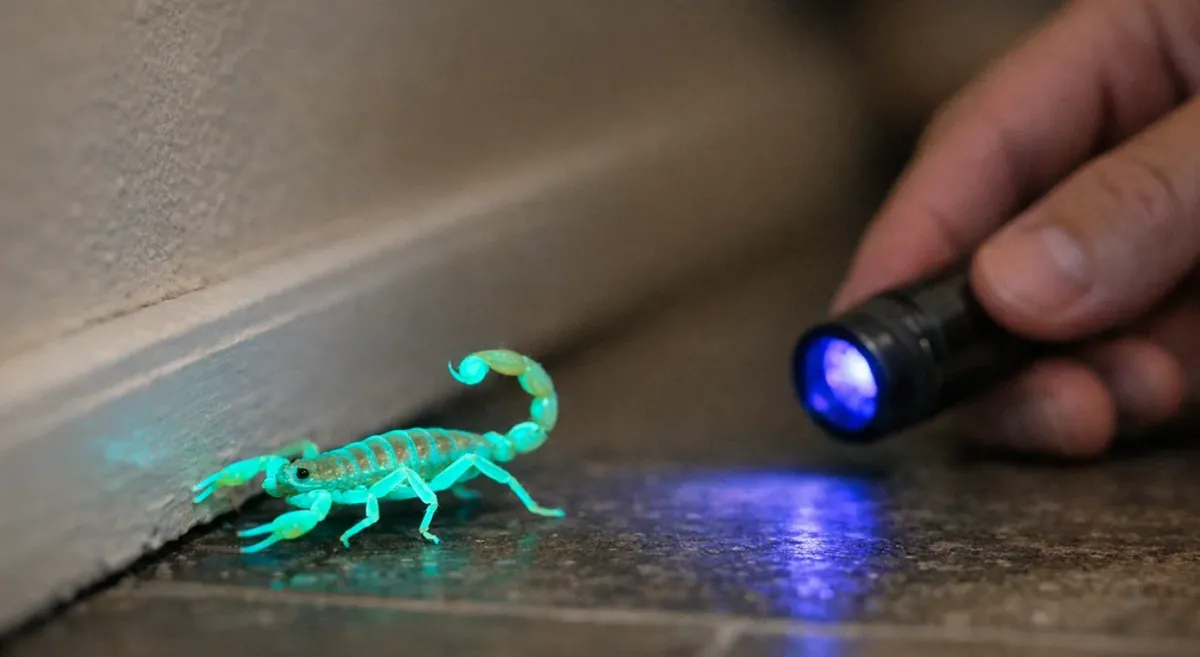
The strongest predictor of a future sting is having seen scorpions before — so if you've spotted one anywhere in your home, a monitoring layer buys real peace of mind. Scorpion Alert detectors plug into standard wall outlets right along the room perimeter, exactly where scorpions in Payson, Arizona travel. Each detector shines 365nm UV light onto the floor, watches for the telltale greenish glow, and sends a photo-verified alert with a confidence score to your phone by push or SMS within seconds. They only scan when the room is dark, so they cover the exact overnight hours scorpions are most active — no walking the house with a flashlight required. Place one in any room where a scorpion has turned up before, like a bathroom, laundry room, or ground-floor bedroom, and let it watch the perimeter for you.
In Payson, scorpions are most active after dark, so knowing when—and where—they’re moving around your home can make prevention a lot easier. If you want a practical way to spot them at night, Scorpion Alert uses 365nm UV light and automatic nighttime monitoring to help you detect scorpions before they become a surprise indoors.