Are scorpions a problem in Sunrise Manor, Nevada?
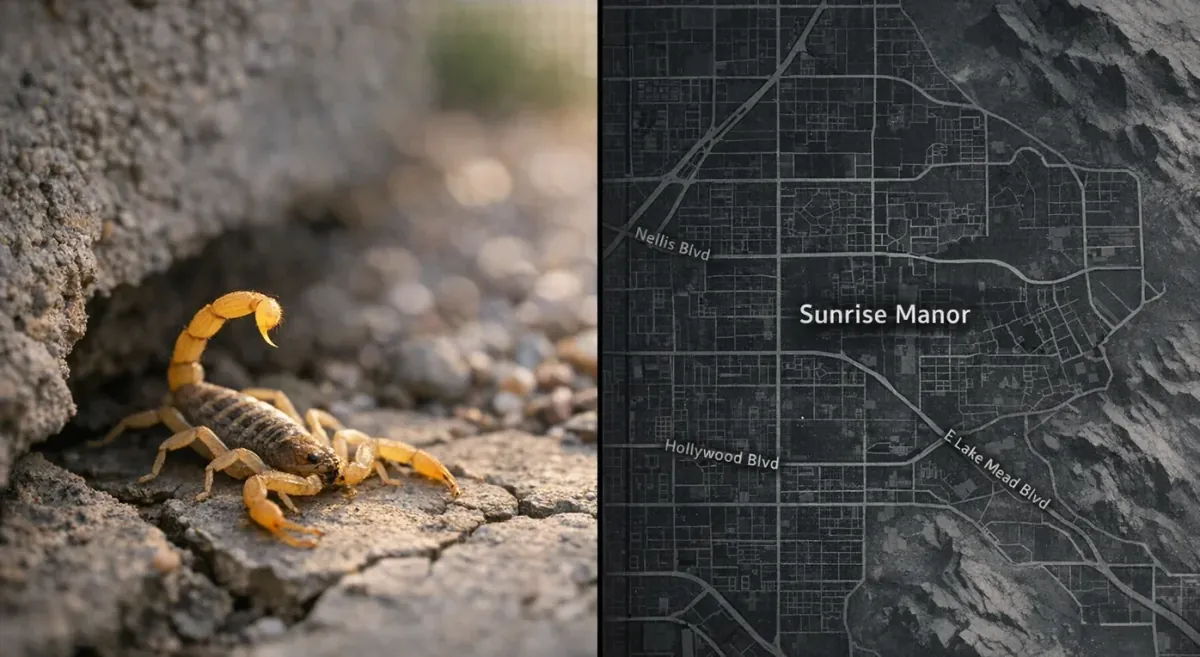
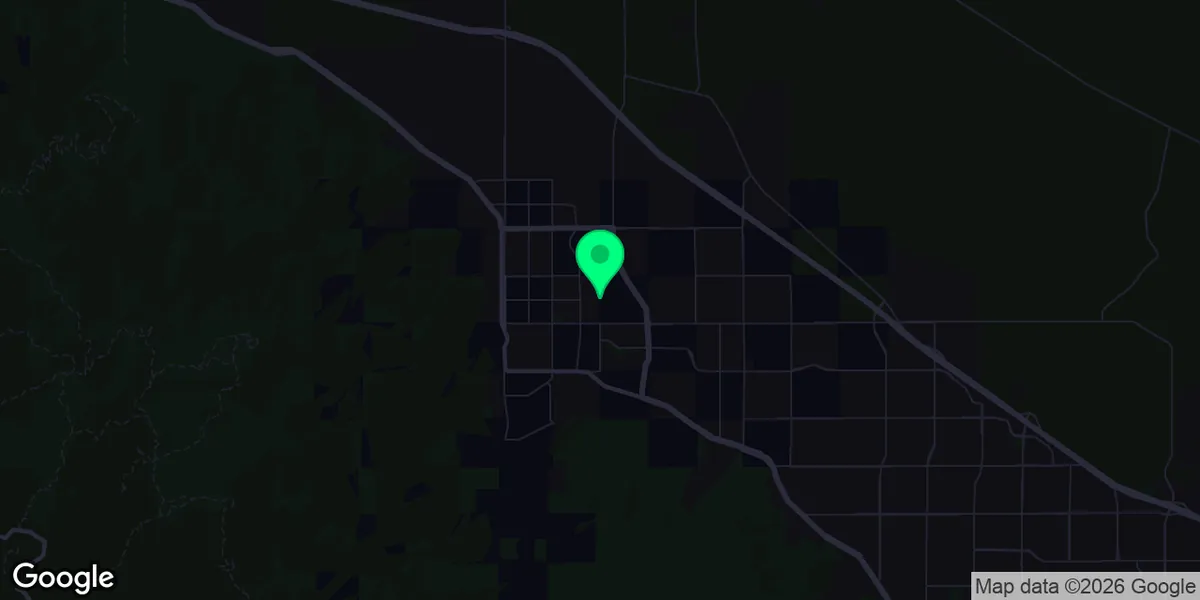
Yes. Sunrise Manor sits squarely in Mojave Desert habitat, which means scorpions are a year-round possibility, with a strong summer surge. Sightings often feel sudden because scorpions are nocturnal — they stay hidden by day and roam at night, so you may live beside them for weeks before you ever spot one.
It isn't your imagination. Community sightings logged on iNaturalist around the eastern Las Vegas valley, plus Clark County's known scorpion activity, confirm that residents here really do encounter them. Poison-center data backs it up, too. In US surveillance from 2005–2015, Nevada logged 7,775 scorpion exposures, and southern Nevada's Clark County showed growing numbers over that window (Kang & Brooks 2017).
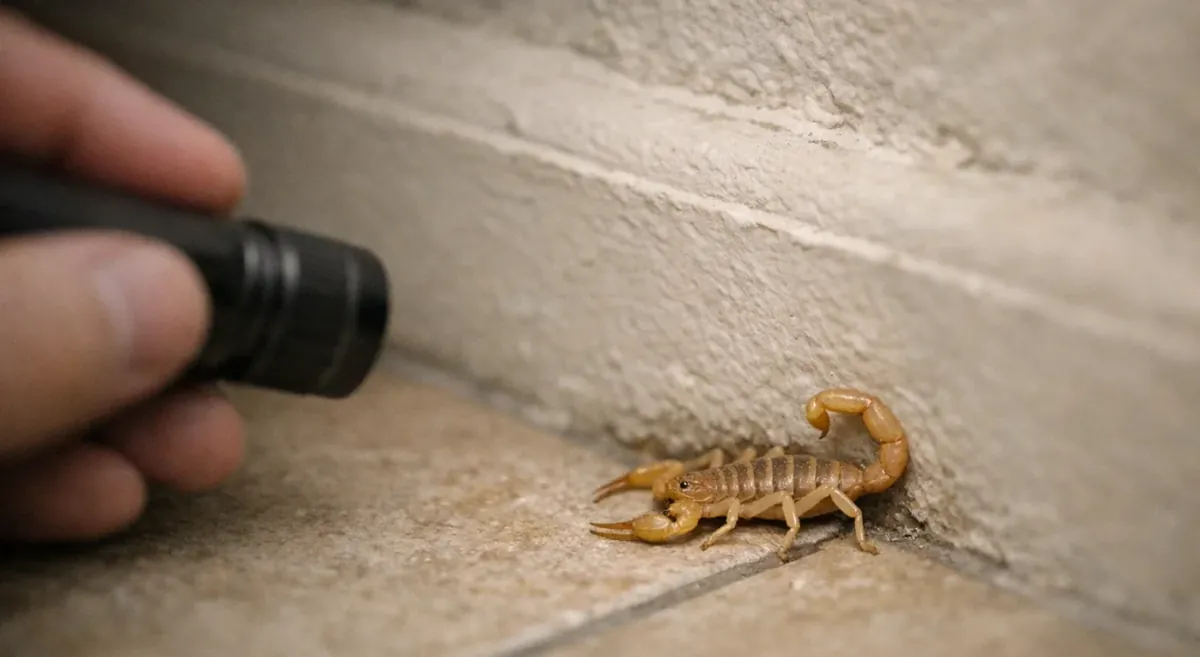
One behavior makes the rest of this article click: scorpions are thigmotactic. They navigate by staying pressed against surfaces and edges. Instead of crossing open floors, they trace baseboards, corners, and thresholds. That's why sightings cluster along walls — and why your defenses should follow the same edges.
What makes some Sunrise Manor homes see more scorpions than others?
The built environment drives most of the difference. Block perimeter walls, rock and gravel landscaping, older single-story homes, and cluttered side yards all give scorpions cool, shaded harborage right next to the foundation. The insects they eat gather there too, so the buffet and the shelter sit side by side.
Run this quick risk check — answer in about 60 seconds:
- Do you have block walls around the yard?
- Rock or gravel beds against the foundation?
- Stored items, wood, or clutter along fences and side yards?
- Visible gaps under exterior doors or the garage threshold?
Two or more "yes" answers means your home offers scorpions what they want. Don't panic. The next step is simple: figure out what you're dealing with, then tighten defenses.
Why do I keep seeing scorpions along walls at night?
Because they hunt by tracing edges. Picture a scorpion at 1 a.m., moving along the base of your wall like it's following an invisible rail — pausing at corners, slipping behind furniture that touches the wall, testing the gap under a door. That's thigmotaxis in action.
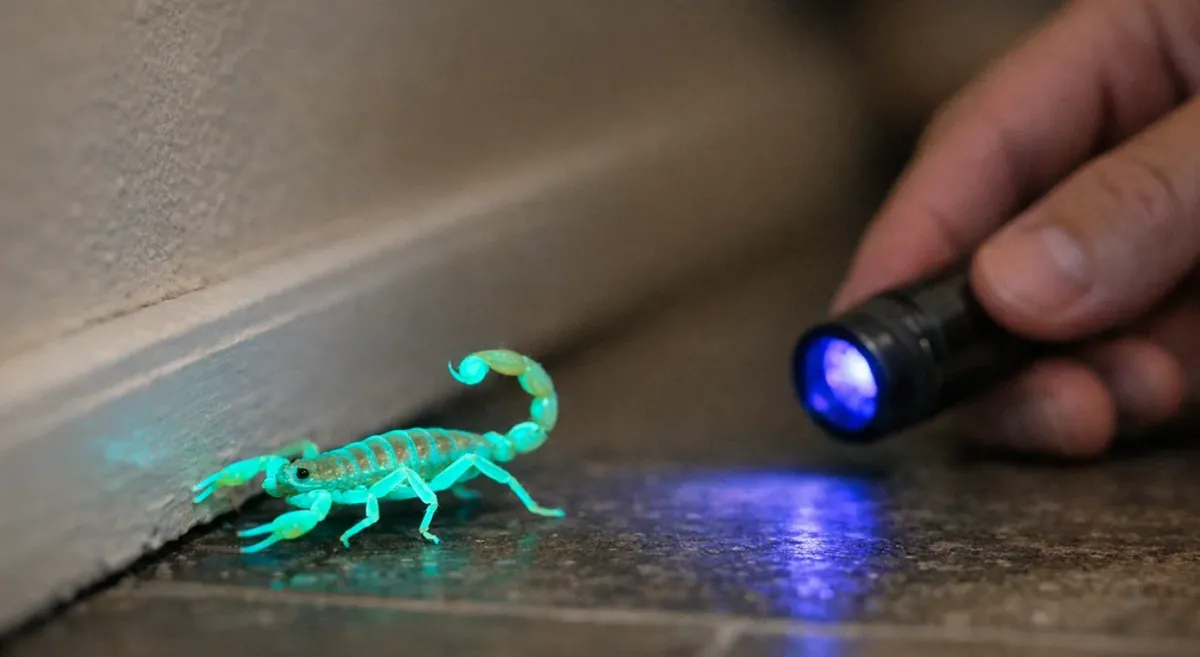
Indoors, check these spots first: baseboards, room corners, behind and under furniture pressed against walls, and door thresholds. One quick tip — do a slow perimeter scan with the lights on and shoes on. A UV flashlight makes them glow a bright greenish color, which is far easier to spot than their sandy brown bodies.
Is seeing one scorpion a fluke—or a sign of more?
One scorpion is a prompt to investigate, not proof of an infestation. There are three honest interpretations: a lone wanderer that slipped in, an active entry point letting several in, or an outdoor harborage right against your foundation feeding a steady trickle inside. The evidence you gather over the next day or two tells you which.
Give yourself a 24–48 hour mini-plan: inspect door sweeps and thresholds for gaps, check where pipes and utility lines pass through walls, and walk the exterior looking for rock piles or clutter hugging the foundation. Find a fresh gap or a harborage? That points to entry or outdoor pressure. Find nothing? It may well be a one-off. Either way, you've tightened your defenses.
Which scorpion species live in Sunrise Manor—and what are Nevada's scorpion species?
Nevada hosts several scorpion species that vary by region — Mojave Desert species in the south around Las Vegas, Great Basin and desert-transition species farther north. Near Sunrise Manor, the one that matters most medically is the Arizona bark scorpion (Centruroides sculpturatus), whose range has expanded into parts of Nevada in recent decades (Skolnik & Ewald 2013).
A simple ID framework helps: look at body shape, climbing behavior, where you find it (walls and furniture edges versus ground level), and whether it resembles a common lookalike. Because the bark scorpion climbs so well, this changes where you inspect.
Which scorpion is most likely in Sunrise Manor homes?
The Arizona bark scorpion is the primary species showing up in local iNaturalist records. You can recognize it by a slender body, thin delicate pincers, and a tail it often holds off to one side. It's an excellent climber and turns up most in bathrooms, laundry rooms, and bedrooms.
The practical consequence matters: because this species climbs, your inspection and monitoring can't stop at the floor. You have to include walls, shelves, and the edges of furniture. A scorpion that can reach a countertop or a bed skirt won't be caught by a floor-only search.
What are the most common scorpion species in Nevada?
Here's a statewide snapshot. Species differ by region, so what's common near Las Vegas isn't the same as northern Nevada.
| Species | Where in NV it's common | Climbs well? | Typical indoor risk |
|---|
| Arizona bark scorpion | Southern NV / Mojave (Clark County) | Yes — strong climber | Most medically significant |
| Desert hairy scorpion | Southern desert lowlands | Poor — ground dweller | Large but painful-and-local |
| Stripe-tailed / devil scorpion | Widespread desert areas | Limited | Painful-but-local reaction |
| Great Basin species | Northern NV transitions | Varies | Generally local reactions |
Only the bark scorpion is considered clinically significant here. The others deliver a sting that hurts but usually stays local. When in doubt, treat any sting cautiously and call for guidance.
How can I tell a bark scorpion from common lookalikes?
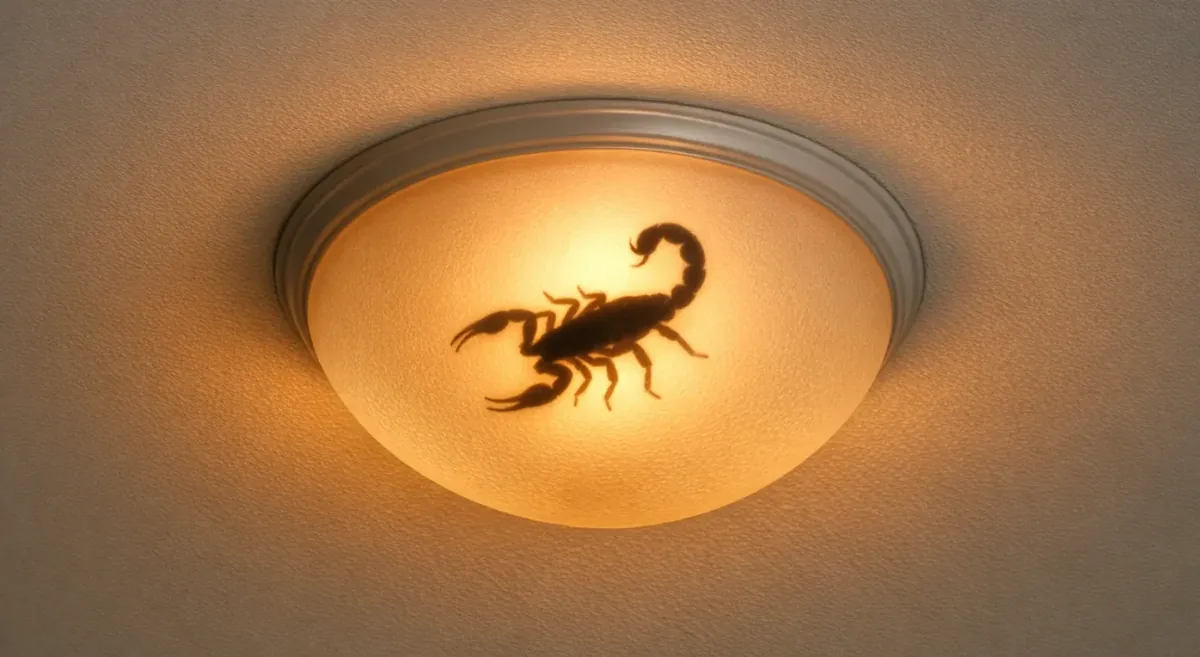
People often mistake earwigs, crickets, vinegaroons (whip scorpions), and small lizards for scorpions in dim light. Use this quick checklist — a true scorpion has three features:
- Pincers up front (like tiny crab claws).
- A segmented tail arched over its back.
- A stinger at the very tip of that tail.
If it's missing the arched tail and stinger, it isn't a scorpion. To confirm safely, photograph it from a distance with the lights on — never with bare hands — and, if it's safe, trap it under a clear glass for a closer look.
Why does species ID change my control plan?
Because behavior dictates where you search. Climbers like the bark scorpion demand attention to vertical pathways — walls, shelves, bed skirts, hanging towels. Ground dwellers call for floor-level gap sealing instead. Match the plan to the animal, and you stop wasting effort. That distinction leads straight into when scorpions are active and where they hide indoors.
When are scorpions most active in Sunrise Manor, and where do they hide indoors?
Scorpions are most active during warm nights, with the biggest surge from June through September. Shoulder seasons still bring activity, and a warm winter spell can wake them up, too. Indoors, they favor cool, dark, humid spots and travel the room's perimeter, which puts them in predictable hot zones.
Those hot zones match bark scorpion preferences: bathrooms, laundry rooms, garages, and bedrooms — anywhere with moisture, shade, and edges to follow. And yes, to answer the fear directly: bark scorpions climb well and can get onto beds. You can cut that risk without gutting the room.
What months are peak scorpion season near Las Vegas?
June through September is the peak window. Warm nights push scorpions to roam and hunt more, so more of them wander toward and into homes. Do your sealing and yard cleanup before peak summer, then maintain it through fall.
A simple seasonal rhythm helps: pre-summer, seal gaps and clear harborage; mid-summer, keep the perimeter tidy and watch the hot zones; post-summer, recheck seals as activity tapers.
What time of night are scorpions most likely to show up?
Dusk to dawn is their window, and most sightings happen when the house is quiet and dark. That's when a scorpion tracing your baseboards has the run of the place. Build a short night routine to stay ahead of it:
- Keep shoes off the floor or shake them out before putting them on.
- Shake out towels and clothing left on the floor.
- Keep floors clear so there's nowhere to shelter.
Remember the thigmotaxis point from earlier — since they hug edges, the clutter along your walls is exactly where they'll pause.
Can scorpions climb walls or get into beds?
Yes. The bark scorpion is a skilled climber, and any fabric touching the floor becomes a ramp — a bed skirt, a floor-length blanket, a towel draped to the ground. That's how a scorpion ends up in a bed. A few bedroom changes make a real difference:
- Pull the bed or crib a few inches away from the wall.
- Remove bed skirts.
- Avoid floor-length blankets and comforters that pool on the floor.
- Cut floor clutter under and around the bed.
Prioritize children's rooms for decluttering and monitoring — kids are the most vulnerable to a serious sting, which is exactly where we're headed next.
How dangerous are scorpion stings in Sunrise Manor, and what should I do right now?
Most scorpion stings are painful but manageable, and healthy adults typically recover without complications. The bark scorpion is the most medically significant species in the US, so a sting deserves attention — especially in children. Your first call for guidance is Poison Control at 1-800-222-1222, available 24/7 and free.
What does a typical scorpion sting feel like vs. an emergency?
A typical sting causes immediate burning pain, tingling or numbness around the site, and mild swelling. In an Arizona cohort, pain occurred in 88.9% of stings and local numbness in 62.2% (Klotz et al. 2021). Red flags — especially in children — include trouble breathing or swallowing, severe muscle twitching or jerking, abnormal roving eye movements, and drooling.
According to Dr. Meghan Spyres, medical toxicologist, Banner Poison and Drug Information Center, "They can also cause involuntary muscle movement — so jerking of the arms and legs — and even more severe, in some cases, it can cause difficulty swallowing. People's eyes can move around in weird directions." When in doubt, call Poison Control for personalized guidance.
Who is most at risk in my household (kids, seniors, pets)?
Young children and older adults face the highest risk of severe reactions, along with anyone whose symptoms are worsening or turning systemic. Children under 10 show the highest rates of systemic effects and hospitalization in both Arizona and Nevada data (Kang & Brooks 2017). Pets are worth watching too — they live close to the floor where scorpions travel, so monitor them for distress like whining, pawing, or tremors. For a deeper dive, see why children are more at risk from scorpion stings.
What should I do in the first 5 minutes after a sting?
Stay calm and work through these steps:
- Wash the sting site with soap and water.
- Apply a cold pack or ice wrapped in cloth to reduce pain and swelling.
- Take an over-the-counter pain reliever if appropriate.
- Secure the room: lights on, shoes on, and do a slow perimeter search so no one else gets stung.
- Watch for red-flag symptoms and keep Poison Control's number handy.
Do not cut the wound, apply a tourniquet, or try to suck out venom — none of that helps, and it can make things worse. For the full timeline, read our bark scorpion sting first aid guide for the first 30 minutes.
When should I call Poison Control or go to urgent care?
Call Poison Control at 1-800-222-1222 for any sting to a child, an older adult, or anyone with more than local pain. Seek urgent or emergency care right away for trouble breathing or swallowing, severe muscle jerking, abnormal eye movements, or heavy drooling. Before you call, be ready with the person's age and weight, their symptoms, and the time of the sting — it speeds up the guidance you'll get.
90.1% of US scorpion envenomations are managed on-site without an ER transfer.
— Kang & Brooks, J Med Toxicol 2017
How do I keep scorpions out of my Sunrise Manor home—and know if one got in?
Effective control is layered, and the order matters: first reduce outdoor harborage and prey, then seal the key gaps, then monitor the perimeter at night for early detection. No single step is enough on its own — together they shrink both the number of scorpions near your home and the number that slip inside.
What's the fastest outdoor cleanup that actually reduces scorpions?
Start at the foundation. Remove rock and wood piles, clear clutter along fences, and trim dense groundcover pressed against the house. The logic is straightforward: fewer hiding spots plus fewer insects to hunt equals fewer scorpions. For the full breakdown, see the top things that attract scorpions to your home.
What should I seal first to reduce indoor sightings?
Prioritize the biggest entry points in this order: door sweeps and thresholds, plumbing and utility penetrations, the garage threshold, and window and slider tracks. Scorpions squeeze through gaps as thin as a credit card, so even small openings count. For the full list, read the top 5 ways scorpions get into your home, and check the mistakes to avoid after spotting a scorpion so you don't take counterproductive steps.
What's the best way to monitor for scorpions at night without nightly UV patrols?
Match your monitoring to their behavior. Scorpions patrol room edges at night, so watching the perimeter is the strategic move — but doing it yourself with a UV flashlight every single night is exhausting and easy to skip. That's the gap an automated system fills.
Scorpion Alert is an optional monitoring layer built exactly for this. The plug-in Detectors sit on the room perimeter, activate automatically when the room goes dark, shine 365nm UV light onto the floor, and watch for the telltale greenish glow. When a scorpion is detected, you get a photo-verified alert with an AI confidence score sent to your phone within seconds. Setup is simple — each Detector plugs into a standard wall outlet and connects over Wi-Fi, with no hub or bridge to configure.
Where should I place monitoring first in a Sunrise Manor house?
Cover the highest-value rooms first, in this order: children's bedrooms, the primary bedroom, bathrooms and laundry (water draws them), the garage entry, and patio or slider areas. Above all, follow one rule — place monitoring where you've already seen a scorpion, because past sightings are the strongest predictor of future encounters. From there, adding Detectors in multiple rooms and entry points builds whole-home perimeter coverage, so no matter which edge a scorpion follows, you find out before someone steps on it.
In Sunrise Manor’s warm desert conditions, scorpions can be most active when you’re least likely to spot them—after dark—so knowing where they hide and how to reduce outdoor harborage goes a long way. If you want an extra layer of confidence around entries, patios, and garages, Scorpion Alert uses UV-based scanning with two-stage AI confirmation to help detect scorpions at night while minimizing false alarms.