Are scorpions a problem in Artesia?
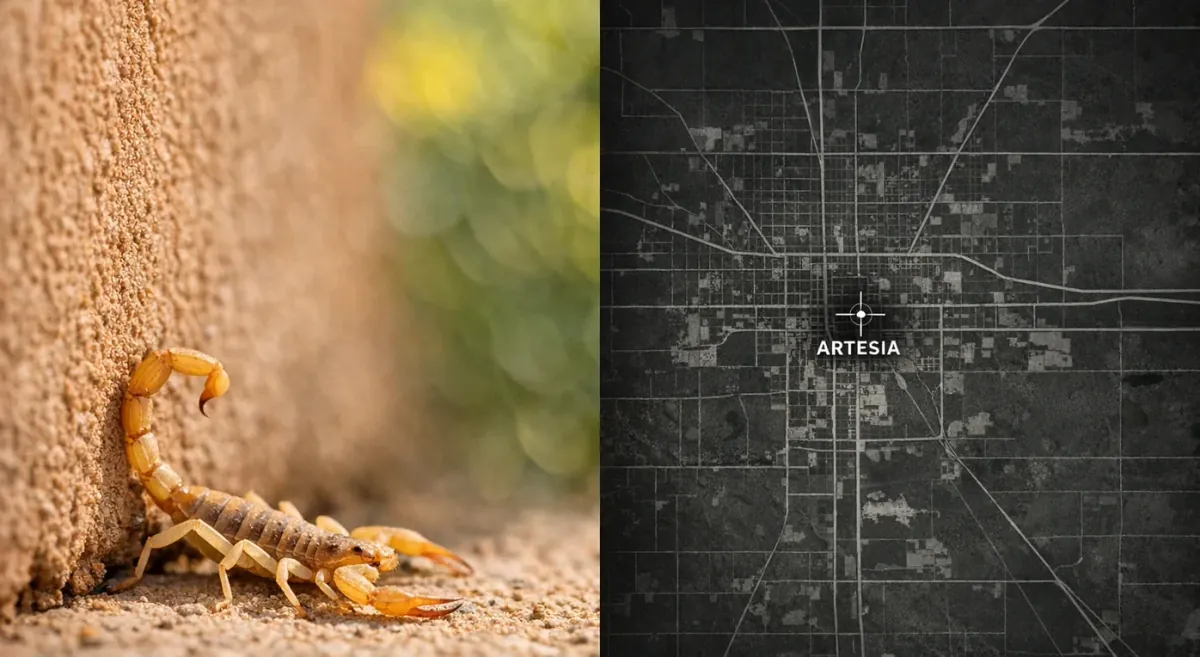
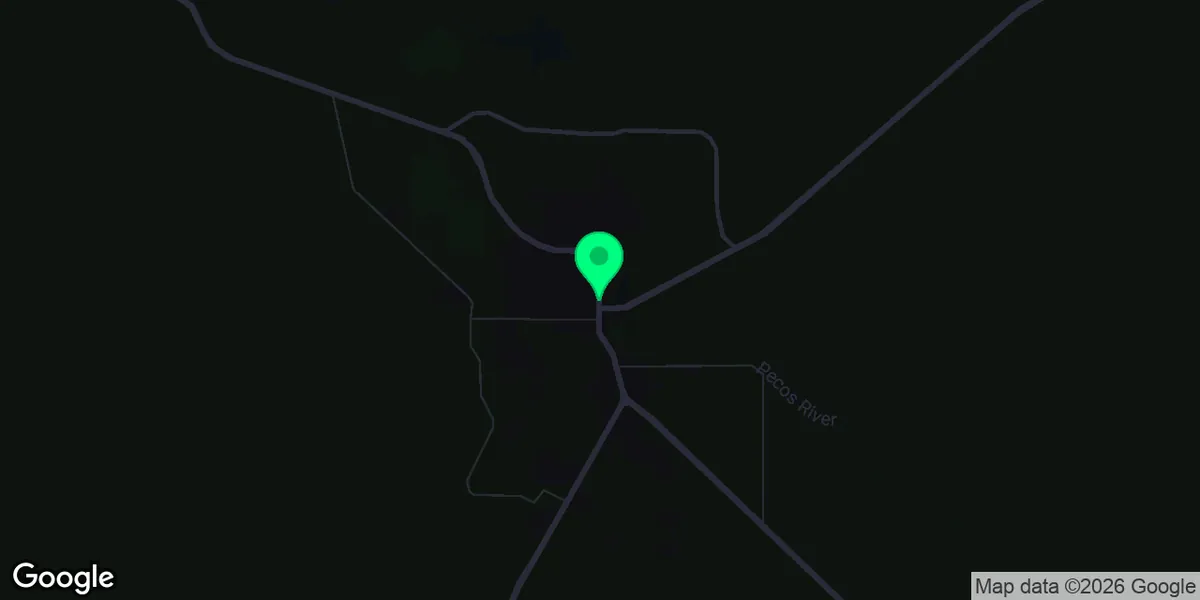
Yes — scorpions are a genuine, year-round concern for Artesia homeowners, and local relevance is high. Sitting in the heart of Eddy County's arid, southeastern New Mexico landscape, Artesia offers scorpions exactly what they need: warm ground, rocky borders, and plenty of quiet daytime hiding spots close to homes. Sightings tend to cluster near yards with rock features, irrigation, and stored clutter.
The tricky part isn't whether scorpions are here — it's that you rarely see them until one turns up on the bathroom tile at midnight. Scorpions are nocturnal and secretive, so a property can have steady activity for weeks before anyone notices.
What "high scorpion relevance" means for Artesia homes
"High relevance" means the conditions around Artesia consistently support scorpion populations near where people live — not that every home is overrun. Reported sightings include indoor encounters as well as garage, patio, and yard-edge spots. Even an "occasional" sighting matters. One scorpion spotted on a garage floor usually means several more are moving along your perimeter after dark, unseen.
Because scorpions hunt at night and disappear by morning, a problem can feel sudden even when it's been building quietly for days.
Why Eddy County scorpions end up around people
Eddy County's dry, rocky terrain and desert-scrub landscape push scorpions toward the moisture and shelter that homes provide. Around Artesia properties, that means a handful of predictable micro-hiding areas: decorative rock borders, the shaded edges of irrigation lines and drip systems, block-wall bases, woodpiles, and any debris piled against a foundation. These spots stay cooler and slightly more humid than open ground, which is exactly what scorpions prefer.
The closer those harborage zones are to your walls, the shorter the trip inside becomes.
Why you might not see them until there's a 'sudden' problem
Scorpions are thigmotactic — they navigate by keeping their bodies pressed against a surface or edge. At night, they patrol baseboards, thresholds, and wall lines rather than crossing open floor. That's why they can seem to appear from nowhere along a bathroom wall or in a corner.
Watching those perimeter lanes yourself every night isn't realistic. Automated night monitoring can do it quietly, flagging activity in the dark zones where scorpions actually travel.
Which scorpion species lives in Artesia?
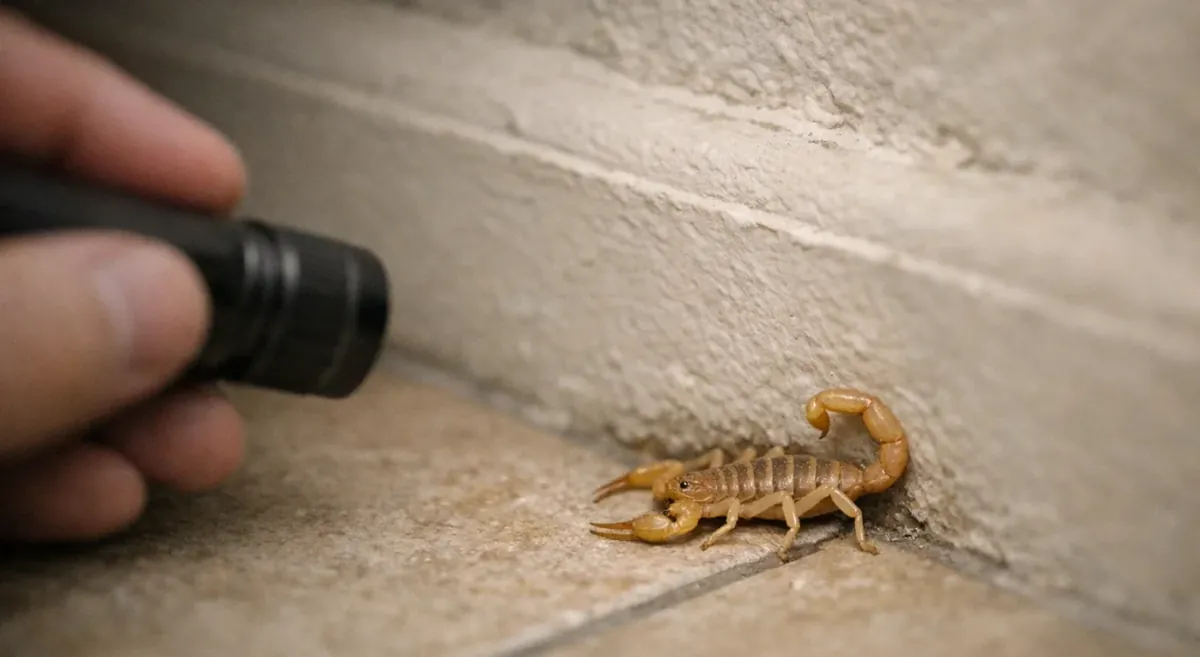
The most commonly recorded scorpion in and around Artesia is the Lesser Stripetail Scorpion (Chihuahuanus coahuilae), based on local iNaturalist observations. It's a small, ground-dwelling desert species — not the medically severe Arizona bark scorpion that dominates headlines. Several related species also show up locally, so not every scorpion you see will be the same.
Primary iNat species: Lesser Stripetail Scorpion
Of the 12 research-grade scorpion observations logged within 30km of Artesia (2007 through July 2025), the Lesser Stripetail Scorpion (Chihuahuanus coahuilae) was the most frequently recorded. Others in the mix include Chihuahuanus crassimanus, Paruroctonus gracilior, and a single Centruroides vittatus (striped bark scorpion). It's a modest dataset, so treat it as a strong hint about what's common — not an exact census.
Where this species is typically found around homes in Artesia
Expect this species under objects and along edges: beneath rocks, boards, and yard debris, tucked against foundations, and inside garages and sheds where it's dark and undisturbed. Indoors, the most common pathway is at ground level — a gap under an exterior door or garage door that lets a wall-hugging scorpion slip straight inside. For the full breakdown, see our guide on the top ways scorpions get into your home.
How to ID safely without getting too close
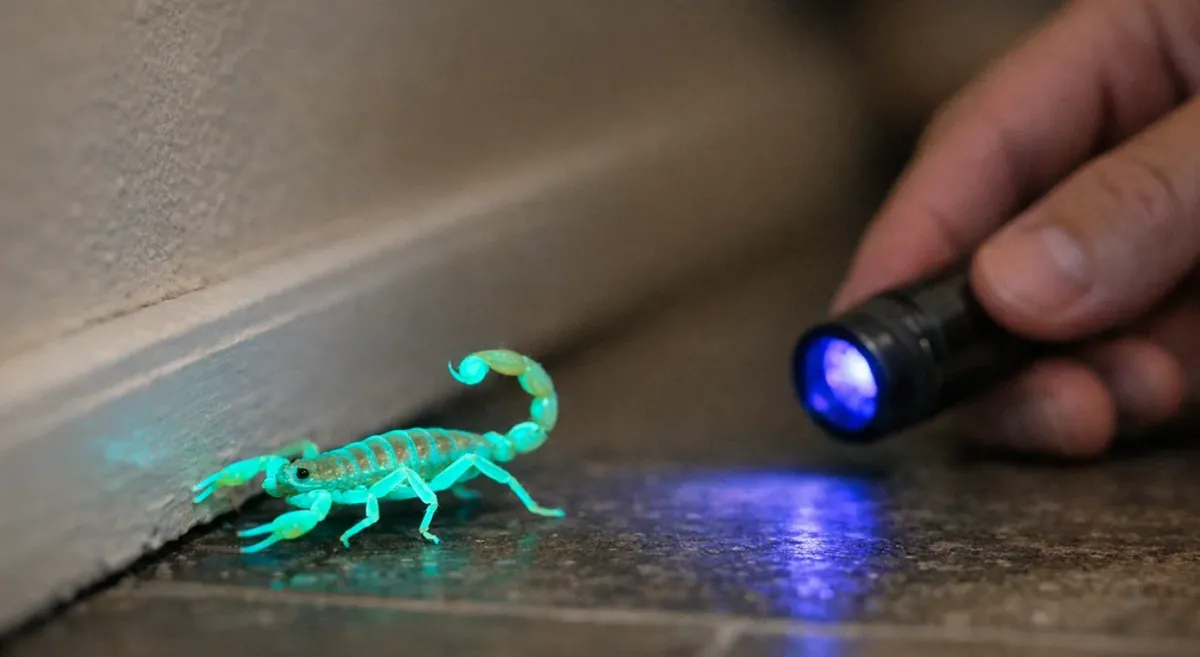
Never handle a scorpion to identify it. Snap a photo from a safe distance — phone zoom works fine — and note the size, color, and pincer shape. If you need it out of a room, guide it into a container rather than picking it up. At night, scorpions glow a vivid greenish-blue under 365nm UV light, which makes spotting and confirming one far easier than hunting for a sand-colored bug on tile.
When are scorpions most active in Artesia?
Scorpions in Artesia are active from spring through fall, with the strongest activity across the hot months of roughly May through September. Nationwide data confirms that summer drives the overwhelming majority of scorpion encounters, with warm-month evenings dominating. Cooler months slow them down, but a warm night can still bring one out.
Scorpion season in Artesia: the months to watch most closely
The core season runs through summer, peaking in the hottest stretch of the year. Early sightings can appear during warm spring spells, and late ones stretch into fall before nights turn cold. Practically, that gives you a clear plan: do your sealing and exclusion work in early spring, before activity ramps up, and stay especially alert on hot summer nights.
What time of night do scorpions move indoors?
Most movement happens after dark. Research on sting timing points to a clear window: roughly 6 PM to midnight accounts for about half of stings, with a smaller morning peak. That's when scorpions leave harborage and hunt along walls. Because they hug edges as they travel, wall outlets, baseboards, and door thresholds become high-probability lanes — which is exactly why people find them in bathrooms and laundry areas late at night.
Weather patterns in Eddy County that can spike activity
Heat is the biggest driver. When daytime temperatures climb and nights stay warm, scorpions move more and range farther after dark. Sudden weather shifts — a summer storm, a burst of wind, or a dry stretch that drives them toward moisture — can push scorpions toward doors, garages, and foundation gaps as they search for stable shelter and water. After heavy rain in a normally dry region, expect a short uptick in sightings around entry points.
How dangerous is a scorpion sting in Artesia?
For most healthy adults in Artesia, a scorpion sting is painful but not dangerous — expect sharp local pain, tingling, and some swelling that eases over hours. Serious, whole-body reactions are uncommon with the species typically found here. The exceptions are young children, older adults, and anyone with allergies or a severe reaction, who deserve closer attention.
What a scorpion sting may feel like (and what's normal)
The classic sting starts with immediate, focused pain at the site — pain shows up in about 88.9% of stings and local numbness in about 62.2%. You may feel burning, tingling, or a numb patch spreading a short distance around the sting. Mild redness and swelling are normal. For most people, the worst is over within a few hours. Watch the first few hours for anything beyond local symptoms.
Are Eddy County scorpions medically significant?
The Lesser Stripetail Scorpion and its Eddy County relatives are not considered medically severe like the Arizona bark scorpion. Their stings hurt but rarely produce life-threatening effects. That said, species ID matters, and severity varies by person and by how much venom is delivered. If you can't confirm what stung you, judge by symptoms, not assumptions — and never assume a sting is harmless for a small child.
Who should treat a sting as urgent?
Higher-risk groups include young children, seniors, people with known allergies, and pets. Children in particular can react more strongly — our resource on why children are more at risk from scorpion stings is worth reading before peak season. Treat a sting as urgent — go to care now — if you see trouble breathing, spreading numbness, severe muscle twitching or jerking, vision problems, uncontrolled vomiting, or intense full-body symptoms, especially in a child. Having a plan ready before the summer months is worth the five minutes it takes.
What to do if you're stung in Artesia
Stay calm. Most stings in Artesia can be managed at home with simple first aid, monitoring, and a quick call to Poison Control if you have questions. Here's a clear plan for the first several minutes and when to escalate.
First 10 minutes: simple, safe first aid
- Wash the sting site gently with soap and water.
- Apply a cold pack or ice wrapped in a cloth for about 10 minutes at a time to reduce pain and swelling.
- Remove rings, watches, or tight items near the sting in case of swelling.
- Keep the area still and rest — take an over-the-counter pain reliever if needed.
- Watch symptoms closely for the first few hours, especially for a child.
For a fuller walkthrough, see our guide on scorpion sting first aid in the first 30 minutes.
When to call Poison Control or seek care in Artesia
You can call the free Poison Help line at 1-800-222-1222 any time, day or night — they'll help you decide whether home care is enough. Seek emergency care right away for red-flag symptoms: difficulty breathing or swallowing, spreading numbness, severe muscle twitching, vision problems, or uncontrolled vomiting. The nearest emergency care is Artesia General Hospital at 702 N 13th St, Artesia, NM 88210 (about 0.62 miles from the city center; phone +1 575-748-3333). Don't hesitate when a child is involved.
If you can do it safely: contain the scorpion for identification
If the scorpion is still around and you can act without risking a second sting, trap it under a sturdy glass or jar, then slide a piece of stiff paper underneath to seal it. Never use bare hands. A contained specimen — or a clear photo — helps confirm the species. Photo-verified monitoring can do the same job without you chasing anything across a dark room. Whatever you do, avoid the common mistakes people make after spotting a scorpion.
How to keep scorpions out of your Artesia home
The most effective strategy for scorpions in Artesia, New Mexico is a layered one: seal the ground-level gaps scorpions use, reduce harborage in the yard and garage, and know the moment activity picks up indoors. Because the vast majority of scorpion stings happen inside the home, keeping them out of your living space is where prevention pays off most.
Block the most likely entry points in Artesia (priority order)
Start where scorpions actually enter — low and along edges. Work through these in order:
- Install or replace door sweeps on exterior and garage doors — a gap wider than a credit card is enough.
- Re-seal worn weatherstripping around doors and windows, which dry desert air and wind tend to crack.
- Close garage-door corner gaps and side seals.
- Seal plumbing and utility penetrations under sinks and behind appliances.
- Caulk foundation cracks and threshold gaps where the slab meets the wall.
For the bigger picture on what draws them close, review the top things that attract scorpions.
Yard and garage fixes that reduce Eddy County scorpion pressure
Push harborage away from your walls. Pull rock borders, mulch, and woodpiles back from the foundation, and clear debris that piles against the house. In garages and sheds, store boxes and gear off the floor and away from walls so there are fewer dark, undisturbed corners. Keep an eye on irrigation and drip-line edges near the foundation, since the extra moisture there is a magnet in Eddy County's dry climate.
Nighttime monitoring: know when the problem is getting worse
Sealing and yard work cut the pressure, but they don't tell you what's happening at 1 a.m. Because scorpions travel the perimeter of a dark room, watching those edges reveals patterns — which door leaks, which room is the hotspot. That's the gap Scorpion Alert Detectors fill: they plug into standard outlets along the room perimeter, shine 365nm UV light on the floor, and send a photo-verified alert to your phone within seconds when a scorpion glows into view — only while the room is dark. No nightly blacklight walks, no guesswork.
Past sightings are the strongest predictor of a future encounter, so putting a Detector in any room where a scorpion has already turned up is the smartest place to start. It's a rental-model monthly subscription — hardware included, cancel any time — so you can know sooner and respond faster instead of waiting to step on the next one.
If you’re in Artesia, New Mexico, the best way to stay ahead of scorpions is to combine smart prevention with consistent nighttime checks—especially around entry points, garages, and patio areas where they can wander in. Scorpion Alert helps by using 365nm UV and a two-stage AI verification process to spot scorpion fluorescence and cut down on false alarms; learn more at Scorpion Alert.