Are scorpions a problem in Abilene?
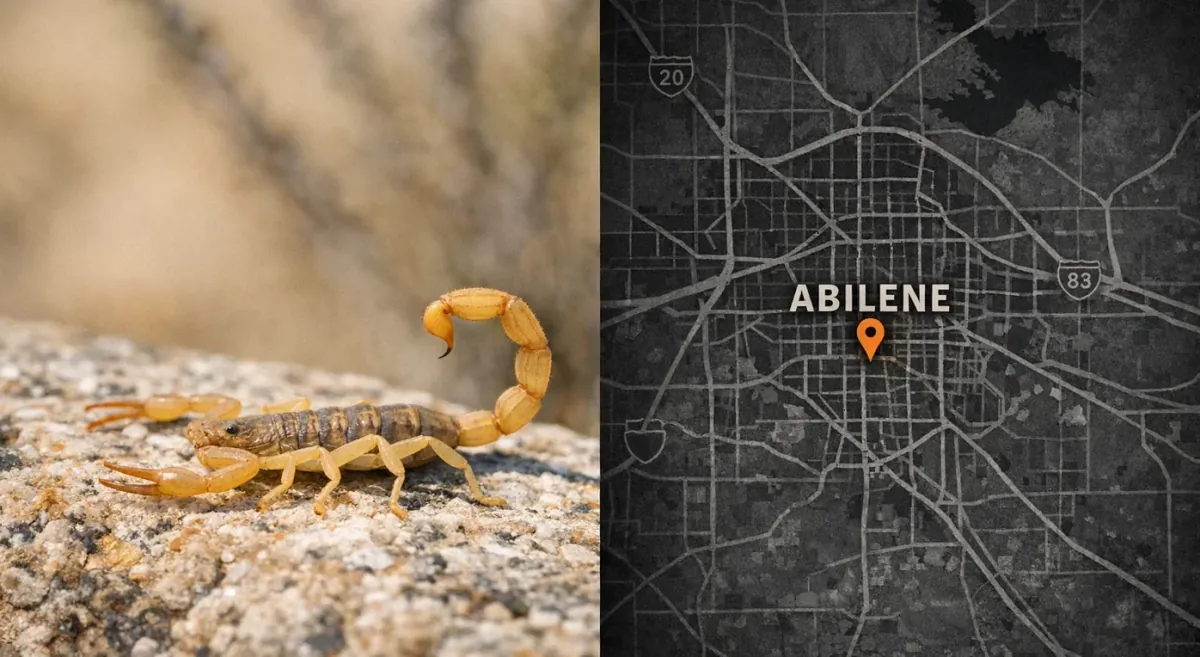
Yes — scorpions are a genuine, year-round reality for homeowners in Abilene and across Taylor County. The region sits in the heart of striped bark scorpion territory, and community sighting data backs it up: 138 research-grade scorpion observations have been logged within 30km of Abilene, according to iNaturalist. Scorpions in Abilene, Texas are a documented, ongoing presence — not a rare or seasonal fluke.
Why here? Abilene's hot, dry climate with sharp seasonal swings creates exactly the kind of habitat scorpions thrive in. Statewide, Texas reports roughly 1,743 scorpion exposures a year to poison control — the second-highest count in the country after Arizona, per Kang & Brooks 2017. Taylor County sits squarely in that active zone.
What Abilene homeowners typically notice first
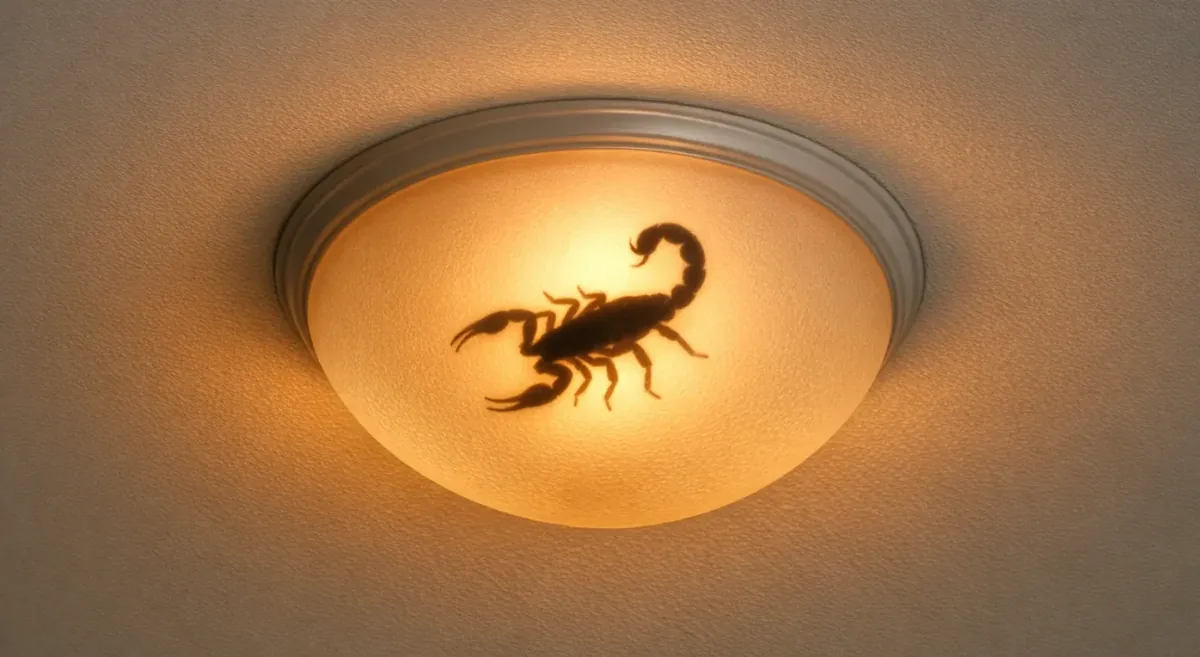
The first sign is usually a sighting, not a sting. People spot them in bathrooms, laundry rooms, garages, and along baseboards — the cool, dark, low-traffic edges of a home. Kids' rooms are a common one too, which is understandably alarming.
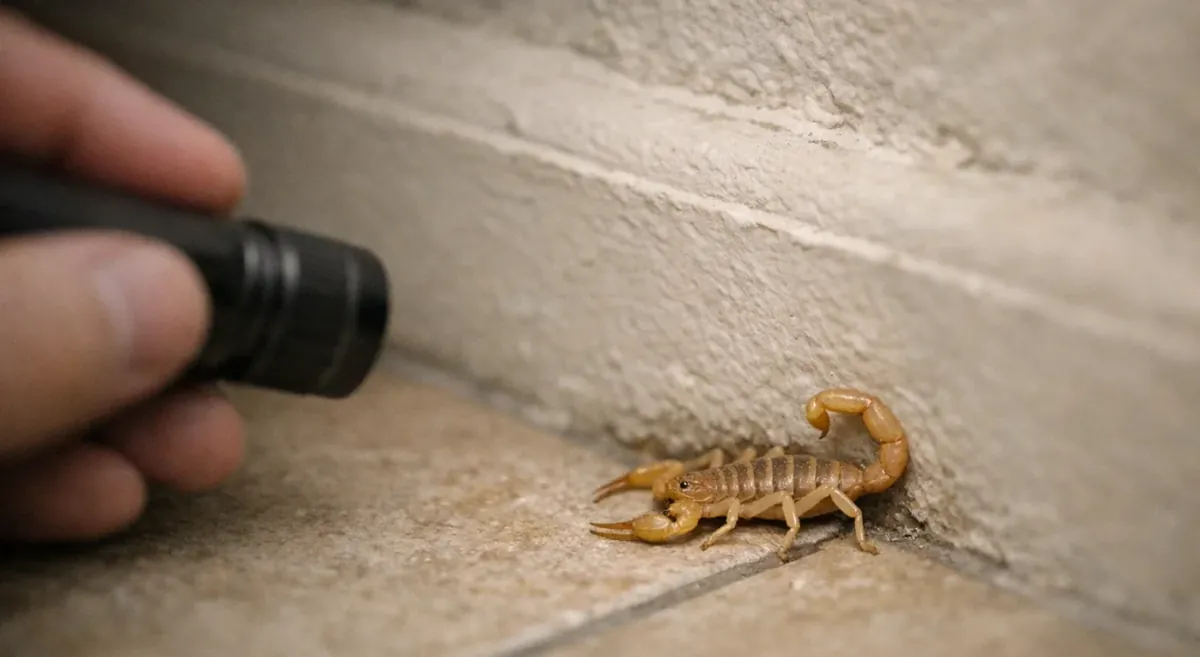
It often happens like this: you pad into the bathroom barefoot at 1 a.m., flip on the light, and a pale tan scorpion is frozen on the tile by the baseboard. That late-night surprise is common because scorpions are nocturnal — they hunt and explore after dark while you're asleep.
Are "Taylor County scorpions" mostly an outdoor issue or an indoor one?
Both — and that's the key. Scorpions live outdoors under rocks, woodpiles, and landscape debris, but they become an indoor problem when they follow prey insects inside, seek water during dry spells, or slip in looking for cool, dry shelter. A scorpion trailing a cricket along your foundation can end up in your garage in minutes.
Cut down the crickets, spiders, and other soft-bodied insects around your home, and you cut down the reason scorpions come looking. For the specifics on how they slip through, see our guide on the top ways scorpions get into your home.
What 'Abilene scorpion control' really means (prevention + monitoring)
Real scorpion control isn't one product — it's three moves: reduce habitat and prey, seal access points, and confirm whether activity is still happening. That last piece is the one most homeowners skip. Because scorpions are thigmotactic — they navigate by hugging walls and edges — perimeter outlets are strategic spots for detection. More on that below.
Which scorpion species lives in Abilene?
Abilene's scorpion is the Striped Bark Scorpion (Centruroides vittatus). Every one of the 138 research-grade sightings near the city is this species, based on iNaturalist community observations. It's the most widely distributed scorpion in North America, dominant across Texas and neighboring states, per Yamashita & Rhoads 2017.
Striped Bark Scorpion (Abilene's most reported species)
Look for a slender, tan-to-yellowish scorpion, usually around 2 to 2.5 inches long. Its signature is a pair of dark lengthwise stripes running down the back, plus thin, delicate-looking pincers and a slender tail. It favors hiding under bark, rocks, boards, and indoor clutter along walls — hence the name "bark scorpion."
How to tell it apart from 'brown scorpions' and other lookalikes
Homeowners often lump every scorpion into "brown scorpion," but a few cues separate the striped bark scorpion from lookalikes:
- Color and striping: tan body with two dark dorsal stripes — solid dark or reddish scorpions are something else.
- Build: slim pincers and a thin tail, not thick and crab-like.
- Where you find it: along baseboards, under objects, in garages and bathrooms.
If it's safe, photograph any sighting — note the location in your home, the time, and a close-up if you can do it without getting near the animal. A clear photo settles the ID far better than memory.
Why species ID changes how worried you should be
Species isn't trivia — it drives how much you should worry. The striped bark scorpion delivers a painful sting, but Yamashita & Rhoads 2017 note that severe systemic reactions are rare and no life-threatening envenomation has been documented for this species. That's very different from Arizona's bark scorpion. Knowing what you have keeps your response proportional.
When are scorpions most active in Abilene?
Scorpions are active in Abilene from roughly late spring through early fall, peaking in the hottest months of summer. Nationwide, summer accounts for the overwhelming majority of scorpion cases, and warm-month evenings drive the calls in every reporting state, per Kang & Brooks 2017.
A simple Abilene scorpion season timeline
- Pre-season (March–May): first sightings return as nights warm; activity picks up near doors and garages.
- Peak (June–September): the busiest stretch — most sightings, more indoors, especially after weather shifts.
- Taper (October–November): activity slows as nights cool.
- Winter (December–February): scorpions go dormant, but a warm garage or heated room can keep a few active.
What weather events spike sightings in Taylor County?
Sudden weather swings push scorpions toward your house. A prolonged heat wave or drought sends them hunting for moisture. A hard rain floods their outdoor harborage and drives them to higher, drier ground — which can mean your foundation and garage. A cold snap sends them seeking shelter too. The practical move: after any of these, check baseboards, closets, and bathrooms that same night or the next morning.
Nighttime behavior: why they show up when you're asleep
Scorpions are nocturnal and move quietly along walls after dark, which is why they're so hard to catch — you'd have to be awake and looking in the right spot at the right moment. Peak sting hours run 6 p.m. to midnight, per the toxicology literature. This is where dark-activated monitoring lines up with scorpion behavior: detectors that only scan when a room is dark match the hours scorpions actually roam.
How dangerous is a scorpion sting in Abilene?
For most healthy adults in Abilene, a striped bark scorpion sting is painful but not dangerous. It typically produces sharp, localized pain that lasts about 15 to 20 minutes, with rare systemic reactions, per Yamashita & Rhoads 2017. It's closer to a bad wasp sting than a medical emergency — but children, seniors, and allergy-prone people deserve closer attention.
Typical symptoms vs. red flags
Common symptoms most adults experience: immediate burning pain at the site, followed by tingling, numbness, redness, and mild swelling. That pain is driven by a venom toxin (CvIV4) that targets pain-signaling sodium channels — which explains the intense local sting without the whole-body syndrome seen with Arizona's species, per Yamashita & Rhoads 2017.
Red flags that warrant urgent care: trouble breathing or swallowing, severe muscle twitching or jerking, roving or uncontrolled eye movements, and intense full-body symptoms — especially in a young child.
Who's most at risk in Abilene homes?
Children are the top concern because of their small body size, followed by seniors and anyone with a known sting-allergy history. Household routines raise the odds too — kids play barefoot on the floor, and curious pets nose along baseboards where scorpions travel. For more on why kids need extra caution, read why children are more at risk from scorpion stings.
Does size or color tell you how dangerous it is?
No. "It was small" or "it was just tan" tells you nothing reliable about risk — small scorpions sting just as readily, and color varies with age and lighting. What matters is the species and, more importantly, the symptoms. Watch how the person responds and act on that, not on the scorpion's appearance.
What to do if you're stung in Abilene
Stay calm — most Abilene stings can be managed at home. Wash the area, apply ice, monitor symptoms, and keep the Poison Help line handy at 1-800-222-1222. If red-flag symptoms appear, head to Hendrick Medical Center at 1900 Pine St, Abilene, TX 79601 (325-670-2000). Documenting the time and how symptoms progress helps if you do need care.
First 5 minutes: what to do immediately
- Move away from where you were stung so it doesn't happen again.
- Wash the sting site thoroughly with soap and water.
- Apply an ice pack or cold compress to reduce pain and swelling.
- Remove rings, watches, or tight items near the sting before swelling starts.
- Keep the person calm and still; note the exact time of the sting.
For a fuller walkthrough, see our guide on bark scorpion sting first aid in the first 30 minutes.
When to seek urgent care in Abilene (decision checklist)
- If the person has trouble breathing or swallowing — go now.
- If you see severe muscle twitching or roving eye movements — go now.
- If a young child, senior, or known-allergy person shows spreading, intense symptoms — call Poison Help (1-800-222-1222) or head to the ER.
- If pain and swelling are severe and worsening after a couple of hours — call for guidance.
Aftercare: what to monitor over the next 24 hours
Most local symptoms fade within a day. Watch for spreading numbness, worsening swelling, or any of the red flags above, and keep a simple timeline — when symptoms started, how they changed, and photos of the swelling. That same night, re-check sleeping areas and baseboards, since scorpions travel along perimeters and where there's one, there may be another.
How to keep scorpions out of your Abilene home
The most effective Abilene prevention plan works in layers: cut the food and shelter that draw scorpions, seal the gaps they use, and then verify whether your work paid off. Do all three and you break the cycle instead of just reacting to the next sighting.
Step 1: Reduce the 'food + hiding places' that support scorpions
Scorpions follow prey and cling to clutter, so start outside:
- Move woodpiles, rock piles, and stored lumber away from the foundation.
- Clear leaf litter, dead plants, and yard debris near the house.
- Declutter the garage — boxes and bins on the floor are prime harborage.
- Knock back crickets, spiders, and other insects; fewer prey means fewer scorpions.
Step 2: Seal and harden the home's most likely entry areas
Prioritize the biggest gaps first. A doable weekend plan:
- Install or replace door sweeps, especially on the garage-to-house door and exterior doors.
- Seal the gaps along the bottom and sides of the garage door.
- Screen weep holes in brick and caulk around plumbing and utility penetrations.
- Fill cracks in the foundation and gaps around window frames.
During peak months (June through September), do a quick monthly check of those same spots — sweeps wear out and caulk cracks.
Step 3: Nighttime verification (so you know if the plan worked)
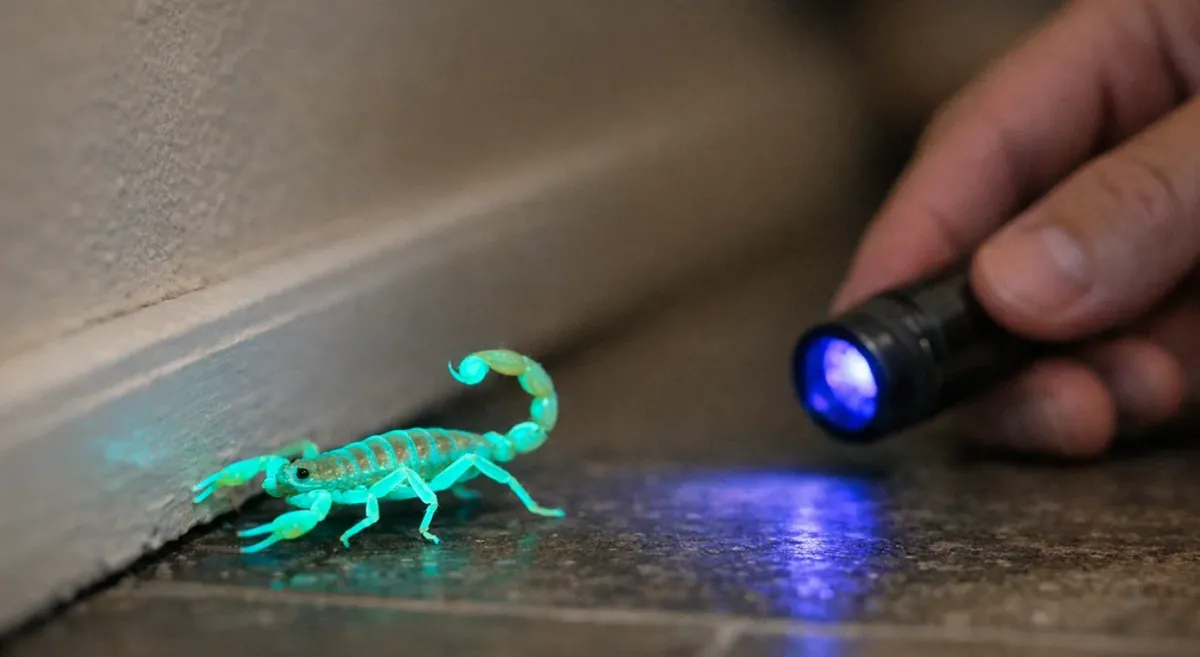
Here's the catch: because scorpions are nocturnal and quiet, not seeing one doesn't mean they're gone. Verification closes that blind spot. Scorpions glow bright green under UV light and travel along room edges — two facts that make automated, perimeter-based detection possible. A Scorpion Alert Detector plugs into a standard wall outlet, shines 365nm UV light on the floor, scans only when the room is dark, and sends a photo-verified alert to your phone within seconds of spotting one. Place them near entry points and in high-risk rooms like bedrooms and bathrooms.
When to call an Abilene scorpion control pro (and what to ask)
Call a professional if you're seeing scorpions repeatedly, someone's been stung, or you have heavy outdoor harborage you can't manage alone. Before you hire, ask these five questions:
- What does your inspection cover, inside and outside?
- Do you do exclusion and sealing work, or only spray?
- What's the follow-up schedule after the first treatment?
- How do you address the prey insects scorpions feed on?
- How will you measure whether it's actually working?
And whatever you do, don't panic-stomp or grab at one bare-handed — see what not to do after spotting a scorpion in your home before you react.
Scorpion Alert rents UV Scorpion Detectors as part of a simple monthly monitoring subscription — the hardware is included, per-Detector pricing drops as you add rooms, and there's a one-time shipping fee at checkout. There's no long-term contract; cancel any time by emailing support@scorpionalert.com and returning the Detectors. See current rates on the live calculator at scorpionalert.com/pricing.
Living with scorpions in Abilene often comes down to catching nighttime activity before it turns into an indoor surprise, especially around entry points and cluttered storage areas. Scorpion Alert helps by using 365nm UV detection after dark and sending a photo-verified alert so you can respond quickly; learn more at Scorpion Alert.