Do cats really kill scorpions—or is that just a lucky pet story?
You’ve probably heard it before: “Get a cat,” your neighbor says. “Mine kills every scorpion that comes inside.” But scroll through Reddit’s scorpion threads and you’ll find something surprising—homeowners are split almost perfectly down the middle. Half swear their cat is a scorpion-hunting machine. The other half? Their cats couldn’t care less.
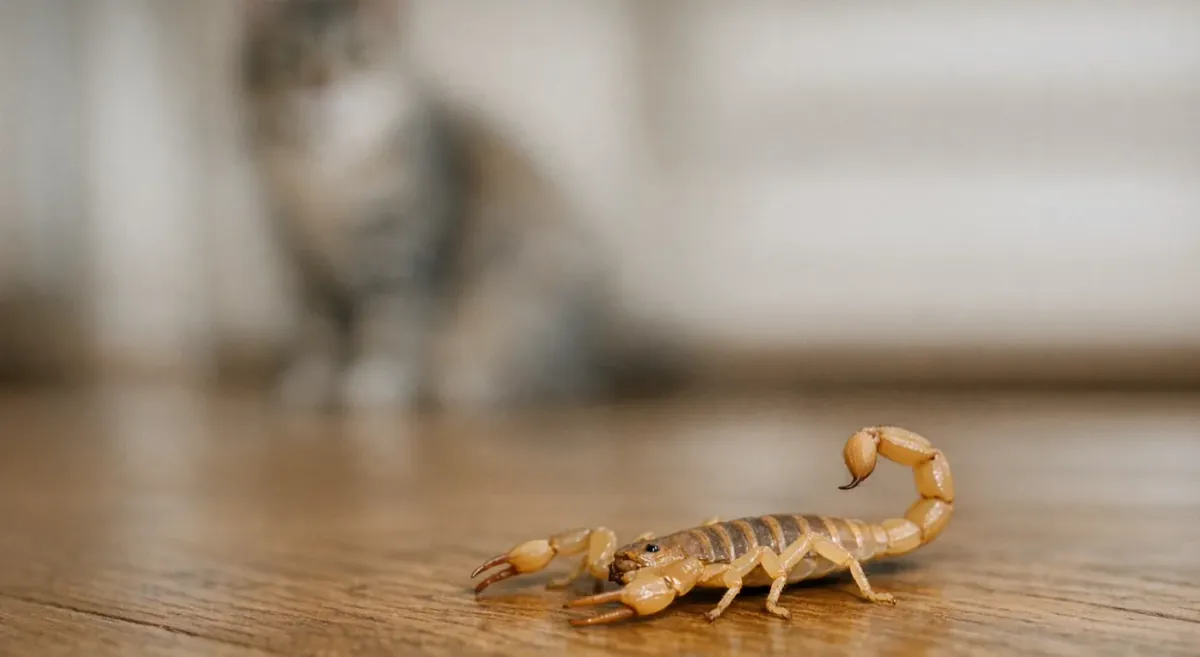
So what counts as “working” when we’re talking about cats and scorpions? Some cats kill them outright, crushing them with quick paws or precise bites. Others spot the scorpion and alert you with intense staring or meowing—giving you time to grab a glass and handle it yourself. Then there’s the third outcome: your cat walks right past a scorpion like it’s part of the furniture.
Here’s the reality: even if you get lucky with a hunter cat, it’s still just a bonus layer of protection. Your cat sleeps 15 hours a day. It can’t patrol every room at once. And most importantly, you wouldn’t rely solely on a cat to protect young children who are more vulnerable to scorpion stings, overnight guests, or even the cat itself from getting stung.
What "success" looks like in real homes
Reddit homeowners describe three distinct outcomes when their cats encounter scorpions. First, the ideal scenario—the cat spots, stalks, and kills the scorpion before anyone else knows it’s there. You find the dead scorpion later, maybe with a proud cat sitting nearby. These are the stories that create believers.
The second outcome might be even more valuable: the cat becomes your early warning system. Picture this scenario from an Arizona homeowner: “My cat was frozen, staring at the bathroom baseboard at 11 p.m. Sure enough, bark scorpion right where she was looking. She didn’t attack it, but I wouldn’t have known it was there without her.”
Then there’s outcome three, which frustrates homeowners who got a cat specifically for scorpion control. The cat shows zero interest. One Texan reported finding a scorpion in their cat’s food bowl—with the cat eating around it. Another discovered their cat had been sharing a water dish with a scorpion for who knows how long.
Why this question gets so many confident (and conflicting) answers
When your cat kills a scorpion right in front of you, it sticks. You tell that story for years. You recommend cats to every neighbor dealing with scorpions. But here’s what creates the confusion: absence of evidence isn’t evidence of success.
A homeowner goes six months without seeing a scorpion and credits their new cat. But was it really the cat? Maybe it was the cooler weather. Maybe the neighbors finally fixed their irrigation leak. Maybe you sealed that gap under the back door without realizing how much it mattered. When you don’t see scorpions, it’s easy to give your cat all the credit.
The opposite happens too. Your cat ignores one scorpion, and suddenly you’re online warning everyone that cats are useless. But maybe your cat would’ve caught a different scorpion in a different room at a different time. That’s why Reddit threads show such passionate disagreement—everyone’s working from a tiny sample size of dramatic moments.
What do Reddit homeowners actually report about cats vs. scorpions?
Dive into Reddit’s scorpion communities and you’ll find hundreds of firsthand accounts. In r/phoenix, r/Tucson, and r/Austin, homeowners share their cat-versus-scorpion stories with the kind of detail only someone who’s lived it can provide. The pattern that emerges? Two completely different camps, each absolutely certain they’re right.
The pro-cat camp shares victory stories that sound almost identical across different threads. “My cat patrols the house every night around 10 p.m.,” writes one Phoenix homeowner. “She’s caught three scorpions this month, always in the master bathroom or laundry room. Kills them before I can even get there.” These aren’t one-off flukes—the same cats seem to develop a hunting pattern.
But scroll down the same threads and you’ll find the skeptics with equally convincing evidence. “Bought two cats specifically for scorpion control,” reports a Tucson resident. “Six months later, stepped on a scorpion barefoot in my kitchen. Both cats were in the same room, completely oblivious.” The frustration in these posts is palpable—they did what everyone suggested, and it didn’t work.
Pro-cat reports: the 'obsessive scorpion hunter' behavior
The cats that excel at scorpion hunting share specific behaviors. They stalk baseboards methodically, especially where walls meet floors. One New Mexico homeowner described it perfectly: “My cat does this creepy slow walk along every wall at night, nose almost touching the baseboard. That’s how I know she’s hunting.”
These hunter cats focus on high-risk areas. Bathrooms, laundry rooms, and garages get the most attention—probably because that’s where scorpions find moisture and insects to eat. The cats seem to patrol during peak scorpion hours too, typically between 9 p.m. and 2 a.m. when scorpions are most active.
The trophy behavior seals the deal for many homeowners. “She brings them to my bed,” admits an Austin cat owner. “Disgusting but effective. I’d rather wake up to a dead scorpion gift than step on a live one.” These cats don’t just kill scorpions—they make sure you know about it.
Anti-cat reports: the 'I bought a cat and still got scorpions' reality
For every success story, there’s a homeowner whose cat couldn’t care less about scorpions. These cats might be excellent mousers or bird catchers, but scorpions don’t trigger their hunting instinct. “My cat will demolish any spider in seconds,” writes a frustrated Phoenix resident. “But scorpions? Walks right past them like they’re invisible.”
Some cats show initial interest that quickly fades. They’ll investigate the first scorpion, maybe bat at it once, then lose interest when it doesn’t run away like typical prey. One homeowner documented this perfectly: “First scorpion: cat was fascinated. Second scorpion: mild interest. By the third one, she didn’t even look up from grooming herself.”
The false security problem shows up repeatedly in these threads. Homeowners stop doing their own checks, skip sealing entry points, or delay calling pest control because they assume the cat has everything handled. Then comes the rude awakening—finding a scorpion in the baby’s room or getting stung in the shower—with the cat nowhere to be found.
Why Reddit looks 50/50: environment + cat personality + timing
Your neighborhood’s scorpion pressure makes a huge difference. A cat in central Phoenix faces more scorpions than one in suburban Dallas. More encounters mean more chances for the cat to develop hunting behaviors—or to prove it doesn’t care. Reddit threads from high-scorpion areas show more extreme opinions in both directions.
Indoor environment matters too. Cluttered homes with lots of hiding spots make scorpion hunting harder for cats. Clear floors and minimal furniture along walls give hunter cats the advantage. The availability of easier prey also factors in—why chase a dangerous scorpion when there are crickets everywhere?
Timing might be the biggest variable. Is your cat active when scorpions are? A cat that sleeps from 8 p.m. to 6 a.m. misses prime scorpion hours entirely. Meanwhile, the restless cat that prowls at midnight has way more opportunities to encounter scorpions traveling along baseboards in search of prey.
Can a cat get stung by a scorpion—and what happens if it does?
Yes, cats absolutely can get stung by scorpions. The Reddit threads are full of these stories too, and they’re important to understand before you rely on a cat for scorpion control. Most stings happen exactly how you’d expect—when the cat gets too playful with dangerous prey.
The immediate signs are usually obvious: excessive drooling, pawing at the mouth, limping if stung on a paw, or unusual vocalization. Some cats hide after being stung, while others become agitated and restless. The severity depends on the scorpion species, where the sting occurred, and your cat’s size and health.
What should you do? First, try to contain or photograph the scorpion for identification—knowing whether it was a bark scorpion versus a less dangerous species helps your vet provide appropriate care. Call your vet immediately, or the pet poison helpline if it’s after hours. Most cats recover fine with supportive care, but scorpion stings can be more serious than typical insect stings, especially from bark scorpions.
The risk factors Reddit users mention (and why they matter)
Cats typically get stung in three scenarios. The most common? Batting at the scorpion with their paws. Even quick cats can misjudge the scorpion’s striking range. One Reddit user described it vividly: “My cat pinned the scorpion with one paw and was about to strike with the other when it got stung right in the pad. Instant regret.”
Biting or attempting to carry the scorpion creates even more risk. Scorpions can sting upward and backward, so a cat thinking it has control can still get stung in the mouth or face. These stings tend to be more serious because of the sensitive tissue and proximity to airways.
Night hunting in dark corners adds another layer of danger. Cats might corner a scorpion under furniture or in a closet where escape routes are limited. Desperate scorpions sting more readily. Several Reddit posts describe cats getting stung while pursuing scorpions into tight spaces where neither animal has room to maneuver.
Why 'my cat is fast' isn't a safety plan
Cat reflexes are impressive, but scorpion defenses evolved over 400 million years. Their sting is lightning-fast—we’re talking milliseconds from threat detection to venom injection. Even the quickest cat can’t always dodge a defensive sting from a cornered scorpion.
Think about the physics involved. Your cat has to get close enough to strike, which puts it within the scorpion’s strike zone. The scorpion only needs one successful defensive sting to win the encounter. Sure, experienced hunter cats might develop techniques to minimize risk, but minimized risk isn’t zero risk.
This keeps coming back to the same point: you wouldn’t rely solely on your reflexes to avoid getting stung while handling scorpions. Why expect your cat to have a perfect record? Even professional pest control technicians—with tools, training, and protective gear—occasionally get stung.
How to reduce pet risk without losing the 'natural hunter' benefit
Keep floors clear, especially along walls where scorpions travel. Clutter gives scorpions places to hide and makes it harder for cats to hunt safely. Move pet beds, litter boxes, and food dishes away from walls and potential entry points. You want hunting encounters to happen in open spaces where your cat has room to maneuver.
Reduce the insect population that attracts scorpions indoors. Fewer crickets and roaches mean fewer scorpions hunting in your home. Fix moisture issues, seal food, and use targeted insect control. This makes your home less attractive to scorpions while also reducing the overall risk.
Consider using motion-activated lights or monitoring systems in high-risk areas. If you know a scorpion is present, you can step in before your cat discovers it during a midnight patrol. Automated detection systems like Scorpion Alert can notify you immediately when a scorpion enters, letting you handle the situation safely rather than hoping your cat notices first.
Are other 'natural predators' more reliable than cats for scorpion control?
Cats aren’t the only animals people recommend for scorpion control. Browse homesteading forums and pest control discussions, and you’ll find advocates for everything from chickens to geckos. But how do these alternatives stack up in real-world effectiveness?
In practice, each predator comes with its own set of trade-offs. Some are better hunters than cats but completely impractical for most homeowners. Others might work in theory but fall apart in day-to-day life. Let’s grade them based on what actually matters: effectiveness against scorpions, practicality for suburban homes, and unwanted side effects.
Understanding these options helps put the cat question in perspective. When you see what else is out there, you might appreciate your scorpion-ignoring cat a bit more—or decide it’s time for a completely different approach.
Chickens: do they really hunt all day, and what's the catch?
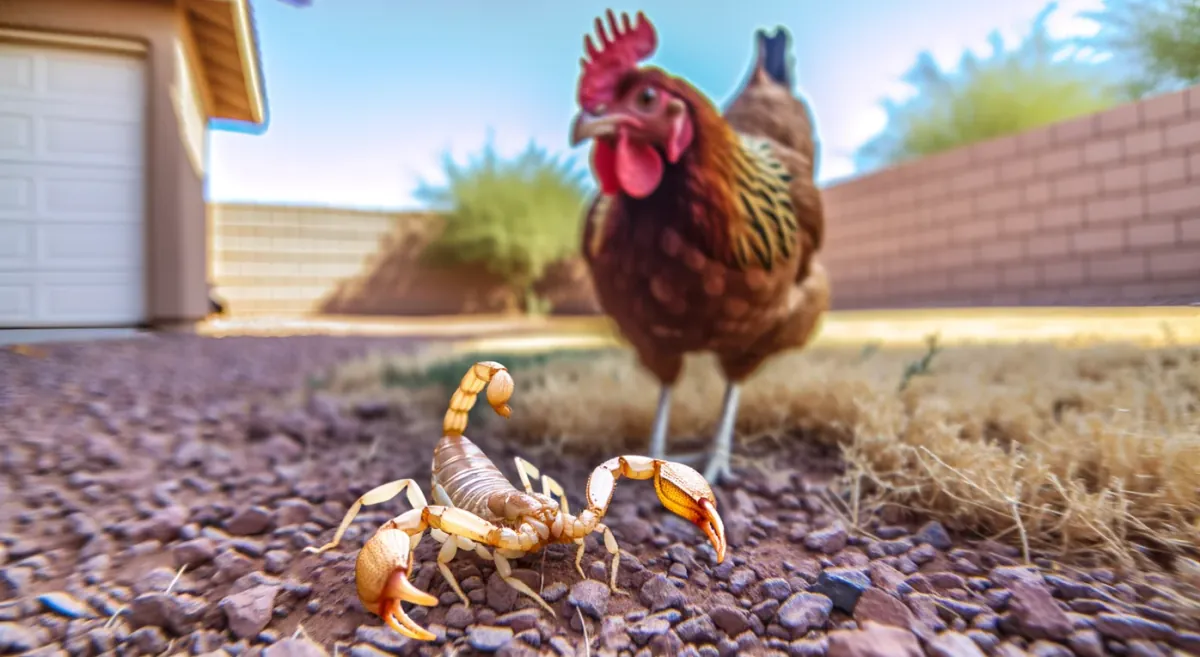
Chickens are scorpion-hunting machines during daylight hours. They’ll spot movement, rush over, and peck scorpions to death before eating them. The hunting drive is strong and consistent—unlike cats, most chickens don’t lose interest over time.
But here’s the catch. Chickens produce massive amounts of poop, make noise that annoys neighbors, and attract predators like coyotes and hawks. Most HOAs ban them outright. They also only work during daylight, completely missing nighttime scorpion activity. For the full breakdown of using chickens for scorpion control in desert homes, check out our detailed guide.
Geckos: cheap, 24/7, and… unpredictable indoors?
Mediterranean house geckos cost $10-20 each and hunt around the clock. They’re small enough to follow scorpions into tight spaces and genuinely seem to enjoy eating them. Some Arizona homeowners swear by releasing a few geckos in their garage or covered patio.
The problems start with containment. Geckos go where they want, not where you need them. They might set up shop in your kitchen when you wanted them in the garage. They also don’t eliminate scorpion entry points—they just add predation pressure. Think of them as helpful background players, not a targeted solution. Plus, they poop on walls, which some homeowners find worse than the occasional scorpion.
Pallid bats, roadrunners, and 'bird feeder' strategies: cool, but not controllable
Here’s a fascinating fact: pallid bats have evolved resistance to scorpion venom and actively hunt Arizona bark scorpions. Roadrunners grab scorpions with their beaks, bash them against rocks, and swallow them whole. Even common desert birds like thrashers and shrikes eat scorpions when they find them.
Some homeowners try attracting these natural predators with bat boxes or strategic bird feeders. The logic sounds good—create habitat for scorpion predators and let nature handle your problem. But you can’t direct these animals to patrol your bedroom at 2 a.m. They hunt where they want, when they want.
Wild predators are fascinating to watch and probably do reduce overall scorpion populations in your neighborhood. But for protecting your family inside your home? You need something more reliable than hoping a roadrunner happens to be passing through your living room at the right moment.
If cats and predators aren't reliable, what should I do instead?
After reading all these Reddit reports, the pattern is pretty clear. Natural predators can help, but they’re not a complete solution. Your cat might catch some scorpions, or it might ignore them entirely. Either way, you need a plan that doesn’t depend on animal behavior.
The most successful homeowners use layers of protection. They reduce entry points, eliminate scorpion food sources, and add reliable monitoring for the scorpions that still get inside. Think of predators as a bonus layer, not your primary defense.
Modern technology offers something predators can’t: consistent, automated monitoring that works every night without getting tired, bored, or stung. When you combine smart monitoring with basic prevention, you’ll get better results than hoping your cat feels like hunting.
Step 1: Stop relying on luck—monitor when scorpions are actually active
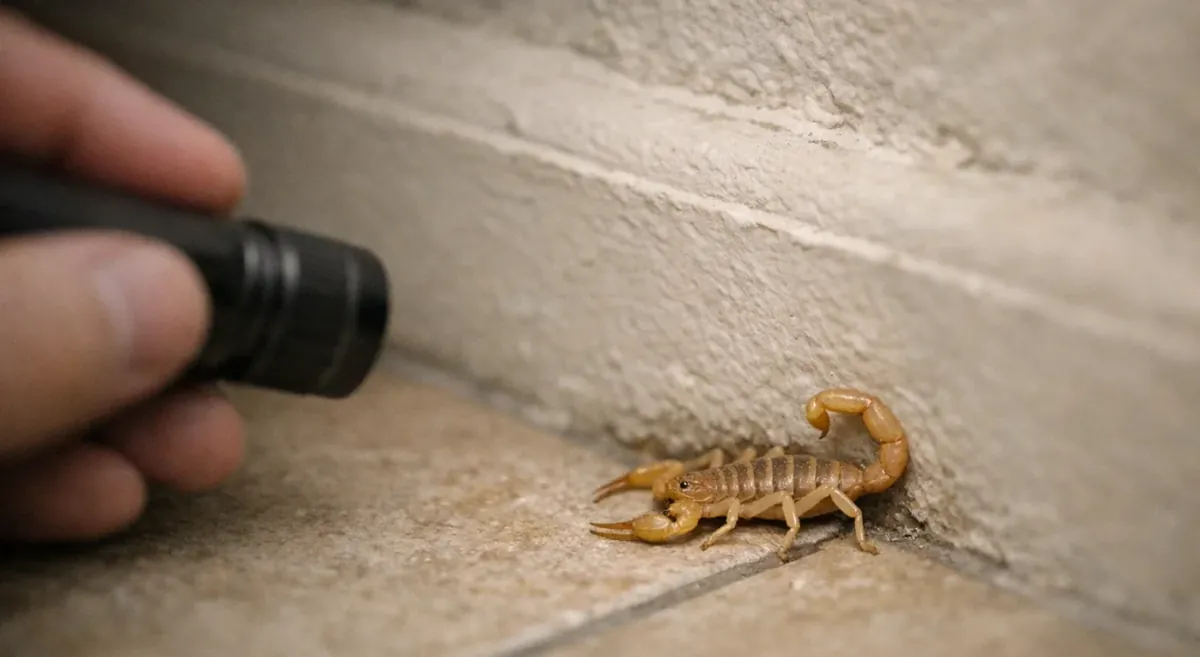
Scorpions are most active between sunset and sunrise, with peak movement typically from 9 p.m. to 2 a.m. They navigate by following walls and baseboards—a behavior called thigmotaxis. This predictable pattern means effective monitoring needs to work in darkness and focus on room perimeters where scorpions actually travel.
Scorpion Alert Detectors solve this by activating automatically when rooms go dark. Each detector plugs into a standard outlet and projects UV light onto the floor below, watching for the characteristic green glow of scorpion fluorescence. Unlike hoping your cat happens to be patrolling at the right moment, these devices monitor continuously throughout the night.
The system is designed around scorpion behavior, not human convenience. While you’re sleeping, detectors are scanning. While your cat is curled up on your bed, detectors are watching the baseboards. It’s the difference between random protection and systematic coverage.
Step 2: Use detection you can verify (not just 'my cat seems interested')
When your cat stares at a corner, you’re left guessing. Is it a scorpion? A cricket? A piece of lint? With photo-verified detection, every alert includes a captured image showing exactly what triggered it. You’ll see the scorpion’s size, location, and which direction it’s facing—information that helps you respond appropriately.
The two-stage detection process reduces false alarms that would otherwise wake you unnecessarily. First, on-device AI looks for the specific UV fluorescence pattern of scorpions. If it spots something suspicious, it captures an image and sends it to cloud AI for confirmation. Only verified scorpion detections trigger alerts to your phone.
This verification matters at 2 a.m. when you’re deciding whether to get out of bed. Instead of wondering if your cat’s meowing means danger or just midnight zoomies, you get a clear photo showing a scorpion six feet from your bedroom door. That’s actionable information, not anxiety-inducing guesswork.
Step 3: Place defenses where scorpions travel and enter
Start with the rooms where a scorpion encounter would be most dangerous. Bedrooms and nurseries top the list—anywhere people sleep or spend time barefoot. Place detectors near entry points like doors from the garage, pet doors, and sliding glass doors. These transition zones see the most scorpion traffic.
High-moisture areas need coverage too. Bathrooms, laundry rooms, and kitchens attract the insects that scorpions hunt. A detector in the master bathroom might catch scorpions your cat never visits during its nighttime rounds. One near the washing machine watches an area where scorpions often hide in damp towels or clothing.
Begin with a starter pack in your highest-priority rooms, then expand coverage based on what you learn. The system’s alert history shows patterns—which rooms see the most activity, what times scorpions appear, and whether your prevention efforts are working. It’s systematic protection that adapts to your specific situation, not a one-size-fits-all hope that your cat turns into a hunter.
Reddit stories make it clear that some cats will swat or even kill scorpions, but it’s inconsistent—and it can still leave you guessing about what’s lurking after dark. If you want a more reliable way to know when scorpions are showing up (with or without your cat’s “help”), Scorpion Alert can help you monitor activity and respond sooner.