
Knowledge Base

Biological Control

Articles on Biological Control from Scorpion Alert — practical guides, real-world results, and prevention tips for homeowners and pros.

Articles

Every post tagged Biological Control.
How Scorpion Alert works

Find them before they find you

Plug in your Scorpion Detectors around your home and get instant alerts with the location of the scorpion.
  • Detectors arrive ready to plug in
  • Live alerts go straight to your phone or watch, with location
  • Alert multiple family members with a single account
  • One flat monthly monitoring fee — no contract, cancel anytime
Get Scorpion Detectors
Real homes, real results

Why homeowners trust the system

Map of Peoria, ArizonaPeoria, Arizona
We’re in a new neighborhood with a lot of construction. Our Detectors are staying busy, but getting notifications is better than getting surprised.
Jessica
14 scorpions detected
Map of Paradise Valley, ArizonaParadise Valley, Arizona
We don’t get as many alerts any more now that we’ve figured out how to seal up our vents, but we were getting a lot of alerts in the beginning.
Leticia
15 scorpions detected
Map of Fountain Hills, ArizonaFountain Hills, Arizona
The picture and location that come with an alert is so helpful in figuring out where the scorpion is going. It usually hasn't traveled very far by the time I get there.
Harrison
12 scorpions detected
Common questions

Need quick answers?

How can I attract roadrunners without making my yard worse for scorpions?

You can encourage roadrunners by providing basics like clean water, some shade, and selective native cover that creates hunting lanes—without adding clutter. The key is avoiding rock piles, debris stacks, or dense harborage near the foundation that can shelter scorpions, and avoiding poisons that can harm birds through secondary exposure. The practical do’s and don’ts are laid out in attracting roadrunners safely at home.

Do roadrunners actually get rid of scorpions around my house?

Roadrunners do eat scorpions, but they’re not a reliable, complete fix for an active infestation because their hunting range and food choices vary. Since scorpions are most active at night and roadrunners mostly hunt during the day, you may notice fewer scorpions outdoors without eliminating them everywhere (especially indoors or in wall voids). This section sets realistic expectations in roadrunners for scorpion control.

If I get chickens, will they get rid of my scorpion problem?

Chickens can help as a strong yard layer, but they won’t “solve” scorpions by themselves. The timing is the big limitation: chickens roost at night right when scorpions are most active, and they can’t prevent indoor wanderers along baseboards or bedrooms. This section explains where they help most (open foraging time, fewer hiding spots) and where they don’t (clutter, rock landscaping, block walls) in will chickens eliminate scorpions.

Why am I still finding scorpions inside even though I see roadrunners outside?

Predators can reduce some outdoor activity, but they don’t patrol inside your home at night, and scorpions can still thrive in manmade cracks and hiding spots. This section walks through a calm, step-by-step plan: confirm activity with night checks, seal entry points, reduce harborage, and add consistent monitoring in high-risk rooms. It also explains how Scorpion Alert fits into an integrated approach in what to do when scorpions persist.

What’s the best plan for scorpions at night if chickens are outside?

A practical approach is layered: use chickens to reduce yard prey and hiding spots, seal the perimeter to block easy entry, then add nighttime monitoring when scorpions are actually moving. The article highlights indoor detection that activates in darkness, scans along room edges, and can send photo-verified alerts—especially useful near bedrooms, nurseries, and common entry points. It also includes a calm “panic plan” for safe capture if you spot one, outlined in layered scorpion defense plan.

Do chickens really eat scorpions in the yard?

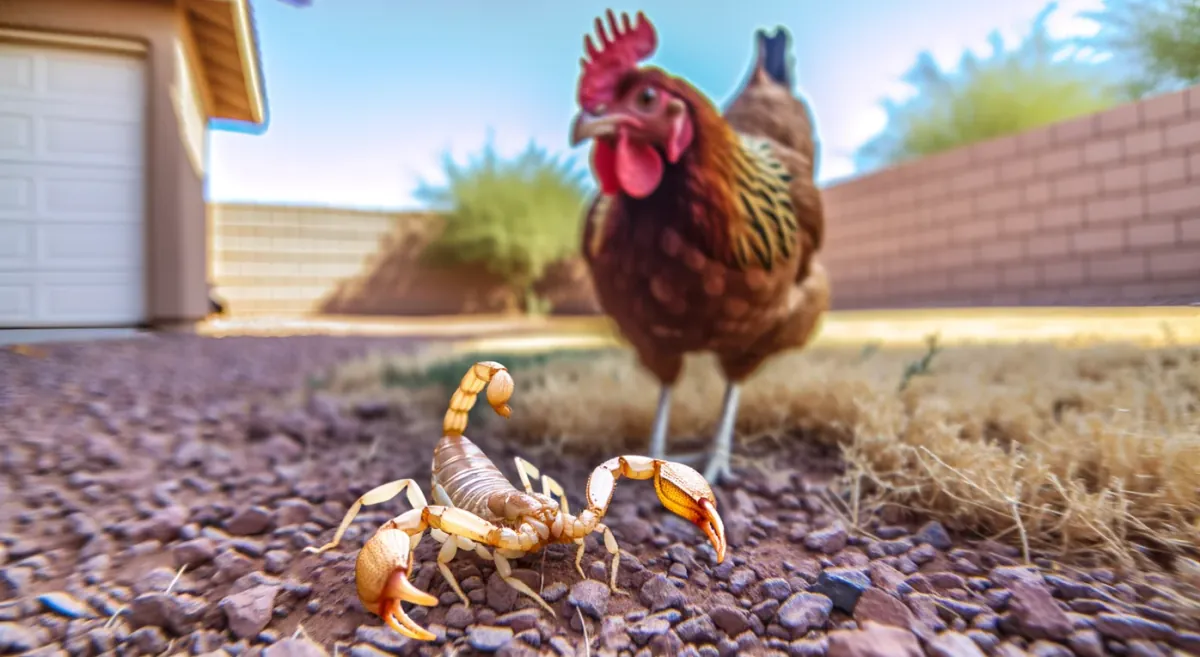
Chickens are relentless daytime foragers—they scratch, peck, and patrol for anything that moves, so scorpion encounters can happen, but they’re not guaranteed daily entertainment. The bigger win is often indirect: they eat crickets, roaches, and other prey that scorpions rely on, which can reduce pressure over time. Stings can happen and outcomes vary (especially for smaller birds), so don’t rely on chickens as your only line of defense—see chickens hunting scorpions in deserts for the full breakdown.

Got questions about scorpion detection?