Can a dehumidifier keep scorpions away?
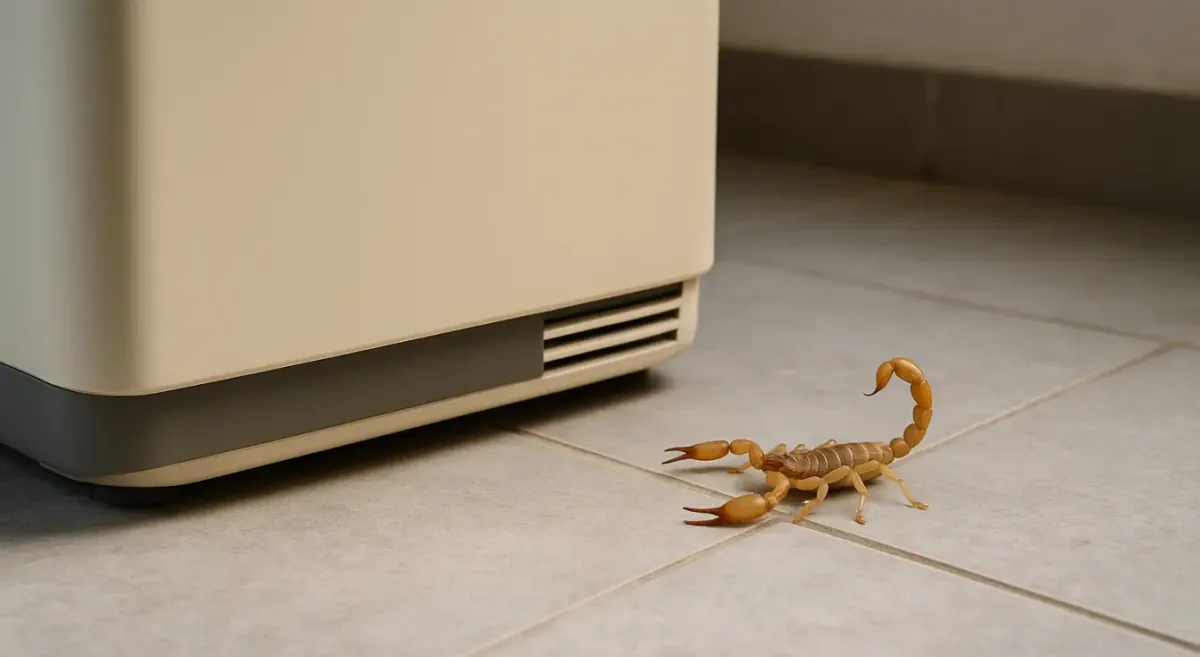
No, a dehumidifier won't keep scorpions away. It lowers indoor humidity, which can make a damp room a little less appealing to some moisture-loving insects, but it isn't a scorpion repellent. It won't seal gaps, remove a scorpion that's already inside, or stop one from patrolling your baseboards at night.
The only real connection is indirect—and weak. Drier air can mean fewer certain bugs in that room, and fewer bugs can mean fewer easy meals for a hunting scorpion. That's a small ripple effect, not protection. Keep your expectations realistic: a dehumidifier is a comfort and mold tool that might nudge insect pressure a bit, nothing more.
What a dehumidifier changes (and what it can't)
A dehumidifier lowers relative humidity in the specific space it serves. That's the whole job. It doesn't touch the wall voids, weep holes, or door gaps that scorpions use to slip inside, and it can't evict one that's already tucked behind a baseboard.
Why do some homeowners swear it worked? Usually because they changed several things at once. They ran the dehumidifier and cleaned out the garage, fixed a leaky pipe, and cleared clutter in the same month. The decluttering and sealing did the heavy lifting. The dehumidifier just got the credit.
When running one still makes sense in the Southwest
There are good reasons to run one that have nothing to do with scorpions. Monsoon season can push humidity up fast across Arizona and New Mexico. Poorly vented bathrooms, damp laundry rooms, and musty closets hold moisture that feeds mold and mildew. A dehumidifier helps fix those comfort and health problems.
Aim for an indoor relative humidity of roughly 30 to 50 percent. That range helps keep mold at bay and rooms comfortable. Just don't buy one expecting it to guard your home against scorpions.
Where should I place a dehumidifier so it isn't wasted?
Put it in the smallest enclosed damp room first, and keep that room's door closed so the unit isn't fighting the whole house.
- Pick the dampest small space — a bathroom, laundry room, or musty closet.
- Close the door so the dehumidifier concentrates on that enclosed air.
- Set up drainage — either empty the tank on schedule or run a hose to a floor drain.
- Don't try to dehumidify your entire house with one unit; it won't keep up.
Notice that none of this guards an entry point. Placement affects moisture, not the routes a scorpion travels. Sealing and monitoring do that job — more on those later.
Do scorpions like humidity, or do they prefer dry air?
Most Southwest scorpions are drought-adapted and don't need humid air to thrive. The Arizona bark scorpion and the Texas striped bark scorpion both evolved in desert conditions and conserve body moisture extremely well. Lowering your indoor humidity won't make your home hostile to them.
They can survive on very little water, which is exactly why cranking down the humidity does so little. A dry house is still softer and cooler than the open desert.
If scorpions don't need humidity, why do I see them near bathrooms?
Bathrooms and laundry rooms offer things scorpions want, and humidity is only a minor one. Plumbing penetrations through walls and floors give them easy travel routes into wall voids. These rooms are dark and quiet at night, when scorpions are active.
Condensation on a pipe or a puddle by the tub is an easy drink. Prey insects gather near water too. So a scorpion isn't there because the air is moist — it's there for the access, the cover, and the food.
Does lowering humidity force scorpions to leave?
Rarely. Scorpions conserve moisture so efficiently that a drier room won't push them out. Your home still beats the temperature extremes and predators outside. Treat humidity control as a minor supporting player in prevention, never your main defense.
Will a dehumidifier keep bugs away (and reduce scorpions indirectly)?
A dehumidifier can help with some moisture-loving pests in some rooms, but it won't solve an infestation on its own. Scorpion control needs broader steps — cutting prey, sealing entry points, and watching the perimeter at night.
Is a dehumidifier good for roaches?
Some roaches, especially American and Oriental roaches, depend on moisture and standing water. Drying out a damp basement, laundry room, or under-sink cabinet makes those spaces less comfortable for them. But it won't eliminate roaches if food, clutter, and entry points remain.
Do the practical things too: fix leaks, wipe sinks dry before bed, cut back on stored cardboard, and store pet food in sealed containers. Those changes matter more than the humidity reading.
Will a dehumidifier reduce spiders?
Not really, because spiders follow their prey. Change the humidity and you might shift a few insect populations, but you won't solve a spider problem with a dehumidifier alone. Reduce the insects drawn to exterior night-lighting, knock down webs and egg sacs, declutter corners where spiders hide, and address the underlying insect pressure. Fewer bugs, fewer spiders.
So…does fewer bugs actually mean fewer scorpions?
To a point, yes. Scorpions are predators, so cutting down their prey gives them fewer reasons to hunt indoors. Less food can mean less scorpion traffic through your living space.
But don't overpromise it to yourself. A hungry scorpion will still wander in through a gap and patrol your baseboards. That's why insect reduction only works when you pair it with exclusion and monitoring. Bugs are one lever, not the whole machine.
Do ultrasonic pest repellers work on scorpions?
Ultrasonic pest repellers haven't been shown to reliably repel scorpions, and you shouldn't trust one as your primary control. Results are inconsistent, and any effect tends to fade fast. If you want something that actually reduces risk, focus on sealing and monitoring instead.
Why ultrasonic devices usually don't deliver reliable results
Sound doesn't bend around obstacles. Furniture, walls, and cabinets block the waves, so the wall voids and crevices where scorpions actually travel never get treated. Coverage per room is limited to line-of-sight.
The common pattern? Homeowners notice a short-lived change, then normal pest activity returns within weeks. The effect isn't proven and can't be relied on. For the fuller picture, see our roundup of the top myths about scorpion repellents.
If you want to try one anyway, what's the least-wasteful approach?
Treat it as an experiment, not protection. Keep these guardrails in mind:
- Never stop sealing entry points or monitoring while you test it.
- Don't hide it behind couches or inside cabinets, where sound is blocked.
- Give it a set trial period, then honestly reassess whether anything changed.
If nothing changes — and often nothing does — you've lost a little money, not your peace of mind.
What works better than a dehumidifier for keeping scorpions out?
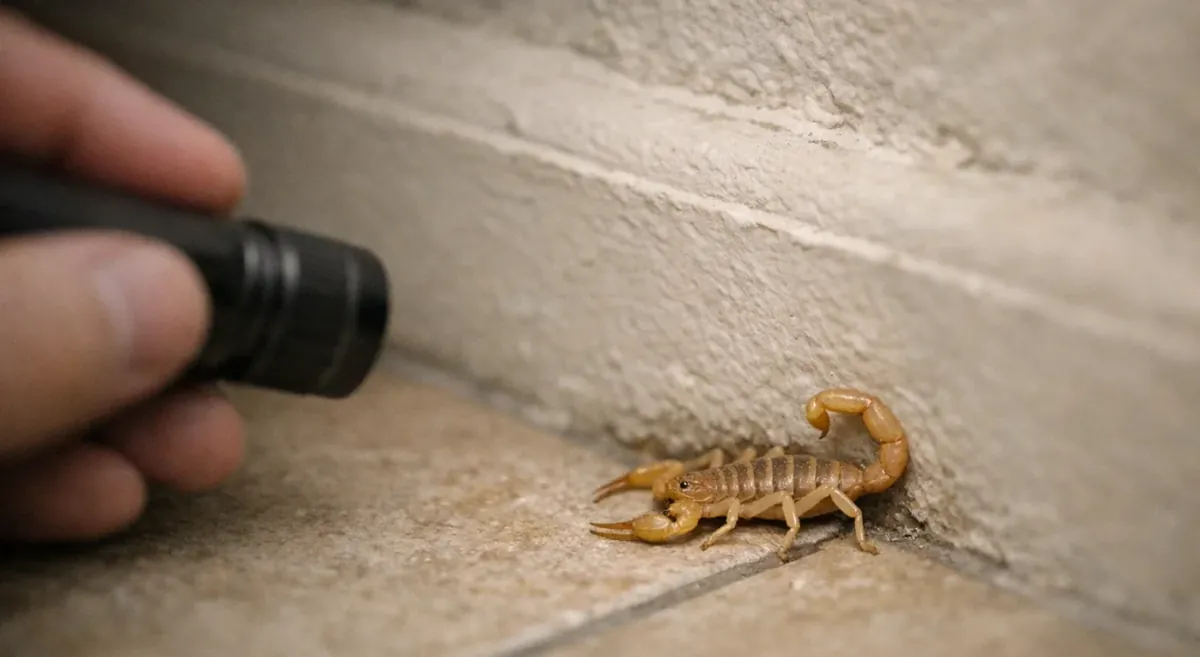
A layered plan works far better than asking whether a dehumidifier can repel scorpions: block access, remove hiding spots and prey, and monitor the routes scorpions travel at night. Scorpions are thigmotactic, meaning they hug walls and edges as they move. That predictable habit is exactly what you can defend against.
Step 1: Block entry points (the fastest win)
Sealing gives you the biggest return for the least money, and most of it is homeowner-doable.
- Add door sweeps to exterior doors — bark scorpions can slip through a gap the width of a credit card.
- Replace worn weatherstripping around doors and windows.
- Check the bottom corners of your garage door, a very common gap.
- Seal around pipe penetrations under sinks and behind appliances.
- Screen or fit weep holes so they drain without becoming doorways.
For the full breakdown, read our guide on the top ways scorpions get into your home.
Step 2: Reduce prey insects without creating new hiding spots
Keep things clean, cut clutter, and manage the bugs scorpions eat. Swap bright white exterior bulbs for warm LED or yellow lighting that draws fewer flying insects. Clear woodpiles, boxes, and debris away from the foundation. Target crickets and roaches with focused pest control, since those are staple scorpion prey. For the complete attractant list, see the top things that attract scorpions in your home.
Step 3: Monitor the perimeter at night so you're not guessing
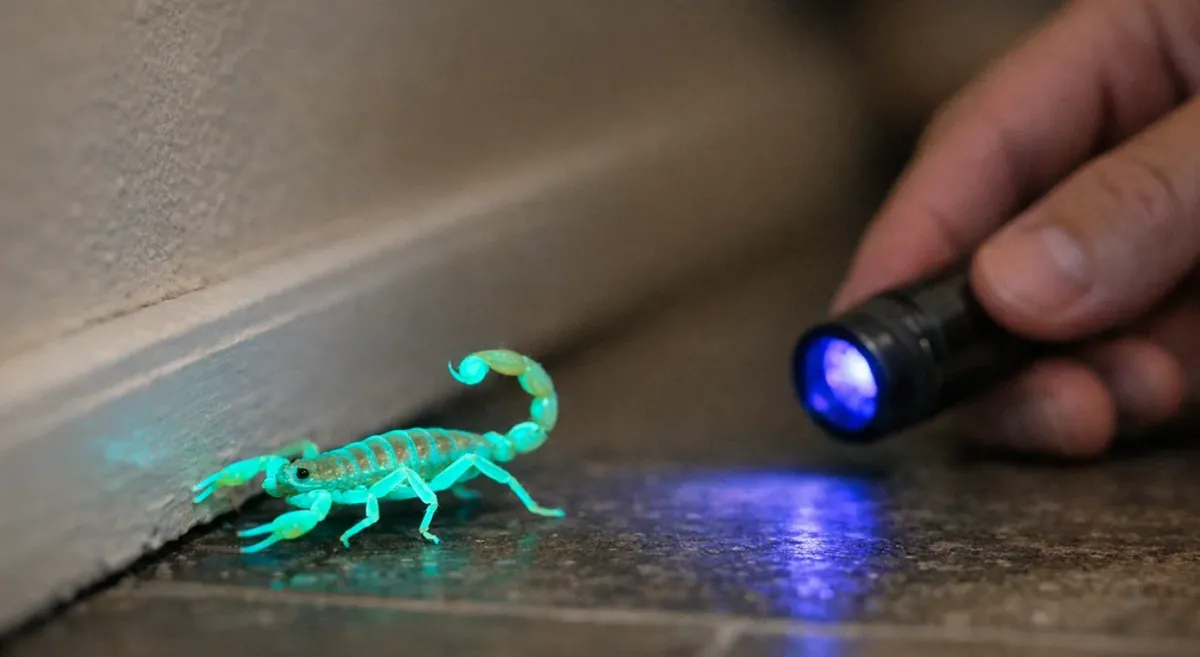
Monitoring is the layer most anxious homeowners are missing. Scorpions are nocturnal and hug walls, so watching those routes at night tells you what's really happening. Scorpions glow a vivid greenish color under UV light — that's the science this works on.
Scorpion Alert Detectors plug into standard wall outlets right on the room perimeter, where scorpions naturally travel. Each shines 365nm UV light onto the floor and scans automatically only when the room is dark. The moment a scorpion is detected, the system sends a push notification or SMS to your phone within seconds.
This is about awareness and faster response, not repelling. It doesn't replace sealing — it tells you when something slipped past your defenses so you can act before someone gets stung. And if you do spot one, know what not to do after spotting a scorpion.
Where should monitoring go first if you only start with a few devices?
Start where scorpions transition into living space and where a sting would hurt most.
- Garage entry and laundry room — common transition points from the outside in.
- Patio sliders and pet doors — wide, low gaps right at floor level.
- Bedrooms and kids' rooms — the bedroom is the most-stung room in the house, and children are more at risk from scorpion stings.
More Detectors mean more coverage. Many homes do well with three to five placed near entry points and high-priority rooms. Picture flipping on the bathroom light at 2 a.m. — with monitoring in place, you'd already have gotten the alert instead of finding that scorpion the hard way, with your bare foot.
Scorpion Alert rents Scorpion Detectors as part of a monthly monitoring subscription, with the hardware included. The hardware is included; pricing is per Detector per month and drops as you add Detectors — see the live calculator at scorpionalert.com/pricing for current rates. There's no long-term contract — cancel any time by emailing support@scorpionalert.com and returning the Detectors. See how automated detection can watch your home's perimeter at scorpionalert.com.
Lowering indoor humidity can make your home less comfortable for scorpions, but it’s rarely a complete solution on its own—especially if they’re still finding their way inside. Pair humidity control with regular monitoring so you can confirm what’s actually happening and respond quickly if you spot activity. If you want an easier way to stay on top of that, Scorpion Alert can help you track scorpion presence and take the next right step.