Detectores de alacranes

Conéctalos por toda tu casa. Recibe alertas instantáneas cuando los alacranes encuentren la forma de entrar.

Lo que dicen nuestros clientes

Map of Queen Creek, ArizonaQueen Creek, Arizona
No nos hemos topado con un alacrán por sorpresa en la casa desde que empezamos a usar esto.
Monique [Traducido]
6 alacranes detectados
Map of Chandler, ArizonaChandler, Arizona
Mucho mejor que esas trampas pegajosas asquerosas.
Danielle [Traducido]
9 alacranes detectados
Map of Las Cruces, New MexicoLas Cruces, New Mexico
Funciona exactamente como esperaba. Por favor, hagan algo parecido para serpientes.
Anjelica [Traducido]
7 alacranes detectados

¿Cómo funcionan los detectores de alacranes?

Los alacranes son sobrevivientes muy bien adaptados — expertos en evitar ser detectados. Pero nuestros detectores aprovechan dos de sus debilidades clave: la tigmotaxis y la fluorescencia.

¿Qué es la tigmotaxis?

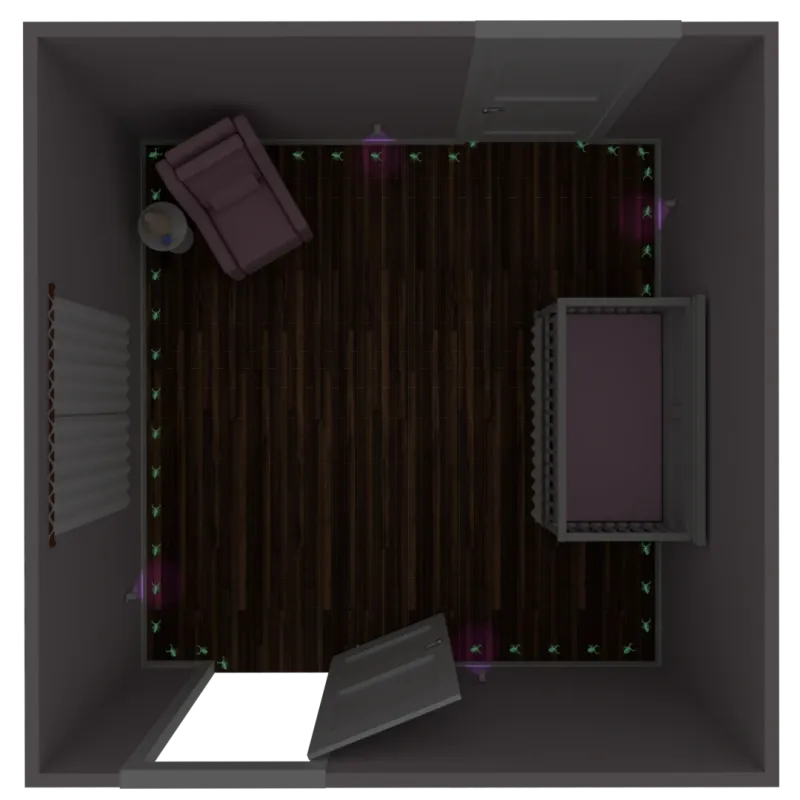
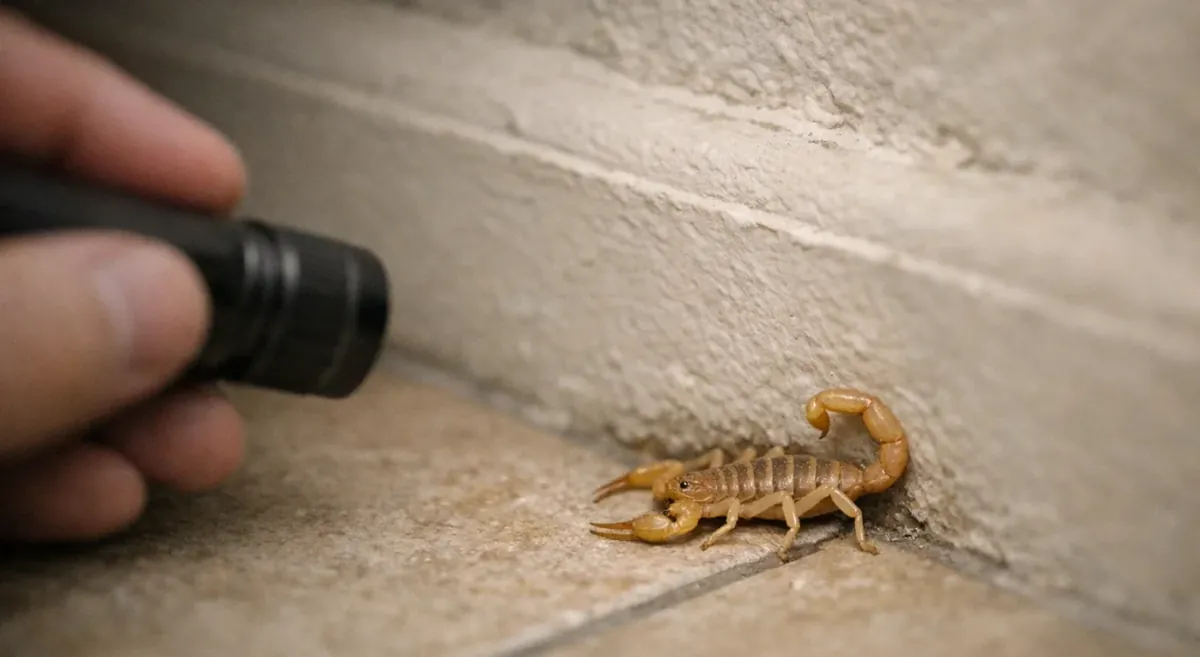
Los alacranes cazan caminando pegados a las orillas de los cuartos, un comportamiento llamado tigmotaxis. Eso les ayuda a encontrar escondites y a moverse en la oscuridad, cuando están más activos.

Mientras pasan por tus zócalos, cruzan justo debajo de los detectores de alacranes conectados a tus enchufes comunes.

Diagrama de un cuarto donde un alacrán camina pegado al perímetro — un comportamiento conocido como tigmotaxis.

¿Qué es la fluorescencia?

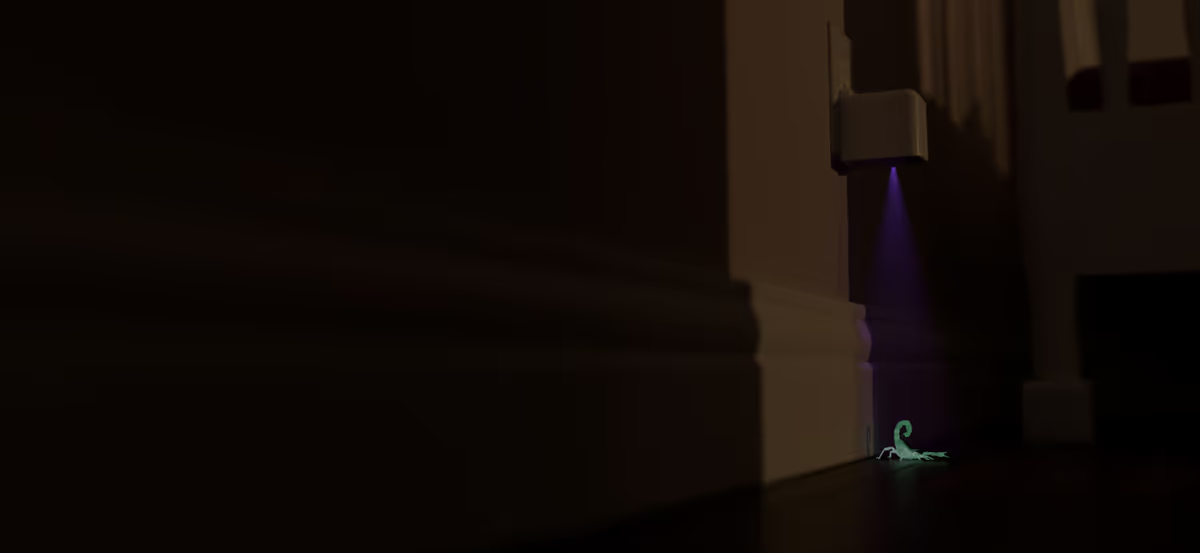
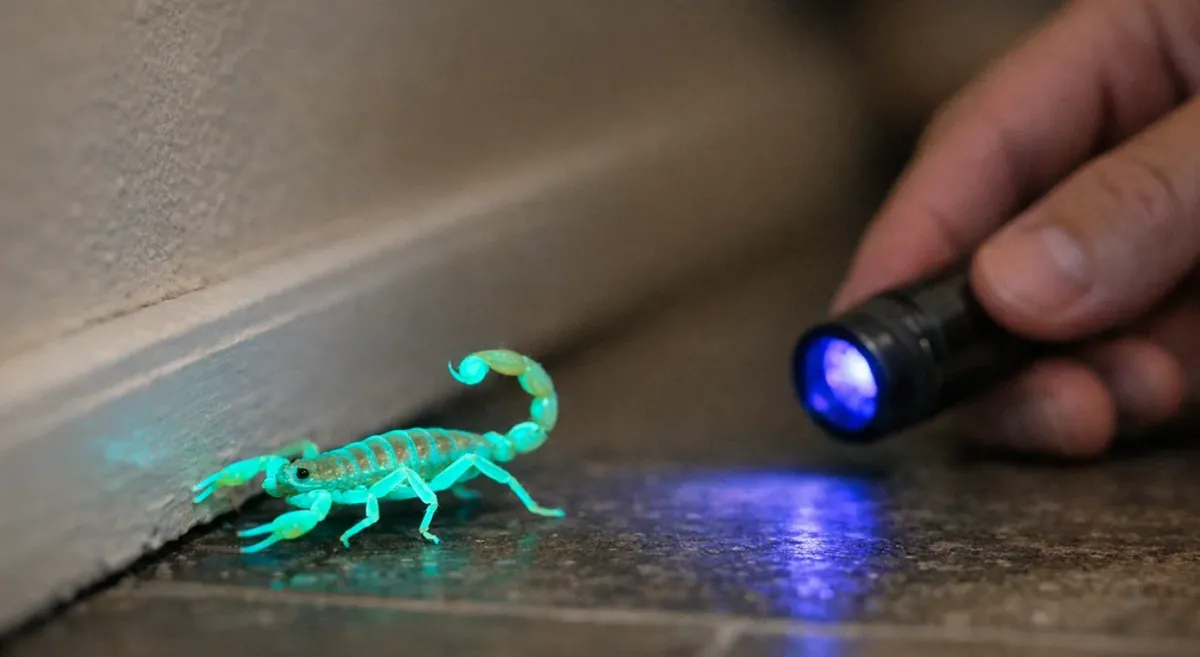
Cuando se exponen a la luz UV en la oscuridad, el exoesqueleto del alacrán brilla. Este fenómeno se llama fluorescencia.

Cuando un cuarto se oscurece, los detectores de alacranes activan en silencio luces UV discretas y de bajo consumo, haciendo que los alacranes brillen al pasar por debajo. Si el color y la forma del brillo confirman que es un alacrán, recibes una alerta al instante.

Imagen de un detector de alacranes color tan.Un alacrán mostrando el efecto de fluorescencia bajo luz UV.

¿Cómo me mandan alertas al teléfono?

Los detectores de alacranes se conectan al Wi-Fi de tu casa y envían las imágenes de los alacranes detectados a nuestra nube con reconocimiento de imagen por IA para confirmar.

Una vez recibida la imagen, la confirmación y entrega de la alerta toman unos 2 segundos. Las alertas pueden enviarse a varias personas y dispositivos si así lo deseas.

¿Son seguros para los niños?

Por supuesto. Sabemos que los niños pequeños son curiosos. Para protegerlos, puedes atornillar opcionalmente el detector de alacranes al tornillo del enchufe que ya tienes en la pared.
Ilustración de un detector de alacranes con tornillos de protección infantil.
Cómo funciona Scorpion Alert

Encuéntralos antes de que te encuentren

Conecta tus detectores de alacranes en tu casa y recibe alertas al instante con la ubicación del alacrán.
  • Los detectores llegan listos para conectar
  • Las alertas en vivo llegan directo a tu teléfono o reloj, con ubicación
  • Avisa a varios miembros de la familia con una sola cuenta
  • Una sola cuota mensual de monitoreo — sin contrato, cancela cuando quieras
Obtén tus detectores de alacranes
Hogares reales, resultados reales

Por qué los dueños de casa confían en el sistema

Map of Dripping Springs, TexasDripping Springs, Texas
Los detectores de alacranes son muy fáciles de configurar con la app y funcionan muy bien.
Rafael [Traducido]
6 alacranes detectados
Map of Austin, TexasAustin, Texas
Me encanta verlos prenderse, noche tras noche. Guardias de seguridad que nunca se cansan.
Leah [Traducido]
5 alacranes detectados
Map of Palm Springs, CaliforniaPalm Springs, California
Es una excelente manera de resolver el problema de los alacranes. Sin desorden, tecnología fácil de usar.
Michael [Traducido]
10 alacranes detectados

Preguntas frecuentes

¿Necesitas respuestas rápidas? Aquí las tienes. Si tienes más preguntas, prueba nuestro asistente con IA o visita la página completa de preguntas frecuentes.

How do I safely look for scorpions at night with a blacklight?

A simple approach is a consistent 10-minute perimeter sweep: start at a door, go clockwise, and keep the UV beam low along the floor/baseboard seam while pausing at corners and thresholds. A 365nm UV light typically produces the strongest fluorescence, making nighttime scans more effective without blasting the room with visible light. If you find one, use a container-and-stiff-paper method to capture it without putting hands near it, as outlined in this nighttime UV scorpion search routine.
Why would there be a scorpion in my ceiling light fixture?

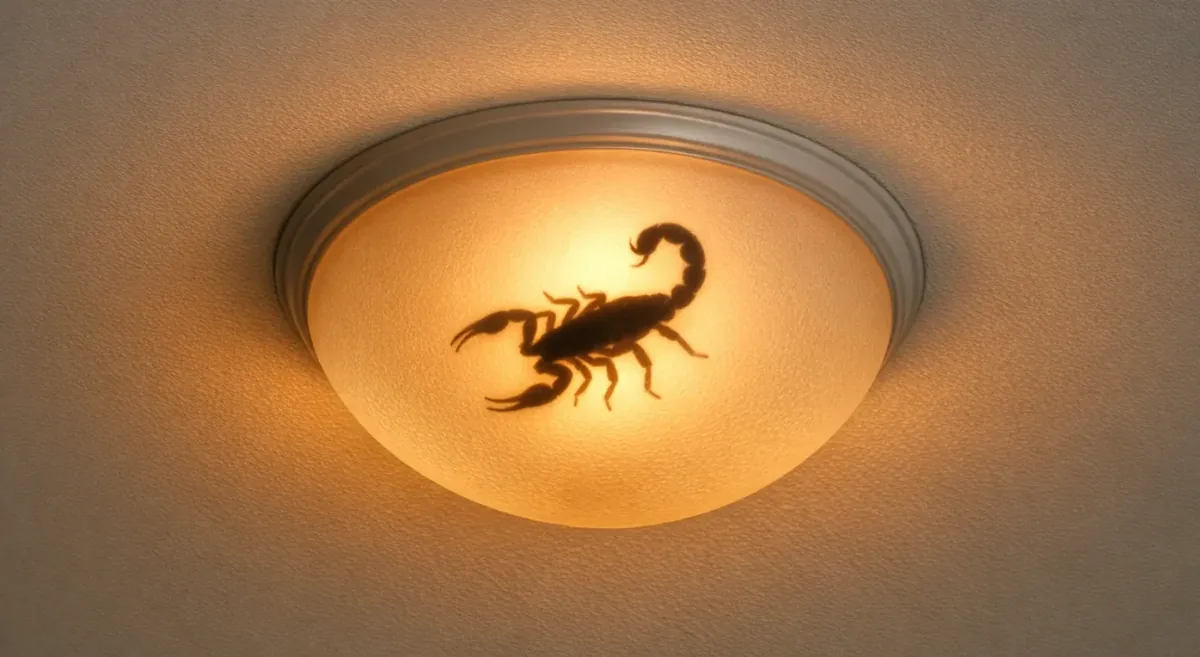
A scorpion in a ceiling light almost always got there from inside your ceiling — not by climbing up the wall from the room. Scorpions travel the attic and wall voids, then drop into the fixture through the gap around the electrical box where the wiring enters. So a sighting usually means they're already getting into the space above your ceiling, especially if you've seen others recently. This guide on scorpions in ceiling light fixtures explains the entry route and what the sighting signals.

Are scorpions really a problem in Sunrise Manor, NV—or am I just noticing them more?

Yes—Sunrise Manor sits in Mojave Desert habitat, and scorpion sightings can feel “sudden” because they’re mostly active at night. Local reports (including nearby community observations) support that this isn’t just your imagination, and their edge-hugging behavior (thigmotaxis) explains why you often spot them along baseboards and corners. This Sunrise Manor scorpion activity guide also includes a quick risk checklist and a simple 24–48 hour plan to inspect entry points and outdoor harborage.

What are the fastest scorpion-proofing steps I can do in the nursery tonight?

The article prioritizes “tonight fixes” that immediately reduce crib access with minimal tools: pull the crib away from walls, remove climbable “bridges” (curtains, cords, nearby furniture), and do quick perimeter decluttering. It also outlines a simple 60–90 second lights-out routine (including optional UV glow checks) and what to do if you spot one so you don’t risk a second sting. Use this fast nursery scorpion-proofing checklist to knock out the highest-impact changes in under 15 minutes.

¿Por qué los alacranes entran a la casa en primer lugar?

La mayoría de los alacranes se meten adentro por lo básico: comida (insectos como grillos y cucarachas), agua (fugas, condensación, platos de mascotas) y refugio (espacios frescos, apretados y oscuros). Muchas veces viajan a lo largo de bordes y líneas de pared, así que la prevención enfocada al perímetro normalmente funciona mejor que los tratamientos puntuales al azar. Esta sección también explica cómo las pinzas del alacrán les ayudan a navegar grietas y desorden, e incluye una rápida revisión de realidad sobre los alacranes en Nevada y alrededor de Austin, Texas en por qué los alacranes entran a las casas.

Are scorpions a real problem in Artesia, New Mexico?

Yes—scorpions can be a “high relevance” issue for Artesia homeowners because sightings often cluster around yards and blocks with good hiding spots near foundations, rocks, irrigation edges, and stored items. They’re also easy to miss since they’re active at night and tend to travel tight along edges (thigmotaxis), so a few “occasional” sightings can still mean more are present. The Artesia scorpion risk overview explains why they show up locally and how monitoring those perimeter zones helps.

¿Tienes preguntas sobre la detección de alacranes?