How expensive can a scorpion infestation really get?
You found a scorpion in your bathroom last week. Then another in the kitchen. Now you’re wondering if this is about to become an expensive nightmare. The truth? A scorpion problem can drain your wallet in ways you may not have considered yet.
Most homeowners think scorpion costs mean pest control bills. But that’s just the beginning. Picture this: your toddler gets stung at 2 a.m., triggering a $15,000 hospital bill. Or you spend months on treatments that barely work because scorpions keep returning from the desert wash behind your house. Maybe you’re already losing sleep, missing work, and buying every spray at Home Depot out of desperation.
Here’s a quick snapshot of what Southwest homeowners typically face:
- Low end: $500–$1,000 (basic pest control, minor sealing)
- Typical: $2,000–$5,000 (ongoing treatments, home modifications, maybe one medical incident)
- High end: $10,000+ (multiple stings requiring antivenom, major exclusion work, repeated professional services)
Why are scorpions so expensive to eliminate? They hunt at night when you can’t see them. They hide in places you’d never think to check. And if you live near natural desert areas in Arizona, Nevada, or Texas, new scorpions can move in even after successful treatments.
What counts as an "infestation" vs. the occasional scorpion?
One scorpion doesn’t make an infestation. But certain patterns should raise your alarm. Are you seeing scorpions in multiple rooms? Finding them repeatedly at night? Spotting them in bedrooms or bathrooms where family members are most vulnerable?
Even a single scorpion can trigger major costs if it stings someone. An Arizona bark scorpion sting that sends a child to the ER can easily exceed $10,000 in medical bills. So “just one” scorpion in the wrong place at the wrong time can turn into a financial crisis.
Start tracking every sighting: date, time, exact location. This data helps you spot patterns without overreacting. Three scorpions in the master bathroom over two weeks? That’s a targeted problem. Random sightings every few months in different areas? Probably strays from outside. Knowing the difference can save you from panic spending on unnecessary treatments.
Why the costs tend to snowball
Fear makes people spend irrationally. You spot a scorpion, buy three different sprays, call two pest companies, and start planning a $5,000 bathroom remodel. Meanwhile, the actual problem — a gap under your back door — goes unfixed.
Scorpion problems stick around when you treat symptoms instead of causes. You need three things working together: exclusion (sealing entry points), prey reduction (eliminating the bugs scorpions eat), and monitoring (knowing where activity happens). Miss any piece and you’ll keep spending money on Band-Aid solutions. One homeowner in Scottsdale spent $3,000 on monthly treatments over two years before anyone mentioned her pool equipment attracted crickets — which attracted scorpions.
The good news? A strategic approach costs less than random panic purchases. We’ll show you a prevention-first checklist that actually works.
What does a scorpion sting cost—especially for kids or older adults?
Let’s talk real numbers. An ER visit for a scorpion sting starts around $1,000 just to walk through the door. Need Anascorp antivenom? That’s often $10,000 to $12,000 per dose. Severe cases requiring multiple doses can hit $20,000 or more, depending on your insurance coverage.
Arizona bark scorpion stings get special treatment because they’re genuinely dangerous. While most scorpion stings feel like an angry wasp sting, bark scorpion venom can cause muscle spasms, breathing problems, and uncontrolled eye movements. Children and elderly adults face the highest risk of severe reactions.
First 30 minutes after a sting: Stay calm, wash the area with soap and water, apply a cool compress, and take over-the-counter pain medication. Watch for severe symptoms: difficulty breathing, muscle twitching, drooling, sweating, nausea, or high blood pressure. For detailed first-aid steps, see our complete bark scorpion sting response guide.
Why one sting can become a 4-figure (or 5-figure) bill
The cost escalates fast based on where you seek treatment. Urgent care might handle mild stings for a few hundred dollars. But if symptoms worsen, they’ll send you to the ER anyway — now you’re paying for both visits.
Emergency rooms follow specific protocols for scorpion stings. They’ll monitor vitals, possibly administer antivenom, and keep you for observation. Pediatric cases often require longer monitoring, sometimes overnight. Each hour adds to the bill. Then comes the surprise: your nearest ER might be out-of-network, doubling your costs. Ambulance rides add another $1,000+ if someone panics and calls 911.
Insurance helps, but check your deductible. Many plans require you to pay the first $2,000 to $5,000 out of pocket. High-deductible plans can leave you covering even more. One Tucson family paid $4,500 after insurance for their daughter’s bark scorpion sting treatment.
How do I reduce sting risk tonight (without panic spending)?
You don’t need expensive gadgets to reduce sting risk immediately. Start with these free or cheap steps: shake out all shoes and towels before use, pull beds away from walls, and remove floor clutter where scorpions hide. A basic UV flashlight ($15–$20) lets you do quick checks of high-risk areas.
Avoid the common mistakes people make after spotting scorpions. Don’t spray everything with pesticide or set glue traps everywhere. These panicked responses waste money and can create new hazards. Check our guide on what not to do after spotting a scorpion for smarter alternatives.
Remember: if a child or elderly person gets stung and shows any concerning symptoms, head to medical care immediately. The cost of caution beats the price of complications.
Why is professional scorpion control so expensive (and why is it rarely one-and-done)?
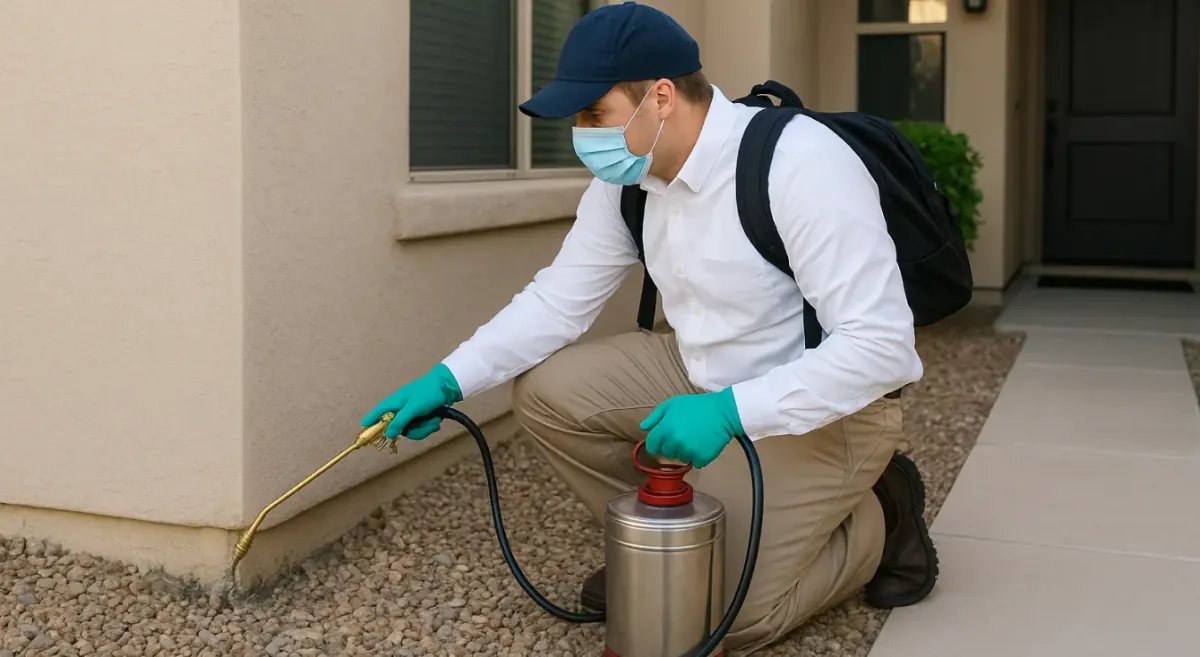
Professional scorpion control runs $300 to $600 for initial service, then $50 to $100 monthly for maintenance. Major exclusion work — sealing your home properly — often exceeds $1,000. These numbers shock homeowners expecting a single treatment to solve everything.
Here’s what you’re actually buying: repeated perimeter treatments to create barriers, thorough inspections to find entry points, targeted sealing of gaps and cracks, and reduction of the insects scorpions hunt. Professionals also adjust their approach seasonally, intensifying efforts during peak scorpion months.
Why isn’t it one-and-done? Scorpions are survivors. They can live months without food, hide in spaces you’d never imagine, and new ones constantly migrate from surrounding desert areas. Professional services manage populations and reduce sightings, but “zero scorpions forever” isn’t realistic if you live near natural habitats in Phoenix, Las Vegas, or San Antonio.
What are you paying for in monthly service?
Monthly scorpion service includes scheduled perimeter treatments, usually focusing on a 3-foot band around your home’s foundation. Technicians also inspect common entry points, apply granular products in rock areas, and may dust wall voids or attics where scorpions hide.
Good companies include callbacks between regular visits if you spot scorpions. They should also provide specific recommendations: which cracks need sealing, where to reduce moisture, what attracts prey insects. Ask for this in writing. Vague promises of “treatment” aren’t worth $100 a month.
Timing matters because scorpion activity follows predictable patterns. Skipping service during winter might seem smart, but that’s when you should be sealing entry points and reducing prey insects. Gaps in service often lead to population rebounds come spring, forcing you to start over with expensive initial treatments.
Do DIY sprays, powders, or traps actually reduce long-term costs?
DIY products can supplement professional service, but they rarely replace it. Sprays kill insects that scorpions eat, which helps indirectly. Diatomaceous earth creates barriers scorpions avoid. Weather-stripping and caulk seal obvious gaps. These efforts matter most when they’re done systematically.
But scorpions resist most pesticides that kill other bugs. Those “scorpion killer” sprays at hardware stores? They might kill on contact, but they don’t prevent new scorpions from entering. For the full breakdown on what doesn’t work, see our scorpion repellent myths guide.
Sticky traps catch some scorpions but miss many more. They’re also messy, fill with other bugs, and can give false confidence. Better to focus on monitoring where scorpions actually travel and responding quickly when you spot activity.
What home repairs and lifestyle changes add to the bill?
Beyond pest control, scorpion problems can trigger home improvement costs that add up fast. Door sweeps for every exterior door: $100. Weep hole covers for your brick veneer: $200. Garage door threshold seal: $150. New screens for torn vents: $300. Suddenly you’re looking at $1,000+ just for basic exclusion.
Then consider the lifestyle costs. Parents keep kids from playing on floors. Everyone wears shoes indoors. You check beds nightly with UV lights. Some families even avoid entire rooms or sleep elsewhere during bad infestations. These disruptions affect work productivity, children’s sleep, and family stress levels — real costs even if they don’t show up on receipts.
Which home upgrades are worth it first?
Start with the biggest leakage points. Door sweeps and weatherstripping offer immediate protection for under $20 per door. Focus on doors leading to garages, since scorpions often enter there first. Torn window screens need replacing — scorpions squeeze through surprisingly small tears.
Next, address weep holes in brick or stucco walls. These necessary drainage gaps are also scorpion highways. Copper mesh or specialized weep hole covers block entry while maintaining drainage. Attic and roof vents often have gaps or torn screens that need attention. Common entry points vary by home style, but these upgrades handle the worst offenders.
Document everything with before-and-after photos. Seal in phases to control costs — you don’t need perfection immediately. Even reducing entry points by 80% makes a noticeable difference in scorpion sightings.
How much does peace of mind matter (and how do you buy it wisely)?
The anxiety of scorpion problems creates its own expenses. Families develop elaborate checking routines: UV flashlight sweeps, shoe shaking, bed inspections. Some install motion lights everywhere or buy multiple UV flashlights for every room. Others consider moving, taking losses on home sales.
Smart peace of mind means replacing constant vigilance with systematic protection. Instead of checking every corner nightly, you seal entry points once. Rather than living in fear, you monitor key areas automatically. This shifts you from exhausting daily routines to set-it-and-forget-it solutions.
Renters face unique challenges since they can’t modify properties. If your landlord dismisses scorpion concerns, know that Arizona law requires “fit and habitable” conditions. Persistent scorpion problems, especially with documented stings, may violate this standard. See our guide on tenant rights regarding scorpion problems for leverage in these situations.
What's the most cost-effective plan to prevent scorpions and avoid repeat expenses?
Stop throwing money at scorpion problems randomly. You need three coordinated strategies: exclusion to block entry, prey reduction to remove what attracts scorpions, and monitoring to catch problems early. This approach costs less than endless treatments and actually works.
Think of it as spending smart, not spending more. Start with cheap, high-impact fixes like door sweeps and caulking. Invest in targeted professional help for persistent problems. Add monitoring where it matters most. Each dollar should have a specific job in your overall strategy.
Modern technology makes monitoring easier than ever. Instead of nightly UV flashlight patrols, automated systems like Scorpion Alert watch for you. These detectors use the same UV fluorescence principle but work continuously while you sleep, sending photo-verified alerts to your phone within seconds of spotting a scorpion.
Step 1: Stop entry points and reduce prey (without reinventing your whole house)
Focus on quick wins first. Seal gaps under doors, fix torn screens, and caulk cracks around pipes. This isn’t about perfection — even reducing entry by 70% dramatically cuts scorpion encounters. For specific guidance on where scorpions enter and what attracts them, check our detailed guides rather than guessing.
Outside, remove wood piles, rock piles, and debris within 10 feet of your foundation. Fix dripping faucets and eliminate standing water. Reduce outdoor lighting that attracts insects, or switch to yellow bulbs that attract fewer bugs. These changes gradually reduce the prey base that draws scorpions to your property.
Set realistic expectations: exclusion helps immediately, but prey reduction takes months. Scorpions already inside won’t leave just because you sealed doors. You need all three strategies working together for lasting results.
Step 2: How can I monitor scorpions at night without constant blacklight walks?
Here’s the monitoring gap nobody talks about: scorpions hunt from 10 p.m. to 3 a.m., exactly when you’re asleep. Manual UV flashlight checks only work if you do them every single night, forever. Miss a few nights and you’re back to surprise encounters.
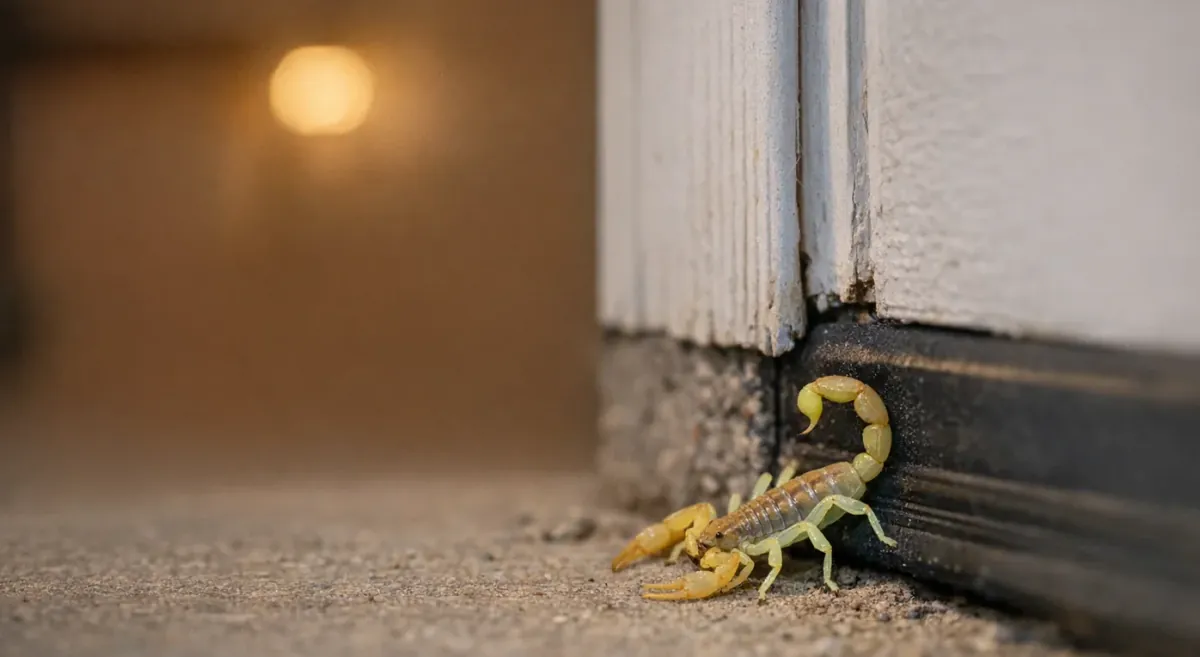
Modern detection fills this gap. Scorpion Alert Detectors plug into outlets along walls where scorpions naturally travel. They activate automatically when rooms go dark, scanning continuously with 365nm UV light — the wavelength that makes scorpions glow brightest. When the detector’s camera spots that telltale green fluorescence, you get a photo alert on your phone within seconds.
The system is offered as a monthly rental subscription with tiered pricing. See /pricing for current rates. Each detector scans every 500 milliseconds in dark mode, catches scorpions as they move along baseboards, and stores detection history so you can track patterns. No more wondering if you have a problem — you’ll know exactly when and where scorpions appear.
Step 3: Where should I place monitors first to reduce the biggest risks?
Strategic placement multiplies your protection. Start detectors at likely entry points: garage entrances, exterior doors, and utility rooms where pipes enter. Then cover high-risk areas where stings typically happen: master bedrooms, children’s rooms, and bathrooms where people walk barefoot at night.
Most homes need 3 to 5 units for solid coverage. Place them in outlets along walls, not in room centers. Scorpions follow edges thanks to thigmotaxis — their tendency to maintain contact with surfaces while moving. A detector in the corner catches scorpions approaching from two walls.
When you get an alert, you know exactly where to look. Grab a glass and stiff paper, trap the scorpion, and relocate it outside. Then inspect that specific area for entry points. Multiple alerts from the same detector? Time to call a professional for targeted treatment in that zone. This beats spraying everywhere and hoping for the best.
When you add up medical scares, lost sleep, repeat pest-control visits, and the constant stress of “is there another one?”, a scorpion infestation gets expensive fast. If you want a practical way to cut those hidden costs with clearer visibility, Scorpion Alert provides autonomous nighttime monitoring with photo-verified alerts so you can confirm activity and respond sooner.