Do glue traps actually catch scorpions—or just bugs?
You've probably seen them at every hardware store — those flat, sticky rectangles promising to catch "crawling pests." But here's what nobody tells you about using glue traps for scorpions: it's basically playing the lottery. Sure, you might catch one eventually. Or you might check that trap every morning for months and find nothing but dust bunnies and the occasional spider.
How glue traps work (and where people place them)
Glue traps rely on pure chance. A scorpion has to walk directly onto the adhesive surface to get stuck. That's it. No lure, no attraction — you're just hoping a scorpion happens to cross that exact spot.
Most homeowners place them along baseboards where scorpions typically travel. You'll find them behind washers and dryers, tucked against garage walls, or hidden in the back corners of closets. The thinking makes sense — scorpions are thigmotactic, meaning they navigate by staying close to walls and edges. Put a trap where they walk, catch them when they pass by.
Except real life isn't that simple.
Why glue traps can fail in real homes
Picture this: You set a fresh glue trap behind your bedroom dresser. Within a week, it's coated in dust from the air vent above. That sticky surface? Not so sticky anymore. A scorpion could practically tap dance across it.
Then there's the placement problem. Your toddler kicks it under the bed. The robot vacuum pushes it against the wall. Your cat bats it around like a hockey puck. Even if the trap stays put, you still have to check it regularly — and let's be honest, who's moving furniture every few days to inspect glue traps?
The biggest issue is inconsistent results. One trap might catch three scorpions in a month. The identical trap five feet away catches nothing for a year. You're essentially hoping scorpions choose the exact path where you've placed your traps.
When glue traps still make sense
Don't toss your glue traps just yet. They work well in specific situations — just not as your main line of defense.
Use them in low-priority areas like storage sheds or unfinished garages where you're monitoring activity levels rather than protecting family members. They're also helpful for short-term confirmation after a sighting. Spotted a scorpion in the laundry room last night? A few strategically placed traps can tell you if it was a one-time visitor or part of a bigger problem.
Think of glue traps as a backup confirmation tool, not a safety plan. They tell you scorpions were there, but they can't alert you when one's heading toward your child's bedroom right now.
How do scorpion detectors work—and will the UV light bother us at night?
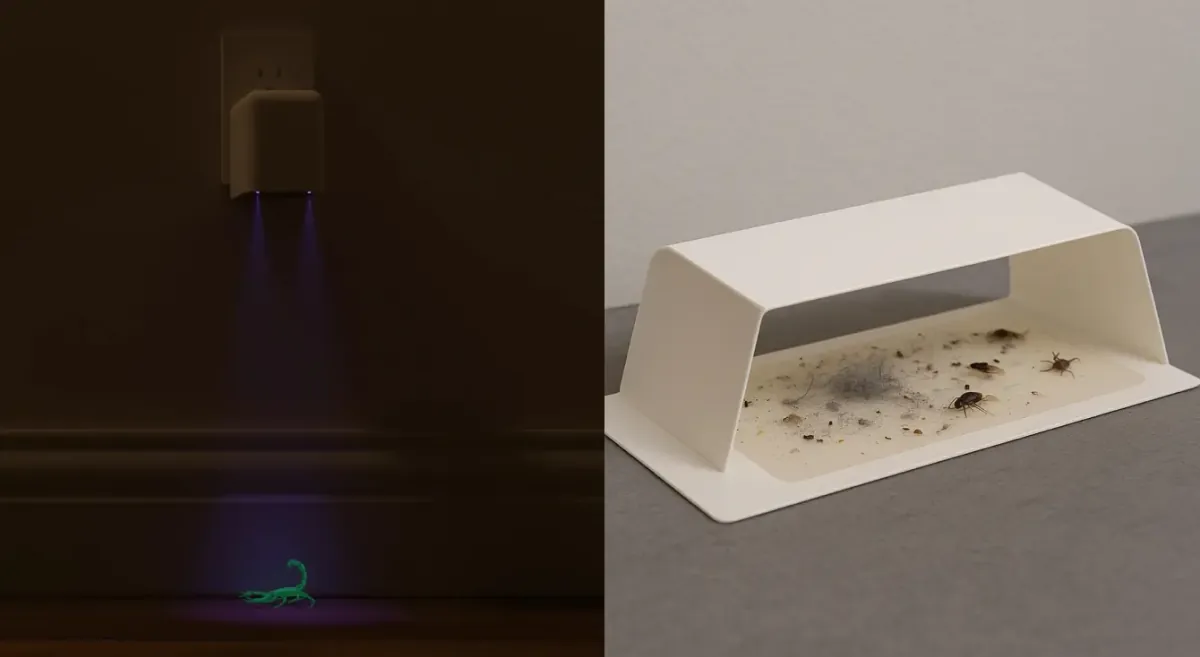
Modern scorpion detectors solve the biggest problem with manual monitoring: you can't stay up all night with a blacklight. These devices use the same UV technology that makes scorpions glow that eerie green color, but they do the watching for you.
Why UV detection works on scorpions
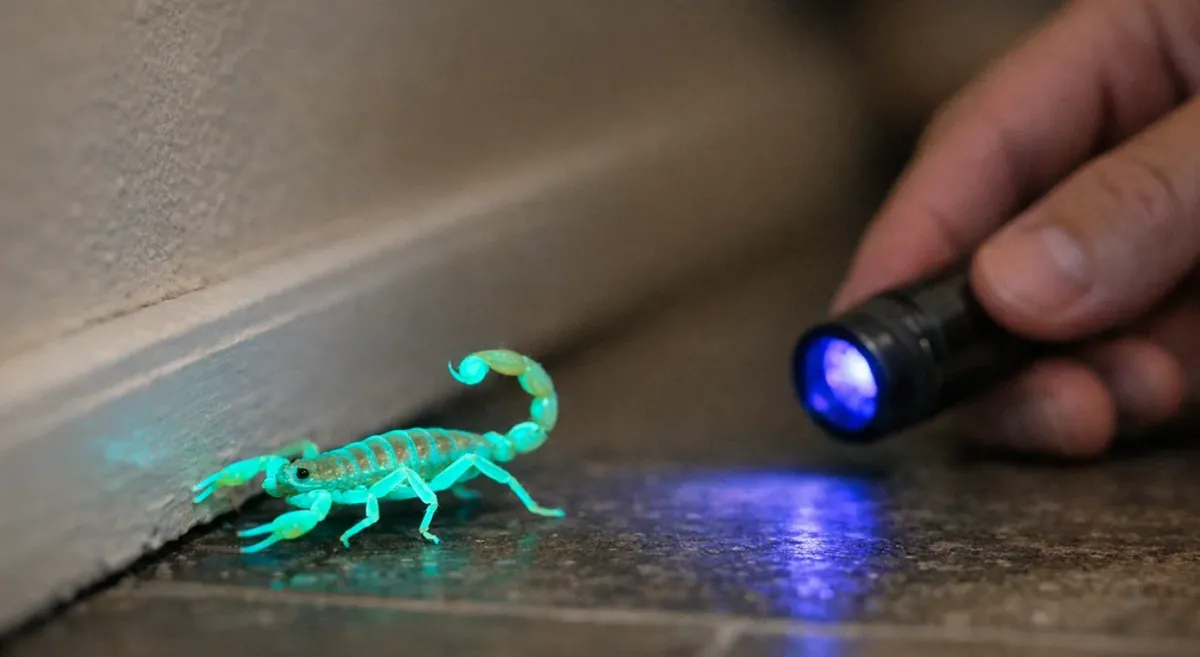
Scorpions contain proteins in their exoskeleton that fluoresce under ultraviolet light — specifically around 365 nanometers. Shine a UV light on a scorpion in the dark, and it glows bright green like a tiny alien. Scientists aren't entirely sure why scorpions evolved this trait, but it makes them incredibly easy to spot with the right equipment.
Detectors use this biological quirk to your advantage. A small UV LED shines down from the outlet-mounted device, and a camera watches for that telltale green glow. No more nightly blacklight patrols. No more wondering if there's one in your bedroom right now. The technology handles the tedious part while you sleep.
What happens step-by-step when a scorpion is detected
Here's what happens when a scorpion crosses a detector's path at 2 a.m.:
First, the device waits for darkness. Once your room lights go off, it activates and begins scanning the floor area below. The UV light creates a detection zone along your baseboard — right where scorpions naturally travel.
When that green glow appears, the camera captures an image. Built-in processing analyzes the shape, size, and fluorescence pattern. Within seconds, you get a push notification on your phone: "Scorpion detected in Master Bedroom." The alert includes a photo and confidence score, so you know it's not a false alarm from a glow-in-the-dark toy.
What you need for detectors to work reliably
Unlike glue traps, detectors need a bit of infrastructure. Each unit plugs into a standard wall outlet — preferably one near the floor where scorpions travel. You'll need stable 2.4GHz Wi-Fi for real-time alerts, though many systems store alerts locally and sync when the connection returns.
Placement matters more than quantity. Focus on room perimeters, especially near common entry points like exterior doors and pet doors. The UV light won't disturb your sleep — it's positioned to shine downward onto the floor, not into the room.
Cost and upkeep: one-time vs ongoing
Let's talk money. A 12-pack of quality glue traps runs about $15-20. Sounds cheap until you're replacing dusty, pet-hair-covered traps every few weeks. Add the time spent checking and replacing them, and those "cheap" traps add up fast.
Detector systems like Scorpion Alert require an upfront hardware investment (around $50 per unit) plus a subscription for photo alerts and cloud processing. But once installed, they're done. No replacements. No checking. Just peace of mind that you'll know immediately if a scorpion enters your bedroom or nursery.
For families dealing with regular scorpion sightings, it's the difference between constantly wondering and actually knowing.
Which option protects my family better: catching scorpions or getting an early alert?
Here's the fundamental difference: glue traps confirm where a scorpion was. Detectors tell you where one is right now. When you're worried about your kids getting stung, that distinction matters.
Why early detection changes the outcome
Finding a scorpion stuck to a glue trap tells you something important — they're getting inside. But that scorpion might have been roaming your home for days before wandering onto that trap. How many times did it crawl past your baby's crib? How close did it get to where you walk barefoot every morning?
Real-time alerts flip the script. You know within seconds when a scorpion enters a protected room. Grab a glass and a flashlight, and you can remove it before anyone's at risk. No more discovering them the hard way when someone gets stung reaching for a midnight snack.
Why scorpions often travel along walls (and why that matters)
Scorpions don't randomly wander across open floors. They're thigmotactic creatures, meaning they feel safer with a surface touching their body. In your home, that translates to following baseboards, hugging furniture edges, and skirting along walls.
This predictable behavior is why wall-outlet-based detectors work so well. They're positioned exactly where scorpions prefer to travel. It's also why a glue trap in the middle of a room catches nothing while one against the baseboard might actually work — sometimes.
Who benefits most from real-time alerts
Parents of young children top the list. Kids don't check their shoes before putting them on. They don't look before sitting on the floor. If you've got toddlers who play on the ground or babies learning to crawl, early detection could prevent a traumatic sting and emergency room visit.
Pet owners face similar worries. Dogs investigate everything with their noses. Cats bat at anything that moves. An alert gives you time to intervene before curiosity leads to a painful lesson.
Even if you live alone, waking up to "Scorpion detected in bathroom" beats stepping on one during your 3 a.m. stumble to the toilet. It's about controlling the situation on your terms, not discovering scorpions through a painful surprise.
Where should I put glue traps and detectors for the best results?
Smart placement multiplies your protection. Random placement wastes money and leaves gaps in coverage. Here's how to create a defensive perimeter that actually works.
High-priority rooms to cover first
Start where people are most vulnerable: bedrooms, nurseries, and anywhere family members walk barefoot. Your master bedroom needs protection more than your formal dining room. The playroom where kids sprawl on the carpet matters more than the guest bathroom nobody uses.
Think about your daily routines. Where do you walk without shoes? Where do your kids play on the floor? Where does your family spend evening hours when scorpions are most active? Those rooms get priority.
Entry points and water areas to watch
Scorpions need two things from your home: shelter and water. They often enter through gaps around doors, especially areas with moisture nearby. Focus detection efforts near:
- Exterior door thresholds (front, back, and garage entry)
- Pet doors and doggy doors
- Sliding patio doors with worn weather stripping
- Laundry rooms and bathrooms where pipes create moisture
- Kitchen areas near dishwashers and sink cabinets
These zones need either active monitoring with detectors or frequent glue trap checks. Don't assume one method covers everything.
A simple 'use both' layout that avoids common mistakes
The smartest approach combines both methods strategically. Install detectors in high-traffic living spaces where you need immediate alerts — bedrooms, living room, kitchen. Use glue traps as backup monitoring in storage areas, garages, and utility rooms where you're tracking activity patterns rather than preventing stings.
Avoid these common mistakes: Don't put glue traps where pets or robot vacuums will disturb them. Don't install detectors where furniture blocks the UV light from reaching the floor. Don't forget to check and replace glue traps — set phone reminders if needed.
How many detectors do I need?
Start with critical spaces: master bedroom, children's rooms, and main living areas. A typical 3-bedroom home might begin with 4-5 detectors for basic coverage. Expand to hallways, bathrooms, and entry points as budget allows.
You don't need one in every room. Focus on perimeter outlets near doorways and high-risk areas. One detector can often monitor an entire small bedroom's perimeter from a corner outlet. Large rooms might need two — one near the entry and another by windows or exterior walls.
What should I do if I find a scorpion—on a trap or from an alert?
Don't panic. Whether you discovered it stuck to a trap or got a 2 a.m. detector alert, you've got time to handle this safely. Here's your step-by-step response plan.
If a glue trap caught one: safe handling and disposal
First, keep kids and pets away. Even stuck scorpions can sometimes sting if you touch the wrong spot. Put on shoes and grab a pair of tongs or long-handled pliers.
If the scorpion's still alive (they often are), don't try to kill it on the trap — you'll just make a mess. Pick up the entire trap with your tongs, drop it in a plastic bag, seal it, and place it in your outdoor trash. Replace the trap immediately; where there's one, there might be more.
Never touch a glue trap with bare hands, even if the scorpion looks dead. Those stingers stay functional longer than you'd think.
If you get a detector alert: a fast, low-risk capture plan
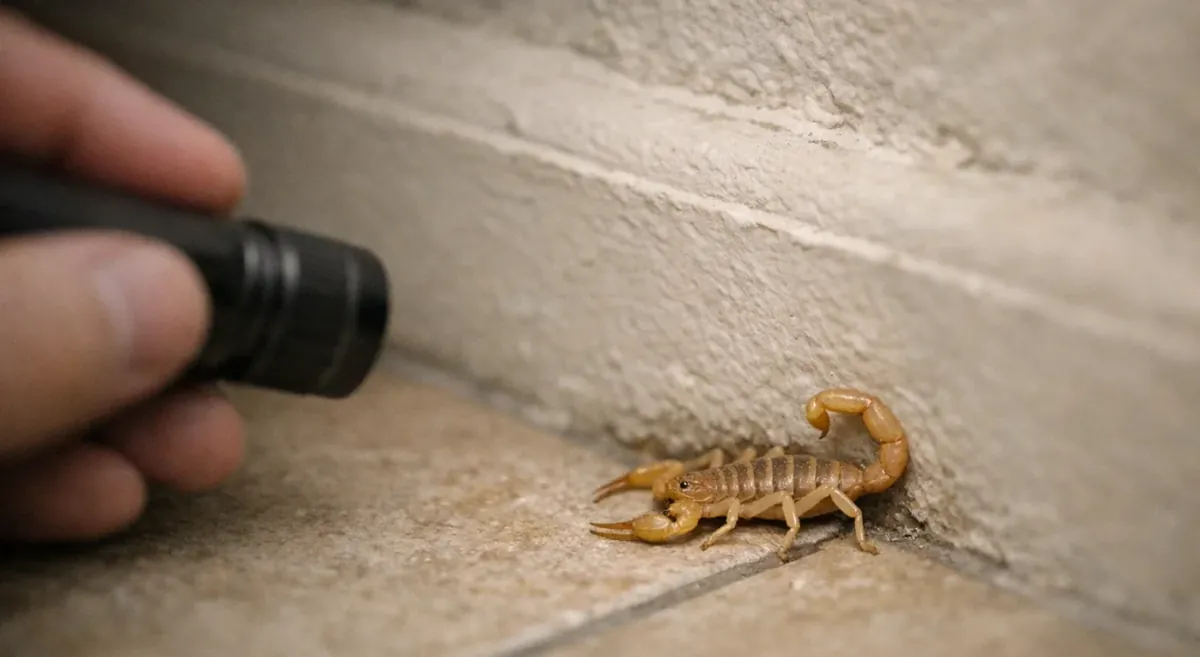
Speed matters here. You know exactly where it is right now — don't give it time to disappear. Grab three things: a UV flashlight, a wide-mouth glass or clear container, and a stiff piece of paper or cardboard.
Head to the alerted detector. Shine your UV flashlight along the baseboards and floor — the scorpion will glow bright green. Once spotted, place the glass over it carefully. Slide the paper underneath, creating a sealed trap. Flip the whole thing over and walk that unwelcome visitor outside.
Release it at least 20 feet from your home, preferably across a barrier like a fence or driveway. Don't kill it near your house — dead scorpions can attract more scorpions.
When to escalate to professional help (and what to track)
One scorpion might be random. Three in a week suggests a bigger problem. Start documenting every encounter: date, time, location, and photos if possible. This information helps pest professionals identify entry points and nesting areas.
Call for professional help if you're getting multiple alerts per week, finding scorpions in different rooms, or discovering babies (tiny, white scorpions that ride on their mother's back). These signs indicate an established population that needs professional treatment.
Remember — the best protection combines multiple strategies. Whether you're using detectors for instant alerts or glue traps for activity monitoring, staying vigilant and responding quickly helps keep your family safe from unexpected encounters.
Glue traps can show you that scorpions are around, but they still require regular checks—and they don’t always tell you when activity is happening. If you want a more hands-off approach, Scorpion Alert uses autonomous nighttime monitoring with photo-verified, AI-checked detections so you can act on real activity instead of guessing. Learn more at scorpionalert.com.