Are scorpions a problem in Wichita Falls?
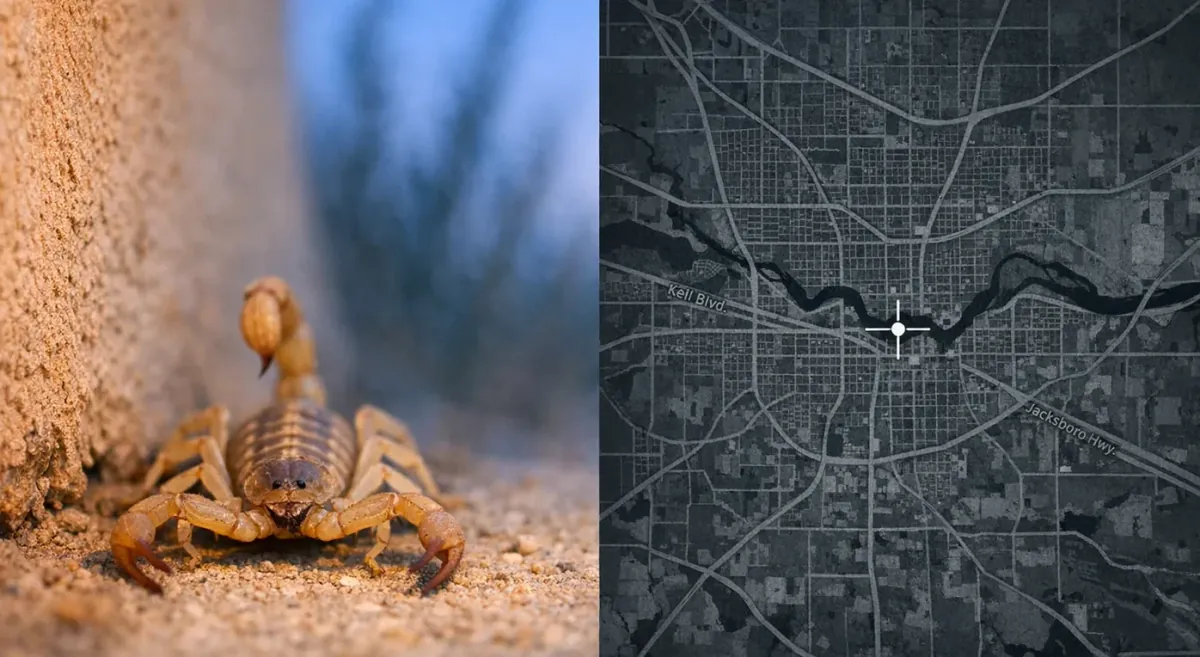
Yes — scorpions are a real, common presence in Wichita Falls, Texas. Within 30 km of Wichita Falls, citizen scientists have logged 45 research-grade scorpion observations on iNaturalist, and every one is a Striped Bark Scorpion. For most homes, an occasional scorpion indoors is normal; a recurring indoor pattern is manageable with a plan.
Texas carries a meaningful share of the country’s scorpion encounters. Nationwide, roughly 1,743 scorpion exposures a year are reported in Texas — about 10.3% of the U.S. total, per Kang & Brooks 2017. Wichita County sits squarely in bark scorpion country, so sightings here are expected, not alarming.
The good news: a workable Wichita Falls scorpion control plan comes down to three moves — reduce outdoor harborages, tighten exclusion around the house, and add nighttime monitoring where scorpions actually travel (along room edges).
What counts as a real infestation vs. an occasional wanderer?
One scorpion every few weeks is usually a wanderer that slipped in through a gap. A real problem looks different: multiple sightings in a single week, the same room or entry point producing scorpions again and again, or tiny baby scorpions (a sign one is breeding nearby).
Pay attention to location. Bathrooms, laundry rooms, garages, and bedrooms are classic indoor harborage sites because scorpions favor cool, dark, humid micro-habitats, according to Kang & Brooks 2017. Repeated hits in those rooms mean it’s time to act, not just squish and forget.
Why Wichita County homes see scorpions indoors
North Texas heat and dry spells push scorpions toward moisture and shelter — and homes offer both. When the yard bakes, a cool bathroom drain or a damp laundry room can look like an oasis.
There’s also a dinner motive. Scorpions follow their prey, and homes with crickets, cockroaches, and other small insects are effectively a buffet. Knock down the insects and you make the house far less inviting. Because scorpions are nocturnal, most of this traffic happens while you sleep, which is exactly why it goes unnoticed without deliberate nighttime checks.
How to confirm activity without nightly blacklight walks
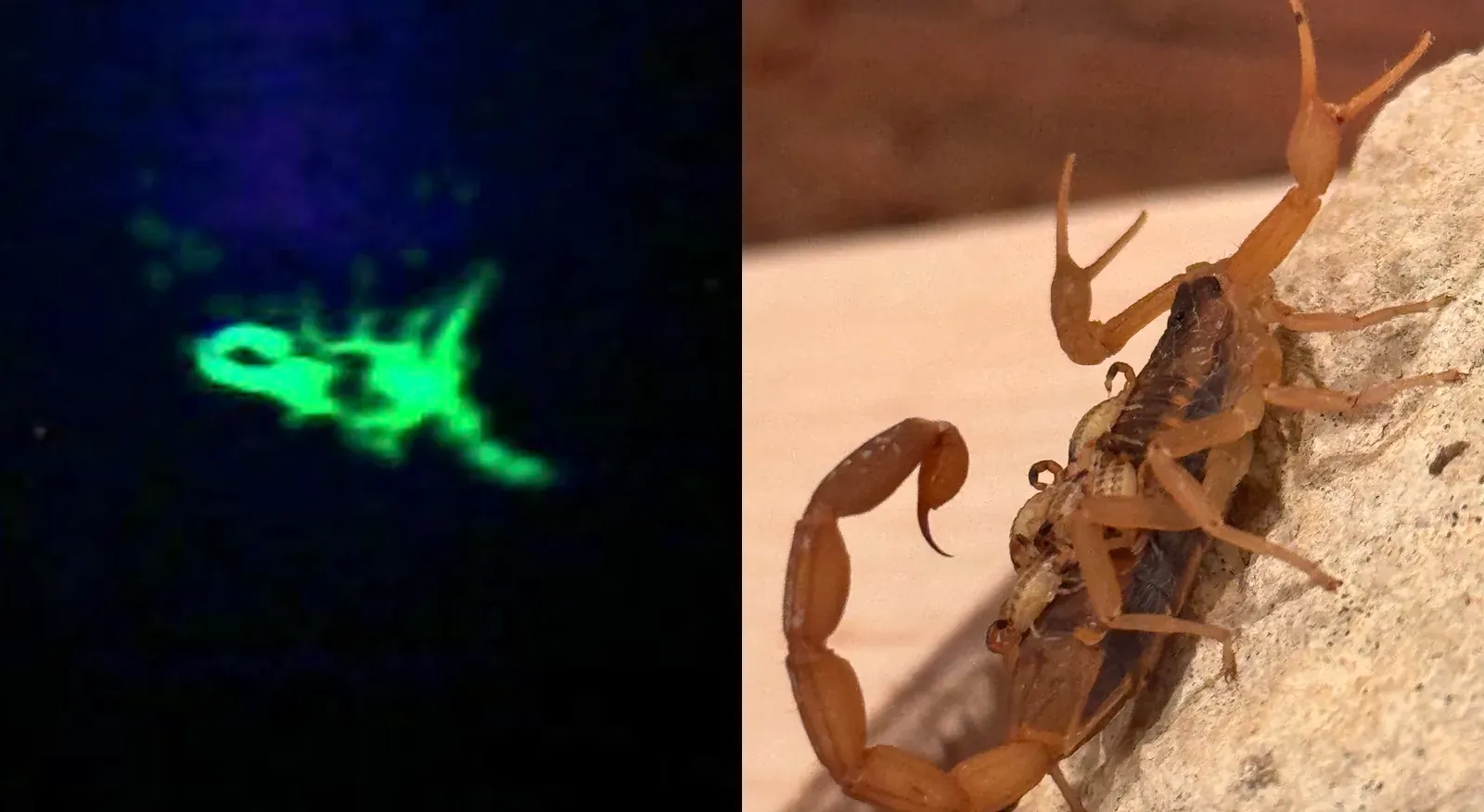
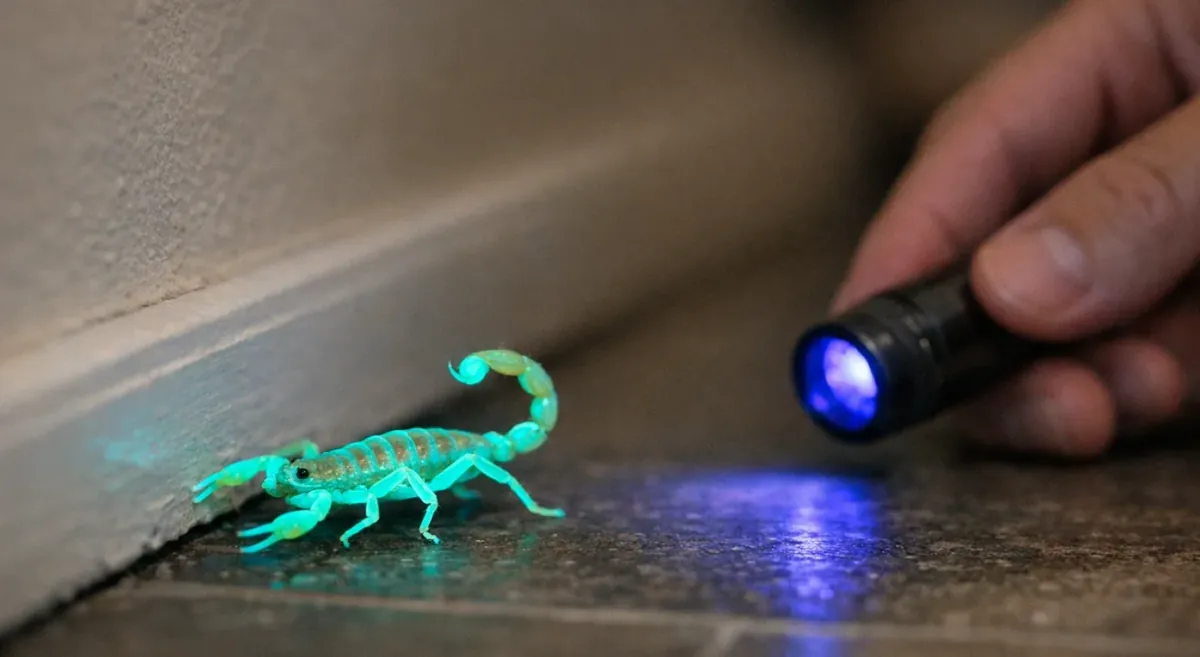
You don’t need to patrol your home with a flashlight every night. Scorpions glow a bright greenish color under UV light, so a quick sweep along baseboards after a sighting can help confirm what you’re dealing with. Jot down where and when you saw each one — patterns tell you where to focus.
For hands-off confirmation, automated nighttime monitoring along the perimeter does the watching for you. Systems like Scorpion Alert plug into wall outlets, scan the floor with UV light after dark, and send a photo-verified alert to your phone within seconds — so you can learn where scorpions travel without nightly check-ins.
Which scorpion species lives in Wichita Falls?
The scorpion you’ll find in Wichita Falls is the Striped Bark Scorpion (Centruroides vittatus). It accounts for 100% of local iNaturalist records and is the most widely distributed scorpion in North America, dominant across Texas and neighboring states, per Yamashita & Rhoads 2017.
Species matters mostly for peace of mind. This isn’t the medically dangerous Arizona bark scorpion, and that changes how worried you need to be.
Striped Bark Scorpion (striped bark scorpion wichita falls) basics
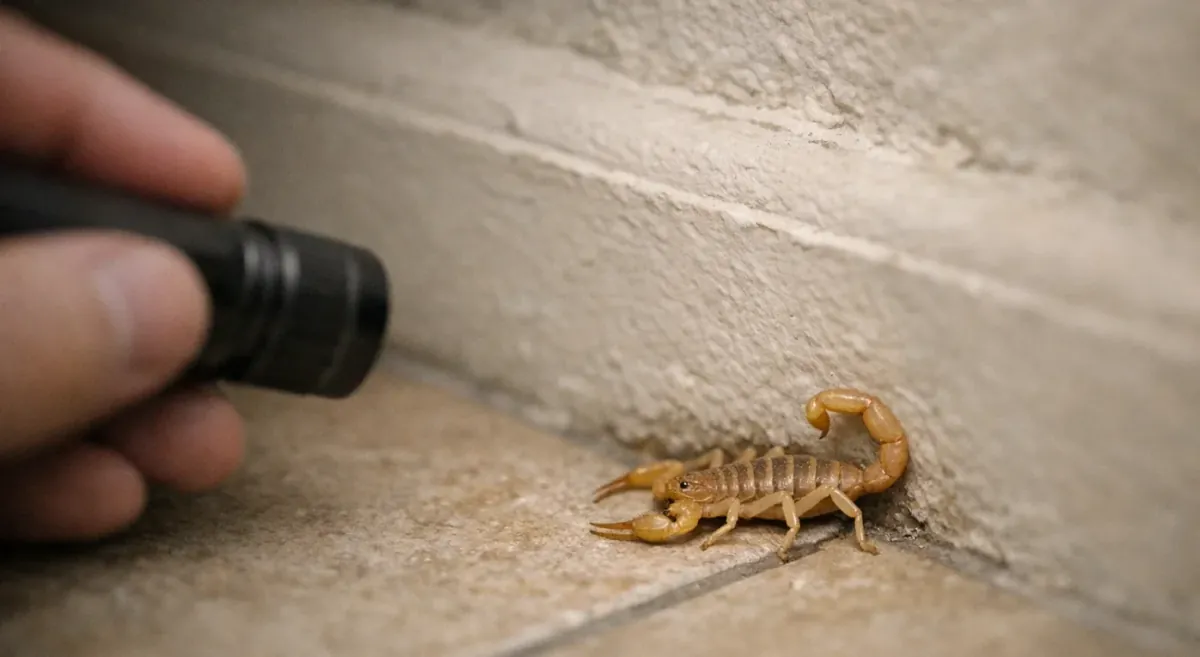
The striped bark scorpion in Wichita Falls is a slender, tan-to-yellowish scorpion, usually under 2.5 inches, with two dark lengthwise stripes running down its back. Its pincers and tail are thin rather than bulky. It shelters under rocks, bark, woodpiles, and outdoor clutter by day, then hunts at night.
Indoors, it gravitates to the same cool, dark spots it likes outside — under boxes, behind baseboards, inside shoes, and along wall edges. It travels by hugging surfaces, which is useful to know when you decide where to watch.
Common misidentifications in Wichita Falls
Plenty of harmless critters get mistaken for scorpions in a dim room. The usual suspects:
- Earwigs — their rear pincers look scorpion-like, but they have no raised tail and no eight-legged bulk.
- Crickets — a dark shape darting along a baseboard fools people at a glance.
- Small spiders — mistaken for scorpions in silhouette, but they lack the segmented tail and pincers.
Snap a photo from a safe distance instead of leaning in for a close look. A clear picture settles the question and gives you a record. Never handle something you can’t identify.
Do species change the Wichita Falls scorpion control plan?
Not much. The house-level plan is the same whether you’re dealing with striped bark scorpions or any other local species: seal entry points, reduce moisture and prey, and monitor the perimeter at night. Those steps work across the board.
Heavier burrowing species might shift your yard focus toward soil and rock-pile management, but for Wichita Falls, exclusion and monitoring carry the load.
When are scorpions most active in Wichita Falls?
Scorpion season in Wichita Falls runs from late spring through early fall, peaking in the hot stretch of July, August, and September. Summer accounts for the overwhelming majority of scorpion encounters nationwide, with warm-month evening hours dominating calls, per Kang & Brooks 2017. That’s the window when you should have your defenses up.
The Wichita Falls seasonal pattern (what locals notice)
Early season (April–May) brings the first scattered sightings as nights warm. Peak season (July–September) is when indoor encounters spike. Activity tapers through October as evenings cool.
Weather triggers matter too. A sustained heat wave or long dry spell drives scorpions toward moisture indoors, and a sudden storm after drought can flush them out of flooded hiding spots and toward the house. Any of these can precede a run of indoor sightings.
What time of night do scorpions show up?
After dusk is prime time. Peak sting hours fall between 6 PM and midnight — roughly 49% of envenomations — according to clinical data summarized by Isbister & Bawaskar 2014. Scorpions are nocturnal, which is why most people never see one without targeted checks.
They’re also thigmotactic — they navigate by staying tight to walls, baseboards, and furniture edges. That perimeter behavior tells you exactly where to aim a flashlight or place a detector.
A "season-ready" checklist for Wichita Falls homeowners
Get ahead of peak season with a short pre-season push:
- Seal exterior gaps — door sweeps, weatherstripping, and utility penetrations.
- Declutter floor edges inside, especially along baseboards.
- Reset the garage — elevate storage, clear boxes off the floor.
- Clean up the yard — move woodpiles and debris away from the foundation.
- Set up nighttime monitoring near entry-adjacent rooms like bedrooms, bathrooms, and the laundry room.
How dangerous is a scorpion sting in Wichita Falls?
For most healthy adults in Wichita Falls, a striped bark scorpion sting is painful but not dangerous. C. vittatus stings produce sharp local pain lasting about 15–20 minutes on average, and severe systemic reactions are rare — life-threatening envenomation has not been documented for this species, per Yamashita & Rhoads 2017.
That said, severity varies by person. Young children, older adults, people with allergy histories, and pets can react more strongly, so take those cases more seriously and lean on local medical guidance rather than guesswork.
What a sting typically feels like
Expect immediate burning or sharp pain at the site, often followed by tingling and some numbness around it. In an Arizona cohort, pain at the sting site showed up in 88.9% of stings and local numbness in 62.2%, per Klotz et al. 2021. For the striped bark scorpion, these symptoms usually ease within an hour.
Red-flag symptoms that need urgent help
Some symptoms mean you should seek care right away:
- Trouble breathing or facial/throat swelling
- Severe pain spreading well beyond the sting site
- Uncontrolled muscle twitching or jerking
- Vomiting, severe weakness, or altered behavior
- Any intense full-body reaction in a child
Children warrant extra caution. Their smaller size means symptoms can hit harder, so a child with anything beyond mild local pain deserves a prompt call for guidance.
Why Wichita Falls parents worry (and what to do proactively)
Picture a kid sliding a bare foot into a sneaker left by the back door — and feeling a sharp sting. Most contact stings happen this way: shoes, towels, and bedding edges where a scorpion tucked in overnight. The foot and hands are the usual targets.
Simple evening habits during peak months cut down on surprises: shake out shoes before putting them on, check towels and bedding, and keep floors clear. For more on why kids are especially vulnerable, see our guide on why children are more at risk from scorpion stings.
What to do if you're stung in Wichita Falls
If you’re stung in Wichita Falls, stay calm — most striped bark scorpion stings can be managed at home with simple first aid. Wash the area, cool it, monitor symptoms, and call Poison Control at 1-800-222-1222 if you’re unsure or symptoms worsen. Seek emergency care for any red-flag symptoms.
Immediate steps (first 10 minutes)
- Wash the sting site with soap and water.
- Remove rings, watches, or anything tight near the sting in case of swelling.
- Apply a cool compress or ice pack to reduce pain and swelling.
- Keep the person calm and still, and take an over-the-counter pain reliever if appropriate.
Just as important is what not to do: don’t cut or try to suck out venom, don’t apply heat, don’t use a tourniquet, and skip the random home chemicals and folk remedies. Our rundown of common scorpion repellent myths covers the DIY “fixes” that don’t work.
Who to call in Wichita Falls (and when)
For mild symptoms, the Poison Help line at 1-800-222-1222 is your first call — it’s free, available 24/7, and staffed by experts who can tell you whether home care is enough. Call if symptoms worsen, if the person is a young child or older adult, or if there’s any allergy history.
For red-flag symptoms — breathing trouble, severe twitching, spreading pain — go straight to emergency care. Nearby options include Texoma Medical Center at 1518 10th St (about 0.78 miles from downtown) and KPC Promise Hospital of Wichita Falls at 1103 Grace St (about 0.83 miles). Follow professional advice and use 911 for emergencies.
If you saw the scorpion: safe capture/photo tips
Photograph it from a safe distance rather than handling it. If you need to contain it, trap it under a sturdy glass or clear container — only if you can do so safely, and never with bare hands. Note the time of the sting and track how symptoms progress; that’s useful information for clinicians.
If the scorpion vanished before you got a look, photo-verified monitoring can tell you the next morning exactly what was there and where — a time-stamped record beats guessing. For more, read what not to do after spotting a scorpion in your home.
How to keep scorpions out of your Wichita Falls home
Keeping scorpions out of a Wichita Falls home comes down to three prioritized steps: seal and exclude entry points, remove shelter and reduce the insects scorpions hunt, then monitor the perimeter at night in your highest-risk rooms. Nearly all scorpion stings happen inside the home, so exclusion is where your effort pays off most.
Step 1: Exclusion for Wichita Falls homes (big impact, low cost)
Scorpions squeeze through surprisingly small gaps. You can knock out the obvious ones in a weekend audit:
- Install or replace door sweeps on exterior and garage doors.
- Add weatherstripping around doors and windows.
- Close garage door side gaps and seal the bottom seal.
- Screen or seal weep holes and utility penetrations (pipes, cables, AC lines).
- Repair torn window screens.
For the full breakdown, see our guide to the top 5 ways scorpions get into your home.
Step 2: Yard + garage changes that reduce sightings
Your yard is the staging ground. Move woodpiles, rock piles, and debris away from the foundation, since those are prime daytime hideouts. Trim shrubs and tree limbs so they don’t touch the house, and keep garage storage elevated off the floor and decluttered.
The goal is twofold: fewer hiding places and fewer insects for scorpions to hunt. A yard that’s dry, open, and bug-poor near the walls is a yard scorpions skip.
Step 3: Monitor where scorpions actually travel at night
Because scorpions hug walls and thresholds as they move after dark, the perimeter is exactly where monitoring belongs. Place detectors at outlets near your top entry areas — garage doors, exterior thresholds — and in high-risk rooms like bedrooms, bathrooms, and the laundry room.
This is where Scorpion Alert fits a Wichita Falls plan. The Detectors plug into standard outlets along room edges, shine 365nm UV light on the floor after dark, and send a photo-verified alert to your phone within seconds of spotting that telltale greenish glow. Over time, you build a time-stamped activity record you can share with a pest pro — far more useful than “I think I saw one last week.”
When to call a Wichita Falls pest professional
Bring in a pro when the problem crosses clear thresholds:
- Repeated indoor sightings despite your sealing efforts
- Any sting, especially to a child
- Scorpions turning up in kids’ rooms or bedrooms
- Entry gaps you can’t seal yourself
Ask about their inspection focus, their exclusion recommendations, and whether they offer an integrated plan rather than a spray-only service. The time-stamped detection history from your monitoring gives them a head start on where to concentrate the work — and makes your Wichita Falls scorpion control plan that much sharper.
If you’re dealing with scorpions around Wichita Falls—especially during warm nights—early detection indoors can make a big difference in keeping bedrooms and hallways clear. Scorpion Alert uses UV-based, night-active detection to help you spot activity when scorpions are most likely to roam; learn more at Scorpion Alert.