Are scorpions a problem in Reno?
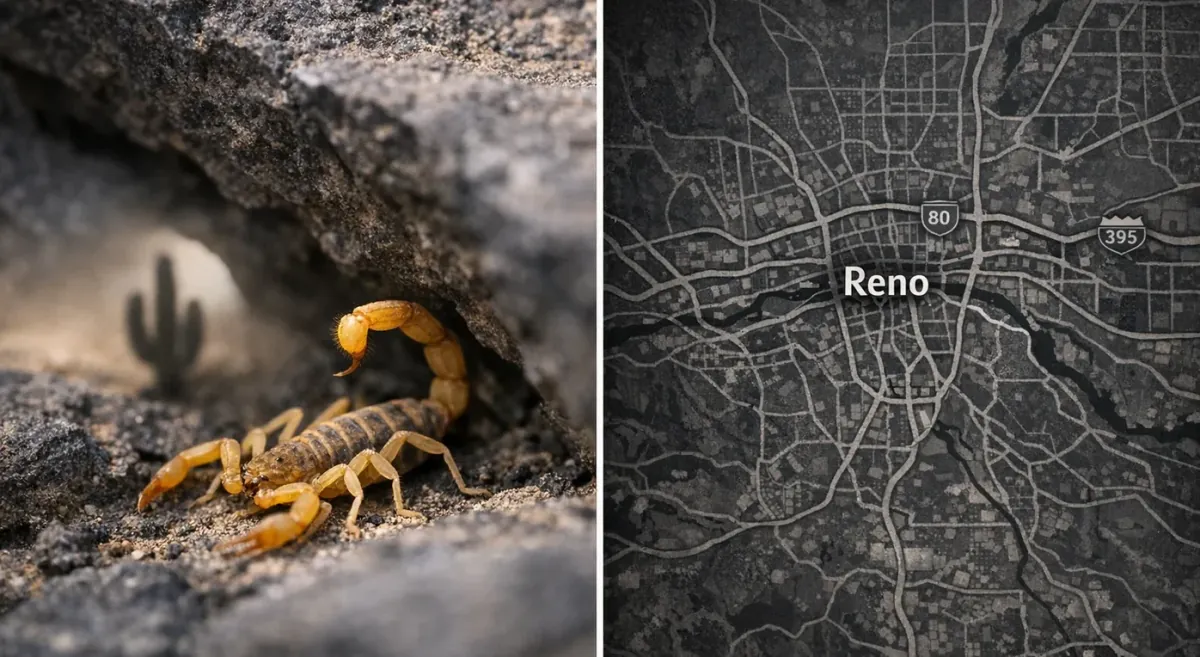
Scorpions are a real but moderate concern in Reno. The region sees seasonal, neighborhood-dependent activity rather than the year-round pressure you'd expect in a Sonoran Desert metro. Statewide, Nevada accounted for roughly 707 scorpion exposures a year between 2005 and 2015, a fraction of Arizona's volume, per Kang & Brooks 2017.
What "medium" means in practice is that your odds depend heavily on where you live and what surrounds your yard. Homes bordering open space, with rock piles, dense landscaping, or a steady supply of prey insects tend to see more. Within 30 km of Reno, iNaturalist has logged 118 research-grade scorpion observations since 2016, concentrated along the city's drier edges.
Because scorpions are nocturnal and move quietly along walls, you often won't know one is inside until you spot it at night. That's why the real question isn't "are there scorpions in Reno, Nevada" — it's "is this a one-off visitor or a pattern on my property?"
What "medium" scorpion pressure looks like for homeowners
Medium pressure usually shows up one of three ways: a single scorpion sighting that never repeats, a predictable summer uptick, or repeated indoor finds that suggest a resident population nearby. One scorpion in July is almost always a lone wanderer. Three in a month, in the same room, is a pattern worth acting on.
With 118 sightings spread across a decade in and around Reno, most households here deal with the occasional visitor rather than a constant problem. The tricky part is telling the difference early, because scorpions don't announce themselves.
Why Reno residents may see scorpions indoors at night
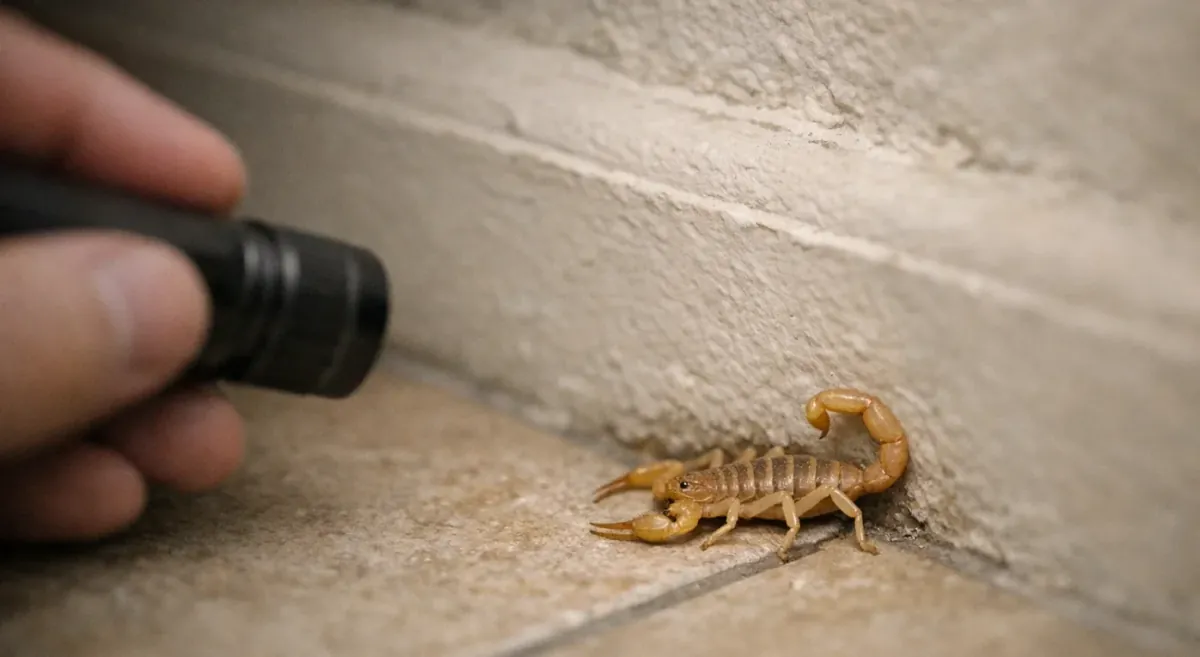
Scorpions hunt after dark and are thigmotactic, meaning they navigate by keeping their bodies in contact with surfaces and edges. They don't wander across the middle of your floor. They trace baseboards, door thresholds, and the edges of furniture.
That behavior is why a sighting can feel random but is actually predictable. Picture flipping on the garage light at 11 p.m. and catching one hugging the wall near the door. It traveled the perimeter to get there, which is exactly where you should focus inspection and monitoring.
Do Washoe County scorpions mean an infestation?
One scorpion is rarely an infestation. Use a simple checklist to judge severity: how often you find them, whether you're seeing small juveniles (a sign of breeding nearby), and where they turn up. Repeated finds, multiple life stages, and scorpions in several rooms all point to an ongoing issue rather than a stray.
Yards backing to open desert, block walls, irrigated landscaping, and attached garages all raise the odds. If you're finding them regularly, or you're uneasy after the first one, it's worth scheduling a Reno scorpion control inspection and setting up monitoring so you're not relying on luck.
Which scorpion species lives in Reno?
The scorpion you're most likely to encounter in Reno is the Northern Scorpion (Paruroctonus boreus). It makes up 103 of the 118 research-grade sightings within 30 km of the city, making it the default ID for anyone who spots one here. It's a small, cold-tolerant species — not the dangerous Arizona bark scorpion.
Use a practical ID framework instead of guessing from color, which shifts with lighting and age. Note the size (Northern Scorpions are modest, typically around two inches), the stocky tan-to-brown body, where you found it, and the time of day. A few desert hairy scorpions (Hadrurus spadix) and other vejovids also turn up around Reno, but they're far less common.
Northern Scorpion: the most reported species in Reno
The Northern Scorpion favors rocky, dry ground, burrowing under stones, logs, and debris during the day. It handles Reno's cooler nights better than most desert species, which is part of why it dominates local records. Around homes, it shows up where that habitat meets your foundation: gravel beds, rock borders, woodpiles, and the shaded gaps along exterior walls.
Its sting is comparable to a bee sting for most healthy adults — painful, but not medically dangerous. Still, nobody wants to meet one barefoot, so identifying and locating them matters.
How to identify a scorpion safely (without getting close)
Identify from a distance first. Snap a clear photo from a few feet away, then compare it against verified images rather than reaching in for a closer look. If you must move it, use a wide-mouth glass and a stiff card — never your hands. Capture should be calm and controlled, not a frantic chase.
Keep good light on it, and keep pets and kids back while you work. A photo also helps a professional confirm the species later if the situation escalates.
What people confuse with scorpions in Reno
Several harmless arthropods get mistaken for scorpions. Earwigs have pincers at the rear but no raised tail or stinger. Vinegaroons and sun spiders look menacing but lack a scorpion's curved tail. Quick tells for a true scorpion: a segmented tail arching over the back, a stinger at the tip, and front pincers (pedipalps). If it lacks the arched tail and stinger, it isn't a scorpion.
When are scorpions most active in Reno?
Scorpions in Reno are most active from late spring through early fall, with the peak in the hottest weeks of summer and into early autumn. Nationwide data shows summer dominates scorpion activity, and the busiest window runs from 6 PM to midnight, when roughly 49% of stings occur, according to Kang & Brooks 2017.
Warm evenings, temperature swings, summer storms, irrigation, and a surge in prey insects can all drive activity spikes. A freshly watered yard that pulls in crickets and other bugs is a buffet, and scorpions follow the food. Reno's dry heat and evening cool-down create a clear nightly rhythm you can plan around.
Reno scorpion season: what changes month to month
Think of the season in three phases. In spring, scorpions emerge as nights warm — that's the time to seal gaps and clear yard clutter before activity builds. Through the peak of summer into early fall, monitoring matters most, since this is when indoor sightings and stings cluster. As nights cool in late fall, activity drops and scorpions retreat to harborage, giving you a window to plan next year's prevention.
Are scorpions more active at night in Reno homes?
Yes. Scorpions are nocturnal, and indoors they move along baseboards, thresholds, and furniture edges rather than crossing open floor. That's thigmotaxis at work again. A quick glance across an open room can look completely clear even when a scorpion is tucked against the wall a few feet away. The perimeter is where the action is.
A practical "high-risk night" routine for families
On warm summer nights, a short routine lowers risk considerably:
- Shake out any shoes, slippers, and folded blankets left on the floor before use.
- Keep kids and pets off dark floors until lights are on and you've glanced along the walls.
- Pull back bedding and check near the headboard, since beds against a wall are easy targets.
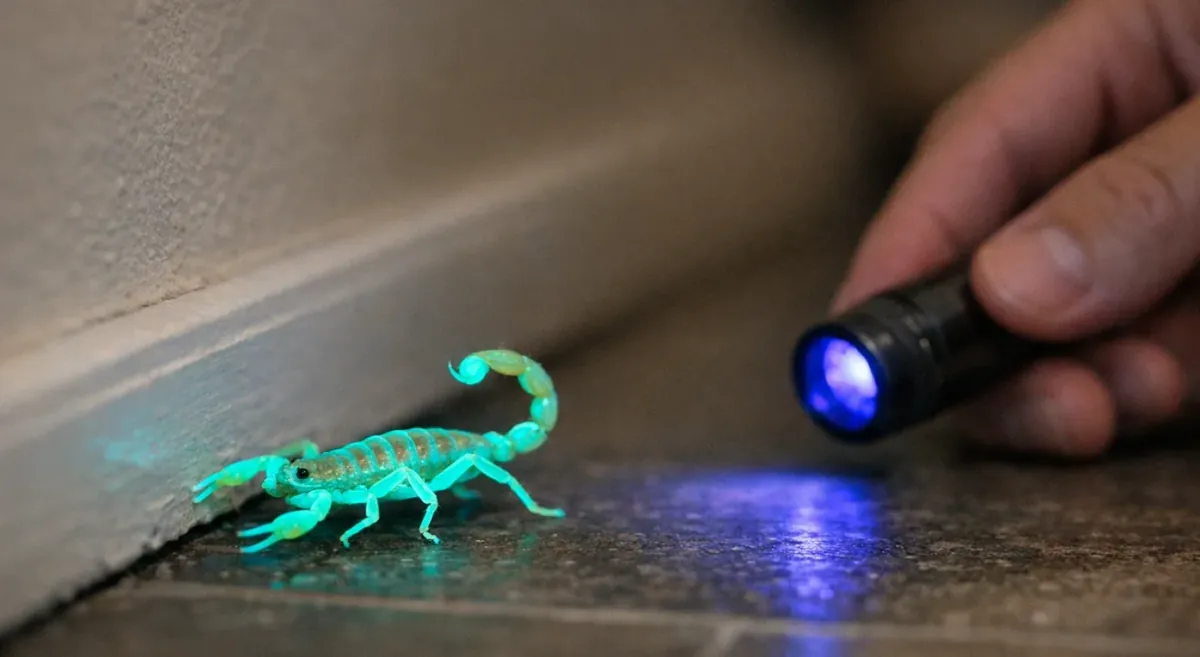
- Run a UV flashlight along baseboards in bedrooms and bathrooms if you've had recent sightings.
Pets are curious and nose around at floor level, so they're especially exposed. A barefoot child on a dark floor and a sniffing dog are the two scenarios worth building habits around.
How dangerous is a scorpion sting in Reno?
For most people in Reno, a scorpion sting is painful but not dangerous. The local Northern Scorpion delivers a sting comparable to a bee or wasp, with localized symptoms rather than life-threatening effects. Nevada doesn't host the Arizona bark scorpion population that drives serious cases, so the risk profile here is lower than in Phoenix or Tucson.
Common symptoms include immediate burning pain at the site, tingling, numbness, redness, and mild swelling. In a large Arizona cohort, pain at the site appeared in 88.9% of stings and local numbness in 62.2%, per Klotz et al. 2021. Red-flag symptoms are different: trouble breathing, severe muscle twitching or jerking, roving eye movements, difficulty swallowing, or intense whole-body symptoms — especially in a child.
Higher-risk groups deserve extra caution: young children, older adults, anyone with a known allergy to stings, and pets. Their smaller bodies or sensitivities can amplify a reaction that a healthy adult would shrug off.
Typical sting symptoms vs. "get help now" symptoms
Typical symptoms stay local and ease over several hours: burning pain, tingling, numbness, and mild swelling right around the sting site. These usually resolve with simple home care. "Get help now" symptoms are systemic and escalate: difficulty breathing, uncontrolled muscle movements, blurred or darting vision, drooling or trouble swallowing, and severe agitation. If those appear — or any strong reaction in a small child — treat it as an emergency.
Are scorpion stings worse for kids in Reno?
Children can react more strongly than adults because they absorb a larger venom dose relative to body size. Research shows kids under 10 have the highest rates of systemic effects and hospitalization, per Kang & Brooks 2017. Even with Reno's milder local species, it's smart to take any child's sting seriously. For more detail, see our guide on why children are more at risk from scorpion stings.
Pets and scorpion stings: what Reno owners should watch for
Dogs and cats get stung most often on the paws and face, since they investigate scorpions nose-first at floor level. Watch for limping, pawing at the mouth, excessive drooling, yelping, or swelling. Most pet stings are painful but not serious, but any trouble breathing, collapse, or severe agitation warrants an immediate call to your veterinarian or an emergency animal clinic.
What to do if you're stung in Reno
If you're stung in Reno, most cases can be managed at home with basic first aid: wash the area, apply ice, and watch for worsening symptoms. Call the free Poison Help line at 1-800-222-1222 for guidance anytime. Seek emergency care immediately if you notice red-flag symptoms or if the person stung is a young child.
Immediate first aid steps (what helps and what doesn't)
Keep it simple and act quickly:
- Wash the sting site with soap and water.
- Apply a cold compress or ice pack wrapped in cloth for 10 to 15 minutes at a time to ease pain and swelling.
- Take an over-the-counter pain reliever if appropriate, and keep the limb still and slightly elevated.
- Stay calm and monitor symptoms for the next few hours.
Skip the folk remedies. Don't cut the wound, don't try to suck out venom, and don't apply a tourniquet. Those do more harm than good.
When to call Poison Control vs. go to urgent care/ER
Use a simple decision tree. For pain and local symptoms only, call Poison Control at 1-800-222-1222 and follow their advice — for most adults, that means home care. For moderate symptoms, a persistent reaction, or an at-risk patient, head to urgent care. For any red-flag symptom, a severe reaction, or a stung child showing systemic signs, go straight to the ER. In Reno, Saint Mary's Regional Medical Center at 235 W 6th St sits right downtown, about a third of a mile from the city center, as a full-service emergency option.
If the scorpion is still inside your home
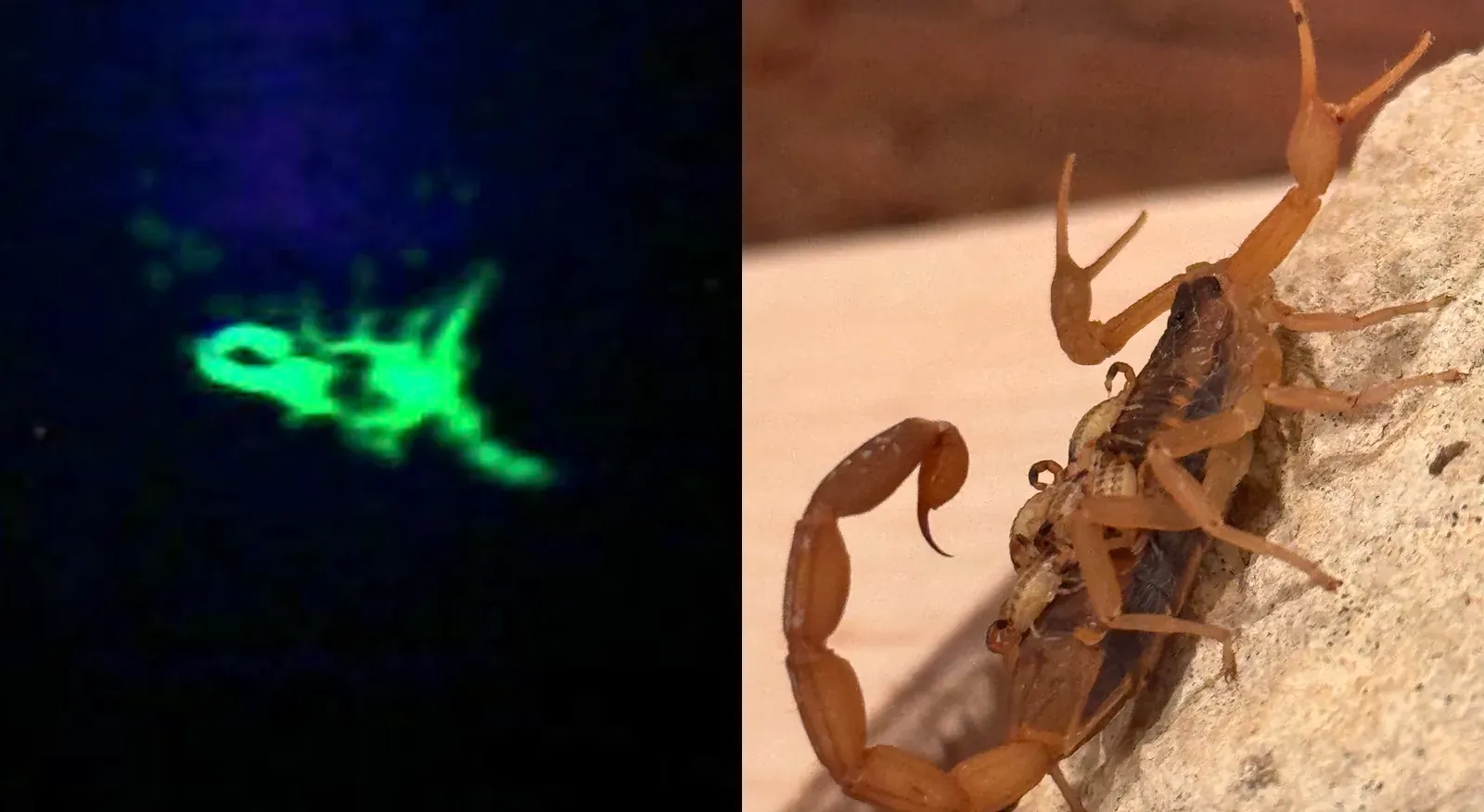
If the scorpion is still inside, contain it rather than chasing it. Place a wide-mouth glass over it, slide a stiff card underneath, and carry it outside to release — or dispose of it safely. Controlled capture beats a panicked swat that risks a defensive sting if you miss. Scorpions glow a bright greenish color under UV light, so a UV flashlight makes a hiding scorpion much easier to spot along a dark baseboard. For more, read our guide on what not to do after spotting a scorpion in your home.
How to keep scorpions out of your Reno home
Effective Reno scorpion control works in layers: reduce hiding spots, cut off the prey insects they eat, seal the gaps they slip through, and then verify it's working. Because scorpions are active while you sleep, verification through monitoring beats guessing. They travel the perimeter and glow under UV light, which tells you exactly where to focus.
Start outside: yard and perimeter changes that reduce sightings
Most of the battle happens before a scorpion ever reaches your door. Clear rock piles, woodpiles, and yard debris away from the foundation, since those are prime daytime harborage. Trim vegetation back from exterior walls. Dial in irrigation so you're not creating damp, bug-friendly zones against the house — fewer insects means less scorpion food. Managing that food supply is one of the top things that attract scorpions to your home.
Seal the house: the Reno-specific entry points to prioritize
Scorpions are flat and squeeze through surprisingly small gaps, so prioritize the most likely ones first. Fit door sweeps on exterior and garage doors, since the gap under a door is a classic entry route. Seal around utility line penetrations, weep holes, and pipe gaps. Replace worn weatherstripping and caulk cracks where the foundation meets siding. After sealing, test by shining a light from inside at night to find stray beams coming through. These are the main ways scorpions get into your home.
Monitoring: how to know your plan is working (without guessing)
Sealing and yard work reduce pressure, but how do you confirm scorpions aren't still getting in? Manual blacklight walks are tedious, and honestly, most people stop doing them after a week or two. A scorpion missed on one sleepy patrol is the one you step on later. Automated monitoring closes that gap. Systems like Scorpion Alert run on their own, scanning in the dark when scorpions are active and sending a photo-verified alert to your phone within seconds of a detection.
The Detectors plug into standard wall outlets and shine 365nm UV light onto the floor, watching for that telltale greenish glow along the room's edges. When one triggers, you grab a UV flashlight and a glass, walk to the room that alerted, and capture the scorpion instead of discovering it with your bare foot. The hardware comes with a monthly monitoring subscription, and the per-Detector rate drops as you add more. You can see current pricing on the live calculator.
Where to place detectors/monitors if scorpions are a concern
Place monitoring where scorpions actually travel and where stings happen. Prioritize entry points first: near front, back, garage, and patio doors. Cover high-risk rooms next, especially bedrooms, a nursery, and storage areas where things sit undisturbed. Then add water rooms like bathrooms and laundry rooms, which offer the cool, damp conditions scorpions seek. If you've ever spotted a scorpion in a particular room, that's the single best place to start — a past sighting is the strongest predictor of the next one.
In Reno, a quick nighttime check can make a big difference—scorpions can be hard to spot until you know to look for their UV fluorescence and the places they like to hide around foundations, rock landscaping, and clutter. If you want an extra layer of confidence between manual inspections, Scorpion Alert pairs UV-based visibility with AI confirmation to help you catch activity early and respond before it becomes a recurring problem.