Are scorpions a problem in Nellis AFB?
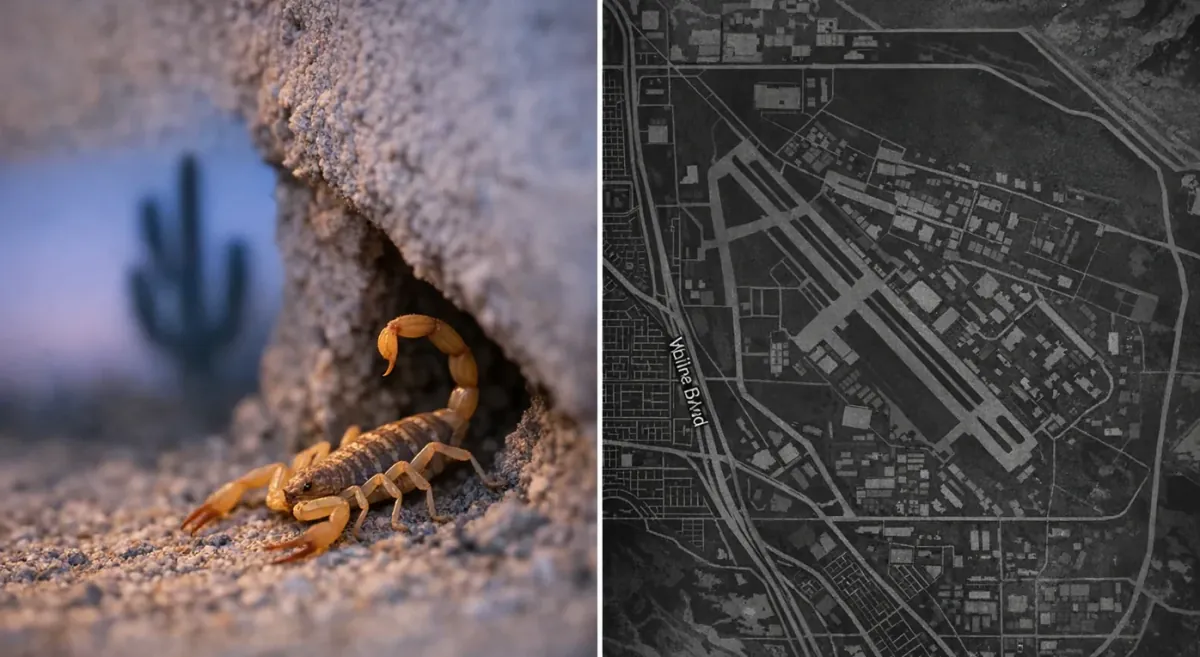
Yes — scorpions are a real, recurring concern at Nellis AFB and throughout Clark County. The surrounding Mojave Desert supports healthy scorpion populations, and base housing sits close enough to open desert habitat that sightings inside homes are entirely plausible. If you've found one, your concern is justified — and there are clear steps to take.
iNaturalist records show 235 research-grade scorpion observations within 30km of Nellis AFB, with the most recent logged in May 2026. Southern Nevada is also a documented hotspot for medically important species. A Kang & Brooks 2017 analysis specifically flagged rising scorpion exposure counts in Clark County, so this isn't a fluke.
What "high relevance" means for everyday life on base
Nellis AFB carries a high scorpion-relevance rating, which means residents should expect the occasional indoor sighting — not treat it as a once-in-a-lifetime event. Most households see scorpions sporadically, especially during warm months. A few properties — usually those backing onto desert lots or with heavy insect activity — see them more regularly.
Certain conditions tip the odds. Recent yard work, humidity spikes during monsoon-like weather, and a surge in insects (which scorpions hunt) can all push activity up. When the bugs show up, the scorpions that eat them usually aren't far behind.
Where scorpions are most likely to show up in Nellis AFB homes
Scorpions tend to show up in predictable places. In base housing, the usual hotspots are garages, utility penetrations along shared walls, patio sliders, laundry rooms, bathrooms, and ground-floor bedrooms. These spots offer the cool, dark, humid micro-habitats that Kang & Brooks 2017 identified as common indoor harborage.
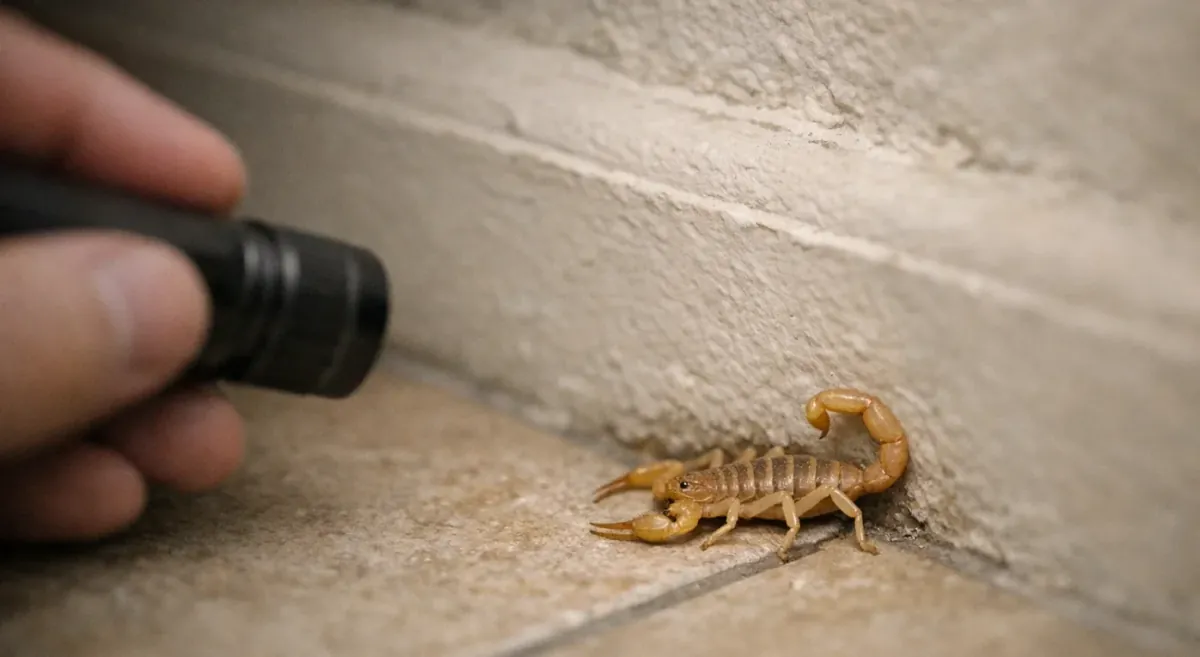
Scorpions are thigmotactic — they navigate by staying in contact with surfaces and edges. They crawl along baseboards, door thresholds, and furniture edges rather than crossing open floor. That's exactly why they're so hard to spot at night, when the room is dark and you're asleep.
Is this a one-scorpion problem—or a sign of more?
One scorpion can be a lone wanderer that slipped in under a door. The bigger question is whether your property is quietly supporting prey insects and offering hiding spots. If it is, you may be dealing with repeat visitors.
Repeated sightings — or finding scorpions in more than one room — point to a property-level issue rather than a single stray. That's when it's time to move from swatting individual bugs to a systematic plan: monitoring, exclusion, and prey reduction working together.
Which scorpion species lives in Nellis AFB?
The primary species of concern around Nellis AFB is the Arizona bark scorpion (Centruroides sculpturatus), which accounts for 136 of the 235 local iNaturalist observations — more than any other species in the dataset. Species ID matters here because the bark scorpion delivers the most medically significant sting of any scorpion in the United States.
Arizona Bark Scorpion basics (why homeowners worry about it)
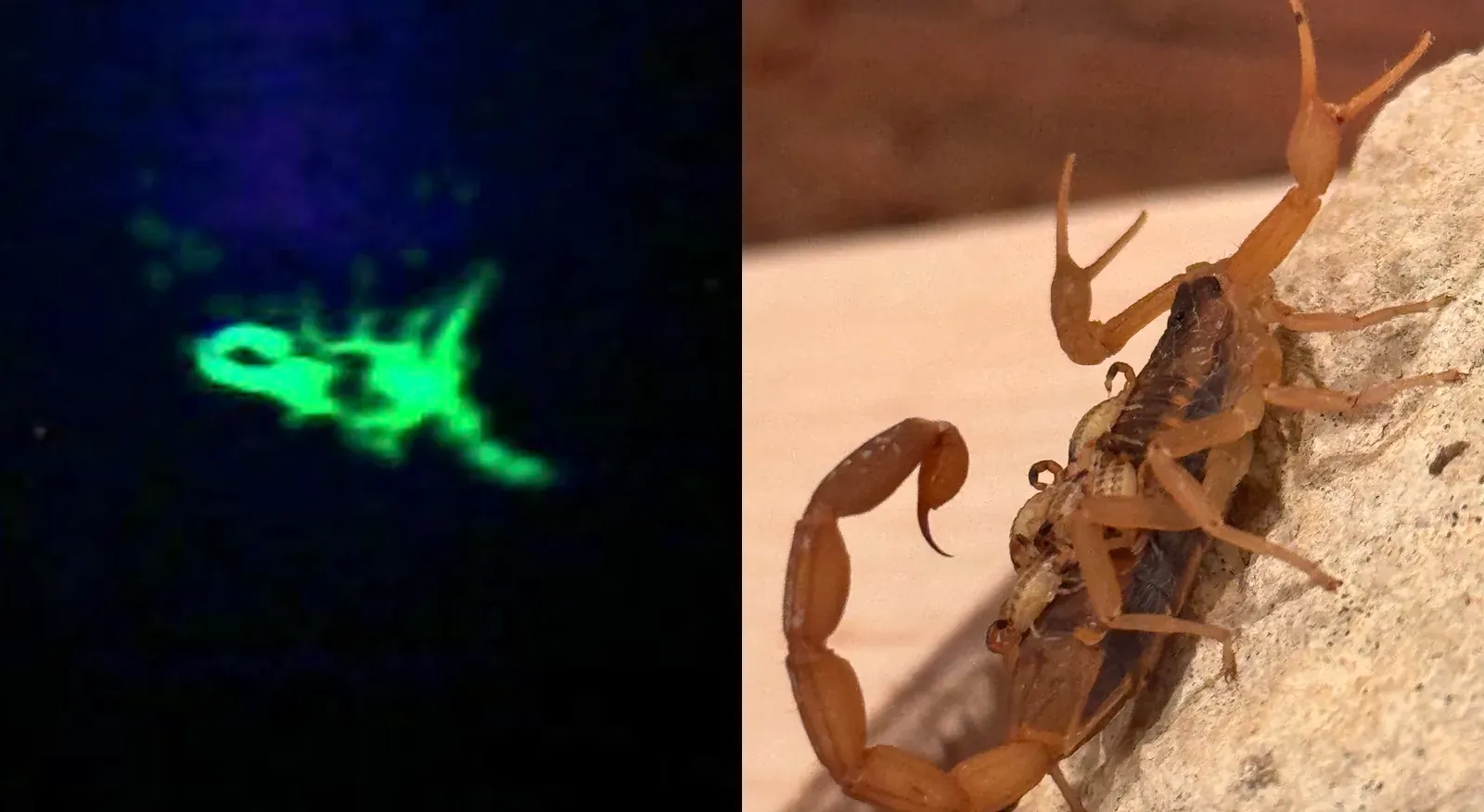
The Arizona bark scorpion is slender, light tan, and typically 2 to 3 inches long, with thin pincers rather than thick, crab-like claws. It's also an agile climber — so yes, to answer a common question, bark scorpions can climb walls, screens, and furniture. This is the species most likely to turn up above floor level.
Don't rely on size to judge risk. A small, pale bark scorpion is just as capable of a medically significant sting as a larger one. The range of this species has expanded into parts of Nevada and neighboring states in recent decades, according to documented range studies.
How to identify a bark scorpion safely (without getting close)
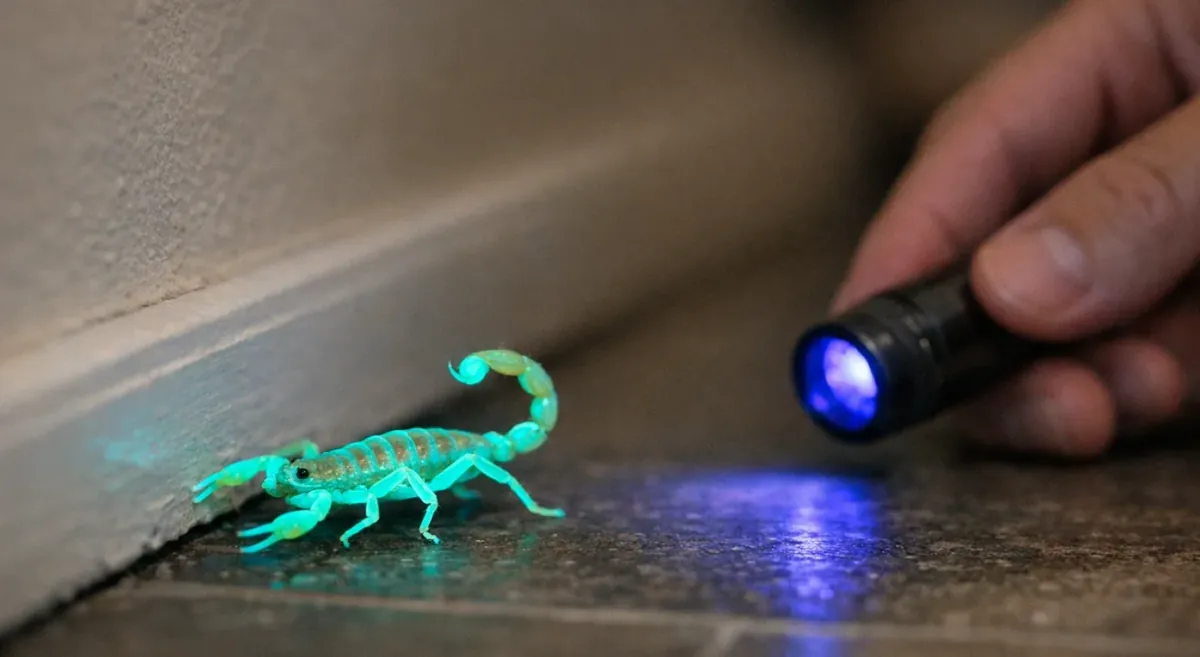
The safest way to confirm a scorpion is with a UV light at night from a few feet away. Scorpions fluoresce a bright greenish-blue under 365nm ultraviolet light — a quirk of their exoskeleton that makes them glow in the dark when almost nothing else does. You can spot one across a room without going near it.
Never try to handle a scorpion or pin it with your hand. Focus on containment and avoidance. A photo taken from a safe distance is far better than close inspection for getting a positive ID.
Other Clark County scorpions you might see (and why iNat points to bark scorpions here)
Clark County hosts several species beyond the bark scorpion. Local records also include the desert hairy scorpion (Hadrurus arizonensis, 23 sightings) and Paravaejovis confusus (26 sightings), among others. Most of these are far less medically concerning.
Even so, local iNaturalist observation data clearly highlights the Arizona bark scorpion as the dominant species near Nellis AFB — which is why it's the one base residents should plan around.
When are scorpions most active in Nellis AFB?
Scorpions around Nellis AFB become active as temperatures warm in spring, peak through the hottest summer months of roughly July and August, and taper off as nights cool in fall. They're primarily nocturnal, hunting after dark when people are asleep and least able to spot them — which is a big part of why stings happen at home.
Seasonality: the months Nellis AFB residents should be most alert
Expect activity to ramp up in spring, hit its peak in midsummer, and wind down through fall, though you can encounter a scorpion in any month in southern Nevada. Summer accounts for the overwhelming majority of cases nationwide, with warm-month evening hours dominating calls in every reporting state, per Kang & Brooks 2017.
The simple rule: risk goes up when nights stay warm. Mojave Desert summer nights that hold their heat keep scorpions moving and hunting long after dark.
Night patterns: why sightings spike after dark
Peak sting hours run from 6 PM to midnight, which accounts for roughly 49% of envenomations, according to Isbister & Bawaskar 2014. After dark, scorpions patrol perimeters — baseboards, thresholds, and corners — in search of prey.
The practical takeaway for homeowners: focus your attention on edges, corners, and door thresholds, not the middle of rooms. That's the real estate scorpions actually use.
Triggers that cause 'sudden' activity (even out of season)
Scorpions can appear suddenly even outside peak season when conditions change. Irrigation shifts, monsoon-like moisture, and nearby construction or landscaping that disrupts their habitat can all drive them indoors. Exterior lighting draws insects, and the insects draw the scorpions that eat them.
Picture a summer evening after a brief desert rain: the porch light pulls in a cloud of moths, and by midnight a bark scorpion is working the baseboard right below it. That chain of events is the single most common "where did this come from?" scenario.
How dangerous is a scorpion sting in Nellis AFB?
A bark scorpion sting is painful but rarely life-threatening for a healthy adult. It's taken more seriously than other scorpion stings because C. sculpturatus venom can occasionally cause systemic, neurological effects — especially in young children, seniors, and anyone with underlying health issues. Most stings, though, are managed at home.
Pain at the sting site is reported in 88.9% of stings and local numbness in 62.2%, based on a large Klotz et al. 2021 cohort. Across the US, 97.8% of envenomations happen in the home, and about 90% are handled on-site without a transfer.
Typical symptoms vs. 'red flag' symptoms
Typical symptoms stay local: immediate burning pain, tingling, numbness, and sometimes a "static" or buzzing feeling around the site. Red-flag symptoms are systemic — trouble breathing, difficulty swallowing, severe muscle twitching or jerking, roving eye movements, and intense agitation. Those warrant immediate care.
If you're unsure, call the Poison Help line at 1-800-222-1222 any time, day or night. For on-base care, Mike O'Callaghan Military Medical Center sits less than a mile from base housing. Always follow professional medical direction over anything you read online.
Who is most at risk in base housing
Children under 10 have the highest rates of systemic effects, hospitalization, and ICU admission in both Arizona and Nevada cohorts, per Kang & Brooks 2017. Seniors and pets that explore low to the ground are also more vulnerable. A toddler's small body and airway make a severe reaction more dangerous — one reason fast awareness at night matters so much. Our guide on why children are more at risk from scorpion stings covers this in depth.
Where stings happen most often at home
Most stings land on the hands and feet. The classic mechanisms, described by Klotz et al. 2021, are putting on a shoe with a scorpion inside, reaching into clothing or a storage box, and rolling over in bed against a scorpion that found its way onto the mattress via the bed skirt. Towels, linens, and shoes left on the floor are common culprits. In single-family and duplex base housing, ground-floor bedrooms and crib proximity are the setups to watch most closely.
What to do if you're stung in Nellis AFB
If you're stung, stay calm, wash the site with soap and water, apply a cold pack, and monitor for symptoms. Most bark scorpion stings in a healthy adult can be managed at home. For children, seniors, or anyone with worsening or systemic symptoms, seek medical evaluation promptly — on-base, Mike O'Callaghan Military Medical Center is less than a mile from housing.
Immediate steps (first 5–15 minutes)
- Move away from where you were stung so you aren't stung again, and check the area with light.
- Wash the sting site thoroughly with soap and water.
- Apply a cold pack or ice wrapped in cloth to reduce pain and swelling.
- Remove rings, watches, or tight items near the site in case of swelling.
- Note the exact time of the sting and jot down any symptoms as they appear — clinicians will want this.
- Skip home "remedies" that waste time; they don't neutralize venom.
When to seek urgent care (especially for children)
Err on the side of prompt evaluation for young children, seniors, pregnant women, and anyone with a known allergy or heart or breathing condition. Go in — or call 911 — for trouble breathing, difficulty swallowing, uncontrolled muscle jerking, roving eye movements, or intense full-body symptoms in a child. When in doubt, call the Poison Help line at 1-800-222-1222 and follow their direction and local protocols.
If you can do so safely: confirm what stung you
If it's safe, use a UV flashlight from a distance to locate the scorpion — it will glow greenish under the light — or snap a photo. Don't chase or handle it. Confirming the culprit helps clinicians and gives you peace of mind. Knowing exactly which room triggered an alert and what was found there cuts the guesswork — and the panic — out of a midnight incident.
How to keep scorpions out of your Nellis AFB home
Keeping scorpions out of base housing comes down to three layers working together: exclusion (sealing entry routes), habitat reduction (removing prey and moisture), and nighttime monitoring. Start here: seal the garage door and exterior door sweeps, clear clutter from the floor in bedrooms and the garage, and keep an eye on any room where a scorpion has already been spotted.
Start with exclusion: seal the routes they actually use
Because scorpions patrol edges and perimeters, the highest-impact sealing targets are along those edges. Prioritize:
- Door sweeps and weatherstripping on exterior and garage doors — a bark scorpion fits through a gap thinner than a credit card.
- Garage door bottom seals and corner gaps.
- Weep holes and pipe/utility penetrations through exterior walls.
- Baseboard and trim gaps, plus the seals around patio sliders.
Our breakdown of the top ways scorpions get into your home is a good checklist to work through room by room.
Reduce what attracts them: prey insects, moisture, and clutter
Scorpions follow their food. Exterior lighting pulls in insects, and insects pull in scorpions, so bug activity around the house is a direct driver. Reduce harborage and prey by tidying storage, elevating boxes off garage floors, trimming debris away from the foundation, and fixing drips or irrigation overspray that create the damp micro-habitats scorpions love. Our list of the top things that attract scorpions goes deeper on each.
Monitoring and peace of mind: catching activity before it becomes a sting
Exclusion and habitat work lower your odds, but they can't tell you when a scorpion slips through anyway — at night, in the dark, while you sleep. That's the gap a monitoring layer fills. Autonomous detectors like Scorpion Alert plug into standard wall outlets and scan the floor only when the room goes dark, shining 365nm UV light to catch the telltale scorpion glow, then send a photo-verified alert to your phone within seconds. Place them in kids' bedrooms, hallways, the garage entry, and near water sources — the rooms where activity and risk overlap most. For a per-room rate, check the live calculator at scorpionalert.com/pricing.
What to do after you spot one (without making it worse)
A single sighting doesn't call for panic — it calls for a calm, repeatable routine:
- Don't walk barefoot at night, especially in bedrooms and bathrooms.
- Don't leave shoes on the floor, and shake out any footwear before putting it on.
- Do use a UV flashlight to locate it from a distance.
- Do contain it safely — a glass over the scorpion and a stiff card slid underneath, then release it well away from the house.
For the full list of mistakes to sidestep, read what not to do after spotting a scorpion in your home. Given how high the scorpion relevance is around Nellis AFB in Nevada, a steady process beats one-off reactions every time.
Living near Nellis AFB means scorpions can show up after dark—especially around block walls, rock landscaping, and entry points—so spotting them early is key to keeping your home and family safer. If you want an easier way to check your property at night, Scorpion Alert uses a 365nm UV light and automatic night operation to help you detect activity when scorpions are most active.