Are scorpions a problem in Lovington?
Yes — Lovington sits in a high scorpion relevance area, which means scorpions are a normal part of life here, and you'll likely run into one at some point. The good news: with a few targeted changes, you can cut down how often you see them, even if you can't erase the risk entirely in this part of southeastern New Mexico.
Research-grade sightings within 30km of Lovington are documented on iNaturalist, and the striped bark scorpion shows up in the large majority of them. Scorpions come indoors for the same three reasons every pest does: food, water, and a dark place to hide. Your home offers all three.
Why Lea County scorpions end up around homes
Lea County is dry, warm rangeland with the kind of terrain scorpions love — rocky ground, sparse vegetation, and plenty of cover under rocks, wood, and debris. That desert habitat runs right up to the edges of Lovington neighborhoods.
Around a typical home, scorpions find the same conditions in miniature: block walls, landscaping rock, woodpiles, sheds, and stacked storage. They follow their prey — crickets, roaches, and other insects — and during the dry stretches that are so common here, they'll drift toward any reliable moisture, which often means your yard, garage, or bathroom.
What 'high scorpion relevance' looks like for a homeowner
In practical terms, high relevance means you can expect occasional nighttime sightings outdoors and the odd scorpion turning up inside, especially during warm stretches. One scorpion on the patio doesn't mean an infestation. A pattern does.
Take it more seriously when you notice any of these:
- Repeat sightings in the same room or along the same wall
- Young children or pets in the house
- An actual sting to anyone in the household
- Scorpions appearing indoors rather than only outside
Are scorpions in Lovington usually inside or outside?
Most scorpions live and hunt outdoors, and that's where you'll see the majority — along yard edges, under rock and wood piles, near clutter and storage. Indoors, they favor cool, dark, humid spots: bathrooms, laundry rooms, garages, and baseboards.
Wherever they roam, scorpions travel along edges rather than crossing open floors. They hug walls, baseboards, and thresholds. That single habit shapes everything about how you prevent and monitor them — a point this guide returns to throughout.
Which scorpion species lives in Lovington?
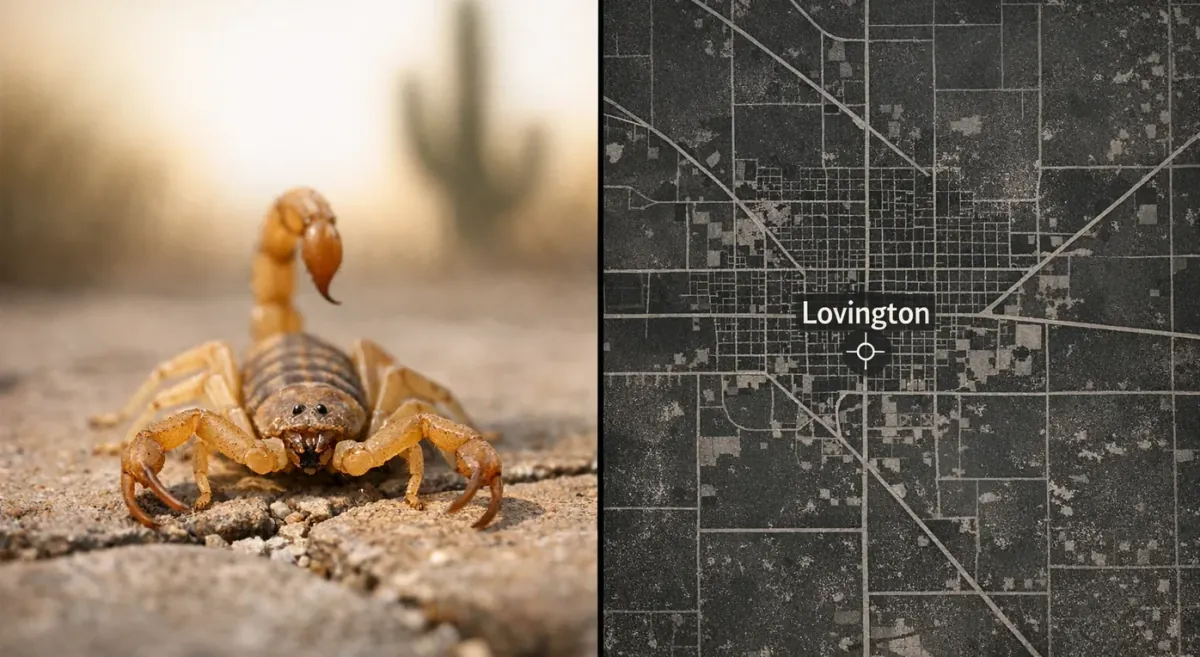
The scorpion you're most likely to meet in Lovington is the striped bark scorpion (Centruroides vittatus), which accounts for seven of the eight research-grade sightings logged within 30km of the city. A single Chihuahuanus coahuilae sighting rounds out the local records.
Its sting hurts — a lot — but no life-threatening envenomation has been reliably documented from a healthy adult. Don't assume every scorpion looks identical, though; the presence of that second species is a reminder that ID matters.
Striped Bark Scorpion Lovington: quick ID tips
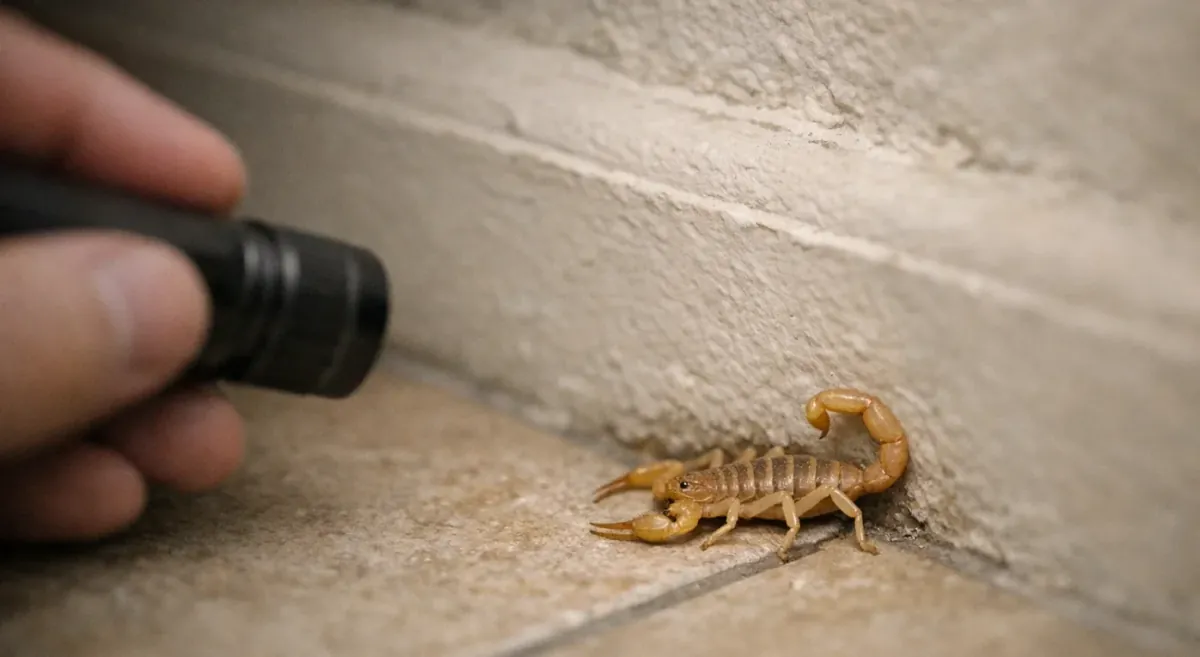
The striped bark scorpion Lovington homeowners find most often is slender and pale — usually tan to yellowish — with two dark lengthwise stripes running down its back. Adults typically reach about two to two and a half inches. It has thin, delicate pincers rather than the thick crab-like claws of some other species.
Never handle one to get a closer look. Snap a photo from a safe distance, or trap it under a clear cup with a piece of stiff card slid underneath. That gives you a positive ID without risking a defensive sting.
Can Lovington scorpions climb walls?
Yes, striped bark scorpions can climb rough surfaces like stucco, brick, and wood, so it's not unusual to spot one partway up a wall. That said, they spend most of their time down low, moving along baseboards, thresholds, and the edges of floors where they hunt.
Because they navigate by hugging surfaces — a behavior called thigmotaxis — the room's perimeter is where they travel and where they're easiest to detect. That's exactly why perimeter-focused prevention and monitoring works so well, a point we'll return to.
Life cycle basics: how long they live and how they reproduce
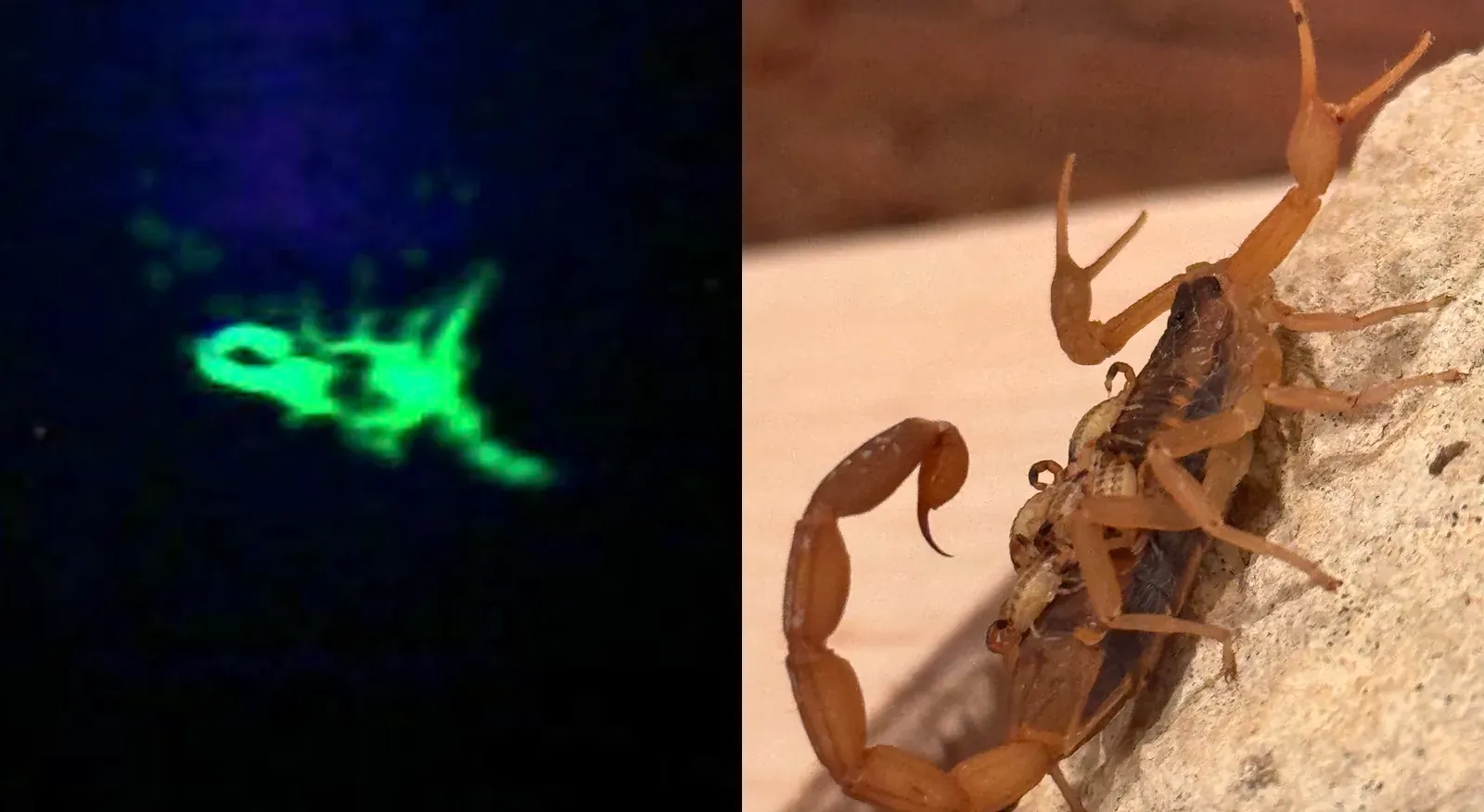
Unlike most insects, scorpions give birth to live young. The mother carries her babies on her back until their first molt, then they head off on their own. A single brood can number a couple of dozen.
Scorpions also live considerably longer than you'd guess — several years is typical, and some individuals reach six years or more. That long life and live birth help explain why activity comes in seasonal waves and why you may see the same scorpions, or their offspring, around your property year after year.
When are scorpions most active in Lovington?
Scorpion season in Lovington runs roughly from late spring through early fall, peaking in the hottest summer months. Nationally, summer accounts for the overwhelming majority of scorpion cases, with warm-month evening hours dominating, according to Kang & Brooks 2017. Indoor encounters tend to rise when outdoor conditions push scorpions toward shelter.
Scorpion season Lovington: the simplest timeline
Here's the easiest way to think about the year in three phases:
- Early season (April–May): the first warm nights wake scorpions up, and you'll start seeing occasional activity after dark.
- Peak season (June–August): hot days and warm nights drive the most sightings and the highest sting risk.
- Late season (September–October): activity tapers as nights cool, though a warm spell can restart it.
Watch for exceptions. A stretch of unusually warm autumn nights, or heavy indoor watering of houseplants, can keep scorpions active later than the calendar suggests.
Why you usually find them at night (and along edges)
Scorpions are nocturnal, so a home can feel completely scorpion-free by day while a few roam the baseboards after dark. Peak sting hours run 6 PM to midnight, when roughly half of envenomations occur.
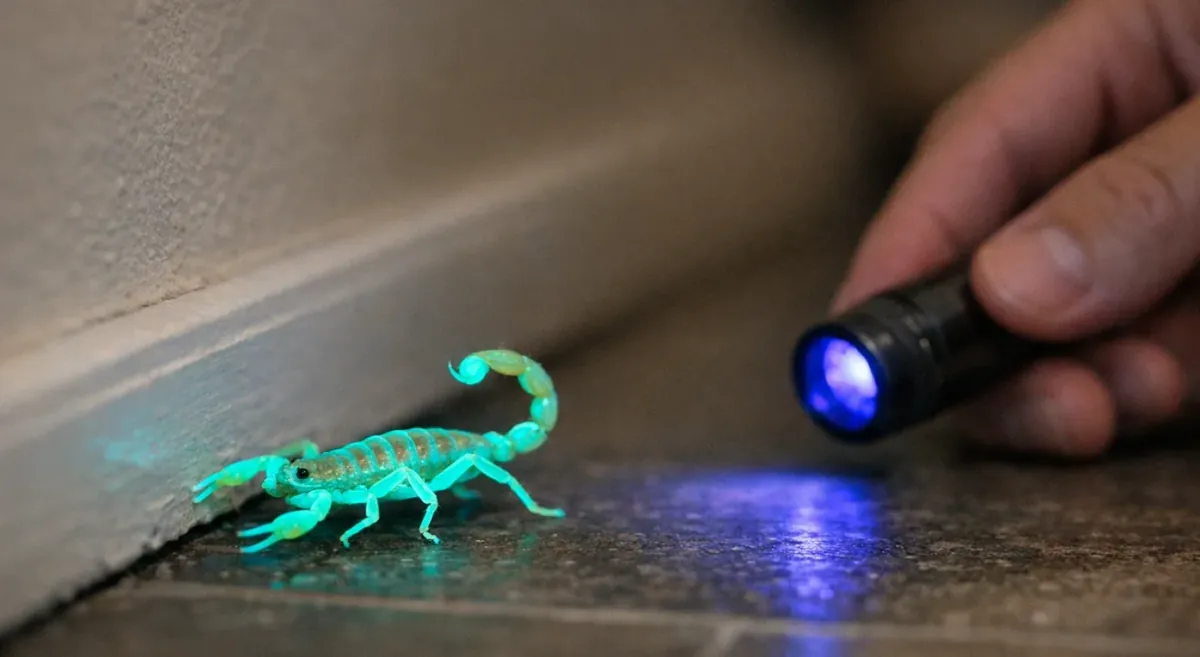
Scorpions glow a bright greenish color under 365nm UV light — which is why a UV flashlight is the go-to tool for confirming a sighting once you know where to look. Focus the beam along baseboards, thresholds, and wall edges, not the middle of the room where they rarely travel.
Weather and yard conditions that spike activity
A few triggers reliably bump up scorpion movement: heat waves, rain events, and irrigation. During dry periods, scorpions concentrate near whatever moisture they can find, which often means your yard and the cool corners of your home.
After a rain or a heavy watering, run a quick check of these spots:
- The garage, especially along the base of walls
- The laundry room and around the water heater
- Patio doors and door thresholds
How dangerous is a scorpion sting in Lovington?
For most healthy adults in Lovington, a striped bark scorpion sting is painful but not dangerous — think of it as a bad bee sting that hurts, burns, and then fades over hours. The venom is far milder than the Arizona bark scorpion's, and serious complications are uncommon. Children, older adults, and anyone with allergy history warrant closer watching.
Pain at the sting site is nearly universal — reported in 88.9% of stings — with local numbness in 62.2% of cases, according to Klotz et al. 2021.
Typical sting symptoms vs 'get help now' symptoms
Most Lovington stings produce these common, manageable symptoms in the first few hours:
- Immediate sharp or burning pain at the site
- Tingling or numbness around the sting
- Mild redness and slight swelling
Call for help right away if you see any of these red flags:
- Trouble breathing or swallowing
- Severe muscle twitching or jerking of the arms and legs
- Roving or uncontrolled eye movements, or blurred vision
- Intense, whole-body symptoms — especially in a child
If you're unsure, don't guess. Seek professional medical advice.
Who is most at risk in Lovington households?
Children are the biggest concern. Their smaller body size means the same dose of venom hits harder, and symptoms can escalate faster than in an adult — which is why kids with severe symptoms need prompt care. You can read more about why children are more at risk from scorpion stings and how to protect kid and pet zones like bedrooms and playrooms.
A scorpion sting Lovington families take to a doctor is usually one involving a young child, an older adult, or worsening symptoms. When any of those apply, err on the side of getting checked out.
Pet stings: what to monitor
Dogs and cats often get stung on the paws or muzzle while sniffing around the garage, patio, or yard — the low, ground-level spots scorpions favor. Most pets recover after a painful few hours, but watch for drooling, whining, swelling of the face or paw, difficulty breathing, or unusual weakness, and call your vet if those appear.
Because pets investigate close to the floor first, floor-level clutter control and monitoring pays off double — for them and for you.
What to do if you're stung in Lovington
Stay calm, wash the area, ice it, and monitor symptoms — the vast majority of stings are handled at home. For expert guidance any hour of the day, call the free Poison Help line at 1-800-222-1222. Have your Lovington and Lea County location details ready in case they need to escalate.
Immediate checklist for a scorpion sting (Lovington)
Work through these steps in order:
- Move away from where you were stung so you aren't stung again.
- Wash the sting site with soap and water.
- Apply a cool pack or ice wrapped in cloth to ease pain and swelling.
- Remove rings, watches, or tight items near the sting before any swelling sets in.
- Take an over-the-counter pain reliever if needed and note the time.
- Monitor for the red-flag symptoms above over the next few hours.
Avoid the old myths: don't cut the wound, don't try to suck out venom, and don't apply a tight tourniquet. For a fuller breakdown, see this guide to what to do in the first 30 minutes after a sting.
Who to call and where to go in Lovington
For mild, local symptoms, call Poison Help at 1-800-222-1222 and follow their guidance from home. If symptoms worsen, or the person stung is a young child, an older adult, or someone with an allergy history, seek care promptly. For severe red-flag symptoms — trouble breathing, uncontrolled muscle movements — go to the emergency room or call 911.
The nearest hospital is Nor-Lea Hospital District, at 1600 N Main St, Lovington, NM 88260, just about 1.5 miles from the center of town — phone +1 575-396-6611. Have your location and a description of the scorpion ready to speed triage.
Should you catch the scorpion or take a photo?
A clear photo is the safest way to document what stung you. Never risk a second sting trying to capture the culprit — but if you can safely trap it under a cup, that can give medical staff a positive ID, too. Photo evidence, from any source, removes uncertainty and helps caregivers make faster decisions about whether the sting needs more than home care.
How to keep scorpions out of your Lovington home
The most effective Lovington scorpion control follows a clear order of operations: reduce pressure outside, seal and simplify inside, then monitor the perimeter at night. Since 97.8% of envenomations happen in the home, according to Kang & Brooks 2017, keeping scorpions from getting inside is where your effort pays off most.
Lovington-focused exclusion: where to seal first
Scorpions squeeze through gaps thinner than a credit card, so seal the highest-yield openings first:
- Door thresholds and weatherstripping — the garage-to-house door especially
- The garage door's bottom seal and side gaps
- Weep holes and utility penetrations where pipes and wires enter
- Gaps at baseboards and around plumbing under sinks
A simple weekend plan: inspect the whole perimeter one day, seal the gaps the next, then re-check after the next big weather change. More detail on the usual culprits is in this rundown of the top ways scorpions get into your home.
Yard, garage, and outbuilding changes that cut sightings
Scorpions can't move in if there's nothing to move into. Clear away the harborage and the prey insects that draw them, and you shrink the population pressing against your walls. Focus on what's common around Lovington homes:
- Move woodpiles, rock piles, and stored materials away from the house
- Clear fence-line clutter and shaded debris zones where scorpions shelter by day
- Declutter the garage and sheds, and store items up off the floor
- Fix drips and reduce standing water near the foundation
Because the dry Lea County climate pushes scorpions toward moisture, any leaky spigot or over-watered bed near the house becomes a magnet. See what else pulls them in with these top things that attract scorpions, and know what not to do after spotting one indoors.
Ongoing monitoring at night (without constant blacklight walks)
Here's the reality with scorpions in Lovington, New Mexico: they're nocturnal and they hide, so you often won't know one's inside until you step on it or it stings someone. A UV flashlight is useful for confirming a sighting once you have a reason to look, but patrolling every single night is exhausting and easy to skip — and scorpions don't take nights off.
Past sightings are the single strongest predictor of a future sting, which is exactly why passive, always-on monitoring makes sense in a high-relevance city like Lovington. Automated detection systems like Scorpion Alert plug into wall outlets right on the room perimeter — where scorpions actually travel — and shine 365nm UV light onto the floor, watching for that telltale glow. When one appears, you get a push or SMS alert within seconds, so you can grab a glass and a UV flashlight and deal with it before it finds a shoe or a bed. Place detectors near entry points, bathrooms, and laundry areas for the best coverage. Check current rates on the live calculator at scorpionalert.com/pricing.
In Lovington, scorpions can be hard to spot until they’re already in the garage or moving along baseboards at night, so making them visible and catching activity early is key. If you want a practical way to monitor after dark, Scorpion Alert uses 365nm UV light plus AI-powered detection to help confirm what you’re seeing and cut down on false alarms.