Are scorpions a problem in Coolidge?
Yes — scorpions are a real and common concern for Coolidge homeowners. Sitting in the heart of Pinal County, Coolidge is desert-edge country — exactly the kind of warm, dry habitat where scorpions in Coolidge, Arizona thrive. If you've found one on your kitchen tile at midnight, you're not alone, and you're not doing anything wrong.
Arizona carries the heaviest scorpion load in the country. In fact, 68.2% of all US scorpion exposures reported to poison control between 2005 and 2015 happened right here in Arizona (Kang & Brooks 2017). Closer to home, the Arizona Poison & Drug Info Center logged 71 scorpion exposures across Pinal County in 2025 alone (AZ Poison Center, Pinal County 2025).
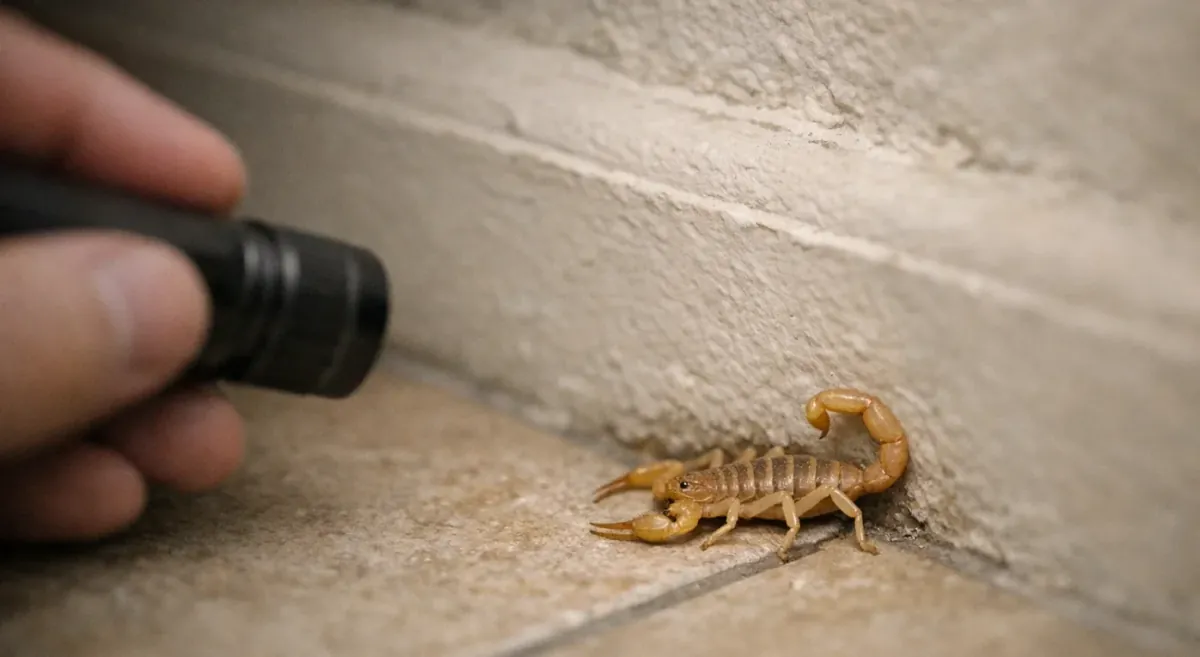
Desert-edge housing, attached garages, block walls, and outdoor clutter all raise the odds of an encounter. Scorpions are mostly nocturnal, and they're thigmotactic — they navigate by hugging edges and surfaces. That matters because it makes their movement predictable, which tells you where to look and what to watch.
Where do Coolidge homeowners usually see them first?
Most first encounters happen in a handful of predictable spots. The garage tops the list, followed by laundry rooms, bathrooms, baseboards, and the area near a patio slider or back door.
Why these places? Because scorpions travel along perimeters — baseboards, thresholds, and wall-to-floor junctions act like highways. A gap under the garage door or a worn weatherstrip at the slider becomes a doorway, and once inside, the scorpion follows the edge of the room rather than crossing open floor.
Do scorpions in Coolidge come indoors on purpose?
Not maliciously — they come in looking for three things: prey insects, water, and comfortable temperatures. A home full of crickets, roaches, and other bugs is a buffet. Dripping faucets, pet bowls, and condensation offer water. And when the desert swings from scorching days to cool nights, your climate-controlled house is appealing.
That means your best early defense is making the house less attractive: knock down the insect population, fix moisture problems, and declutter the spots that offer dark, humid shelter. For the finer points on sealing up gaps, see our guide on the top ways scorpions get into your home, and on removing the draws, read up on what attracts scorpions in your home.
How to get clarity fast (without nightly blacklight patrols)
Here's the frustrating part: scorpions do their roaming while you're asleep. You could walk the house with a UV flashlight every night — but that gets old fast, and you'll miss the nights you skip. Monitoring beats guessing.
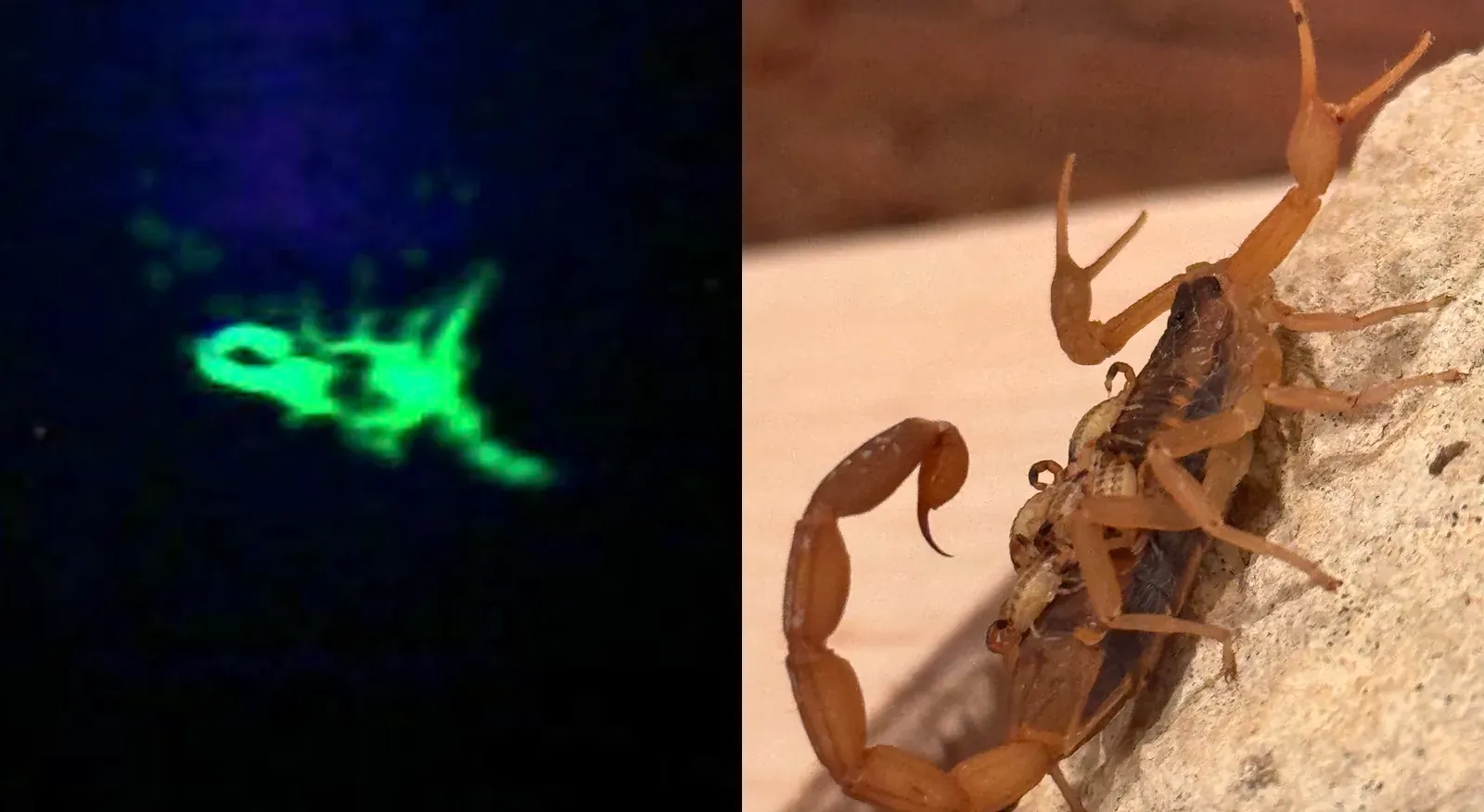
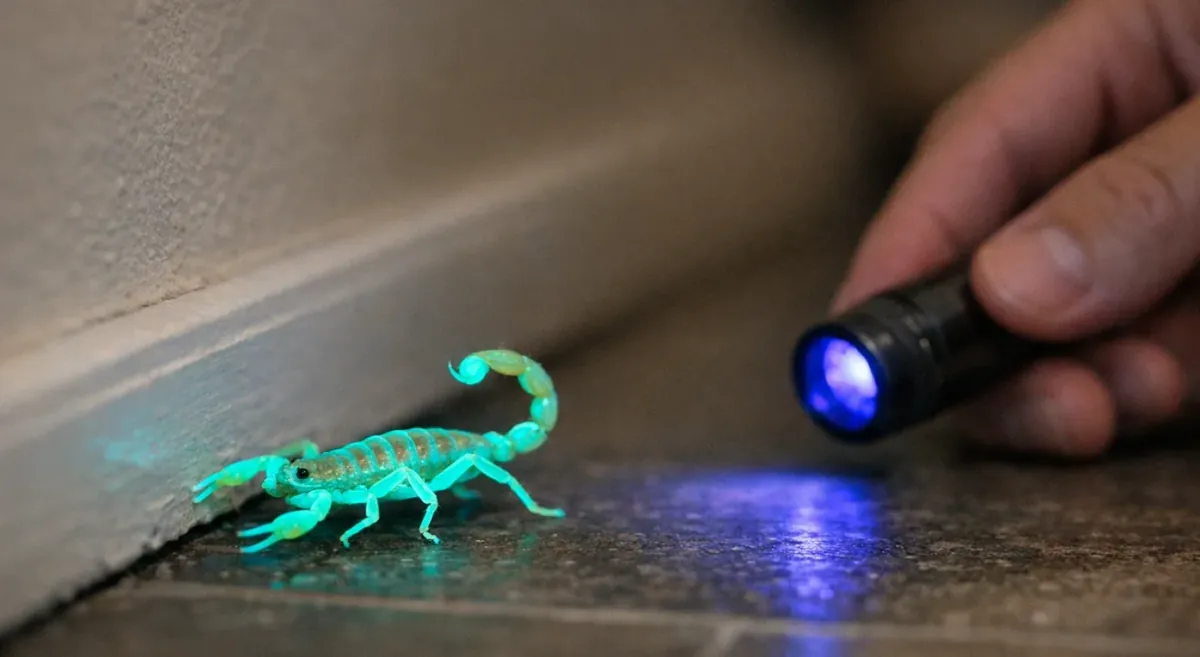
Scorpions glow bright greenish-blue under ultraviolet light, which is the basis of modern detection. Scorpion Alert Detectors plug into standard outlets right along the room perimeter where scorpions travel, shine a 365nm UV light on the floor, and scan continuously once the room goes dark. When one is spotted, you get a photo-verified alert on your phone within seconds — so you know exactly what happened overnight instead of wondering.
Which scorpion species lives in Coolidge?
There's no single iNaturalist-confirmed "primary" species pinned specifically to Coolidge, so we won't pretend otherwise. What Pinal County records do tell us is that homeowners here typically deal with a few usual suspects: the Arizona bark scorpion (Centruroides sculpturatus), the desert hairy scorpion, and the striped-tail (devil) scorpion.
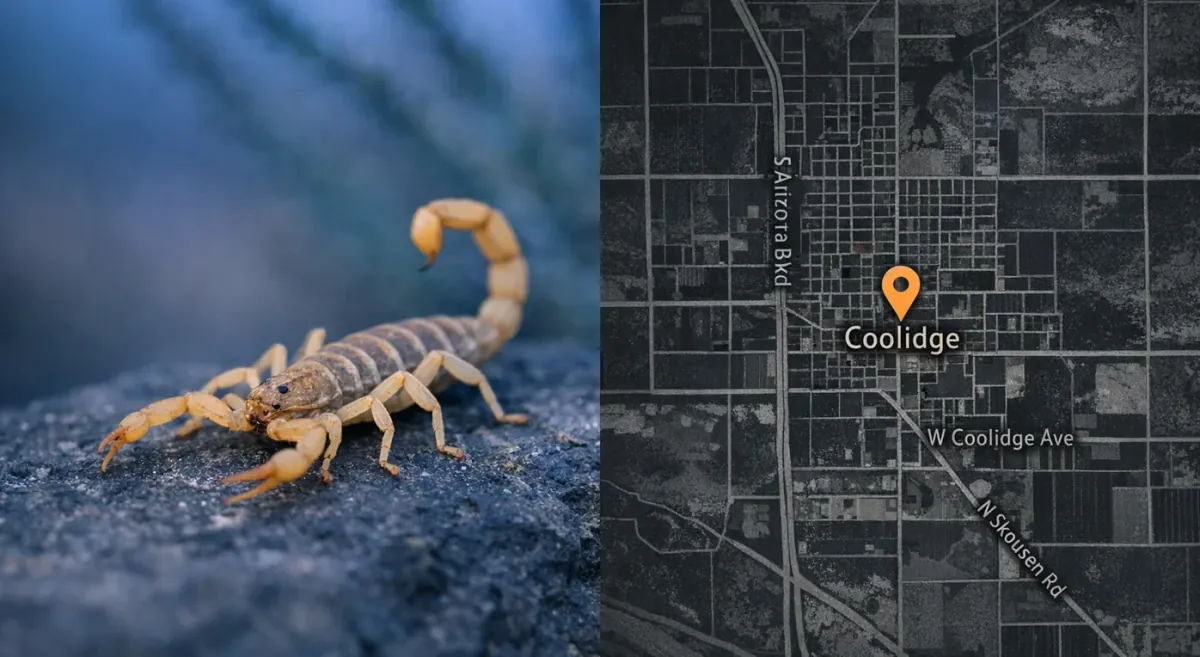
Quick ID cues that actually help: the bark scorpion is small and slender — often under three inches — light tan, with thin pincers and a slim tail. The desert hairy is much larger and bulkier, with thick pincers. The striped-tail is stout, with a noticeably fat tail. Slender pincers plus small size is your cue to be more cautious.
The #1 species homeowners worry about (and why)
The Arizona bark scorpion is the one that matters medically. It's the only scorpion in the region whose venom can cause serious systemic symptoms, and it's the species behind nearly all significant Arizona stings. Arizona also reports the highest rates of neuromuscular and respiratory effects of any state (Kang & Brooks 2017).
From a homeowner's view, the bark scorpion is extra concerning because it likes the exact indoor micro-habitats you have — cool, dark, humid corners in bathrooms, laundry rooms, and bedrooms. It's also the species most likely to turn up in living spaces rather than staying in the yard.
Other Pinal County scorpions you might see around yards
Beyond the bark scorpion, you may spot desert hairy scorpions and striped-tail scorpions around the property. These tend to hang out in rock piles, along block walls, and near irrigation edges where the ground stays a little moister.
Don't rely on size alone to judge risk. A big desert hairy looks scarier but is far less venomous than the small, pale bark scorpion. When in doubt, treat any scorpion indoors with the same caution.
How to confirm what you found (safely)
If you want a confident ID, snap a photo from a safe distance and share it with a licensed local pest professional, or check the identification guidance from the University of Arizona Cooperative Extension office serving Pinal County. Never handle a live scorpion to get a better look.
This is where photo-verified detection earns its keep. A Scorpion Alert captures a time-stamped image of exactly what triggered the alert, which you can hand straight to a pro — no fuzzy phone shot of an empty floor, and no guessing what scurried away.
When are scorpions most active in Coolidge?
Scorpions are active in Coolidge nearly year-round thanks to the mild winters, but activity surges from late spring through early fall. The real peak lands in August and September, when monsoon humidity and lingering heat push both scorpions and their insect prey into overdrive (Kang & Brooks 2017).
Several things drive the shift: extreme summer heat sends scorpions seeking cooler shelter, monsoon moisture raises humidity they favor, and the rains trigger an insect boom that gives them more to hunt. That's why "scorpion season" in Coolidge feels most intense once the storms roll in. For the full timeline, see our month-by-month Arizona scorpion season guide.
What time of day are scorpions active (and where do they travel indoors)?
Scorpions are nocturnal, and the single riskiest window is roughly 6 PM to midnight, when nearly half of stings occur, with a smaller morning peak (Isbister & Bawaskar 2014). Indoors, they travel the edges — baseboards, thresholds, corners — rather than crossing open rooms.
Bark scorpions can scale rough vertical surfaces and tuck into cracks, which is why inspection shouldn't stop at the floor. Check wall-to-floor junctions, stacked clutter, and hanging linens, and keep bedding from touching the floor.
Do mating and babies change what you see in Coolidge?
A few homeowner-friendly facts: scorpions don't lay eggs — females give live birth, and the young ride on the mother's back for a week or two. Mating and birth tend to cluster in the warm months, which can bump up sightings.
That said, a sudden spike usually reflects conditions more than a nest in your walls. More prey, more moisture, or a new harborage spot near the house will draw scorpions in long before "they're breeding inside" is the explanation.
How to time prevention and monitoring for the season
A simple seasonal rhythm works well. Before the heat arrives (spring), seal and exclude. During peak season (summer into early fall), stay vigilant at night and keep floors clear. After the season winds down (late fall), clean up yard harborage so next year starts easier.
Because detectors only scan when a room goes dark, they're naturally aligned with peak scorpion activity — doing the overnight watching for you during the hours that matter most.
How dangerous is a scorpion sting in Coolidge?
Most scorpion stings in Coolidge are painful but not life-threatening for healthy adults — think an intense bee-sting-like reaction that fades over hours. The exception is the Arizona bark scorpion, whose venom can cause systemic effects, especially in young children, older adults, and people with existing health conditions.
Pain at the sting site shows up in 88.9% of cases and local numbness in 62.2% (Klotz et al. 2021). Children are the real concern: kids under 10 have the highest rates of systemic effects, hospitalization, and ICU admission (Kang & Brooks 2017). That's why families with little ones take scorpions seriously — and why our piece on why children are more at risk from scorpion stings is worth a read.
Common symptoms vs. red-flag symptoms
Commonly reported symptoms include immediate burning pain, tingling, numbness, and mild swelling around the site. These are uncomfortable but usually manageable at home.
Red-flag symptoms that mean get medical help now: trouble breathing or swallowing, severe muscle twitching or jerking, roving or jerking eye movements, slurred speech, and intense full-body symptoms in a child. When in doubt, call the Poison Help line at 1-800-222-1222 — it's free, staffed around the clock, and non-diagnostic calls are exactly what they're there for.
Who's at higher risk in Coolidge households?
Infants and young children, older adults, people with allergies or heart and respiratory conditions, and pets all face higher risk. The extremes of age tend to react most severely.
Floor-level roaming at night is why kids and pets are so exposed — they play, crawl, and sleep right where scorpions travel. A toddler on the family-room carpet or a dog's water bowl in a dark laundry room both sit squarely in a scorpion's path.
Why stings often happen at home (not out in the desert)
Nearly all scorpion envenomations — 97.8% — happen inside the home, not out in the open desert (Kang & Brooks 2017). The classic scenarios are sliding on a shoe with a scorpion inside, grabbing a towel off the floor, reaching into a laundry pile, brushing a scorpion at the edge of the bedding, or digging through garage storage.
Every one of those ties back to the same two facts: scorpions move at night, and they hug perimeters and hiding spots. Knowing that tells you where the risk lives — and what to fix.
What to do if you're stung in Coolidge
Stay calm. For most stings, the right response is to wash the area with soap and water, apply a cool ice pack to reduce pain and swelling, keep the limb still, and watch closely for worsening symptoms. Do not cut the wound, try to suck out venom, or apply a tourniquet — those do more harm than good. Our rundown of what not to do after spotting a scorpion covers the common mistakes.
In Coolidge and the wider Pinal County area, your first call for guidance should be the Arizona Poison & Drug Information Center at 1-800-222-1222. They'll tell you whether home care is enough or whether you need to head to an urgent care or emergency room. If you find the scorpion afterward, don't handle it bare-handed — trap it under a glass or snap a photo for identification.
Step-by-step: immediate actions (first 10 minutes)
- Keep the person calm and seated — panic raises heart rate and spreads venom faster.
- Wash the sting site thoroughly with soap and water.
- Apply a cool compress or ice pack wrapped in cloth to ease pain and swelling.
- Remove rings, watches, or tight clothing near the sting in case of swelling.
- Take a photo of the scorpion if you can do so safely, for identification.
- Call Poison Control at 1-800-222-1222 and watch for any worsening symptoms.
When to seek urgent care or call for help
Head to urgent care or the ER — or call 911 — if you see any of these: difficulty breathing or swallowing, uncontrolled muscle twitching or jerking, abnormal eye movements, slurred speech, drooling, or severe agitation. Treat any sting on an infant or young child as urgent.
The good news is that effective treatment exists. Anascorp, the FDA-approved scorpion antivenom, resolves serious symptoms fast. In one trial, symptoms cleared within four hours in all children who received it versus almost none on placebo (Boyer et al. 2009).
If you got stung at night: how to reduce repeat risk the same evening
Where there's one scorpion, there may be more. Before going back to bed, shake out bedding, shoes, and slippers, keep floors clear of clutter and laundry, slip on closed-toe slippers, and move kids and pets off the floor and away from room edges.
This is the exact moment real-time, photo-verified alerts prove their worth. Instead of lying awake wondering whether another scorpion is roaming the hallway, a Scorpion Alert Detector keeps watching through the night and pings your phone the second it spots one — so you know, rather than guess.
How to keep scorpions out of your Coolidge home
Lasting scorpion control in Coolidge rests on four pillars: exclusion (seal entry points), harborage reduction (remove hiding spots), prey and moisture management (cut off food and water), and verification (confirm your changes actually worked). No single step does it alone, but together they can shrink the problem dramatically.
Coolidge homes have their own quirks. Attached garages with worn door seals, block walls that hold warmth and shelter, older weatherstripping that warps in the dust and heat, and desert landscaping right up against the foundation can all create openings and hiding spots. Addressing those specifics is what makes the plan work here.
Seal and block: the highest-ROI exclusion fixes
Exclusion is the cheapest, most permanent win. Prioritize these:
- Install tight door sweeps on exterior and garage-to-house doors.
- Seal the gaps along the bottom and sides of the garage door.
- Caulk around weep screed, pipes, and utility penetrations.
- Repair or replace warped weatherstripping and worn window-track seals.
- Screen vents and seal gaps where cables or conduit enter the home.
In Coolidge, dust and heat make these gaps reopen over time, so a seal you did two summers ago may need a quick recheck. Our guide to the top ways scorpions get into your home walks through each one in detail.
Yard and garage cleanup that actually moves the needle
Scorpions need shelter near the house to become an indoor problem. Pull rock piles, firewood, and lumber away from the foundation, trim low palm fronds and dense shrubs, clear leaf litter, and keep garage storage up off the floor in sealed bins.
Then starve them out. Scorpions follow their food, so reducing crickets, roaches, and other insects removes the main draw. Fix dripping outdoor faucets, correct drainage, and limit nighttime porch lighting that attracts bugs. The link between pests and predators is spelled out in our piece on what attracts scorpions in your home.
Coolidge scorpion control: where monitoring and pros fit in
A reputable local scorpion plan is more than a quick perimeter spray. Look for a pro who starts with a thorough inspection, performs exclusion work, and applies targeted treatment to harborage zones and the perimeter — then follows up. Treatment without sealing just invites the next wave.
The final pillar is verification, and it's the one most people skip. After you seal, clean, and treat, how do you know it worked? Place Scorpion Alert Detectors near entry points and in your highest-risk rooms — bedrooms, nurseries, bathrooms, laundry rooms, and the garage — right along the perimeter in standard outlets where scorpions travel. They scan in the dark using 365nm UV light and send photo-verified alerts within seconds, giving you proof your changes are holding instead of hoping they are. Since homes that have seen scorpions before are the most likely to see them again, ongoing monitoring is what turns a one-time cleanup into lasting peace of mind.
In Coolidge, scorpions are most active after dark, so the best defense is making them easy to spot before they make it indoors. Scorpion Alert helps by using a 365nm UV light to highlight scorpions’ natural fluorescence and running automatically at night when activity peaks. If you want a simple way to stay on top of nighttime sightings, learn more about Scorpion Alert here.